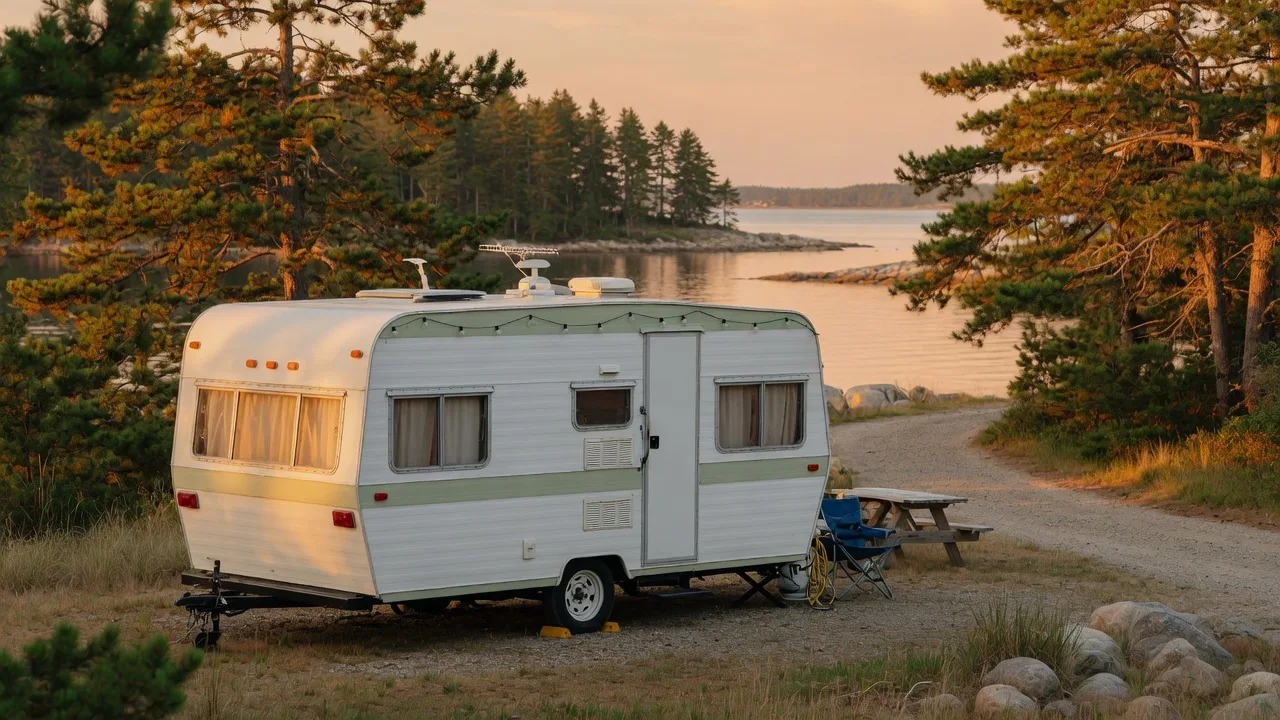
HOA CC&Rs and municipal zoning are the hidden tax on 'free' home RV storage that 36% of owners discover too late — plus the 2026 national price ladder, insurance 'secured location' fine print, and climate-driven maintenance math that actually determine whether a lot or your driveway wins.
The HOA and zoning trap on 'free' home storage
Per the Foundation for Community Association Research 2025 U.S. National and State Statistical Review, 35.2% of U.S. housing units (roughly 36% of households when rounded to common industry framing) sit inside community associations governed by CC&Rs. Industry analyses and CAI-linked surveys consistently show the vast majority of HOAs — often cited around 78% in vehicle-restriction contexts — prohibit or severely limit visible RV storage on residential lots, either outright or outside narrow 24-72 hour loading windows.
Typical provisions include total bans (garage only if it fits), side/rear-yard rules requiring 6+ ft fences and zero street visibility, or municipal zoning overlays that add paved-pad and setback mandates even outside HOAs. Fines commonly begin at $25-100 per day and compound; enforcement increasingly includes neighbor reports and, in some markets, drone or camera patrols. PickRV research compiled June 2026 from primary sources confirms this is not theoretical — owners who skip CC&R review before purchase frequently face forced off-site moves within weeks of delivery.
Texas Property Code Chapter 209 (the Residential Property Owners Protection Act) and its 2017-era amendments impose notice, hearing, and attorney-fee limits on POA enforcement but do not create a blanket right to store RVs visibly. Analogous limits exist elsewhere: Florida Statute §720.3045 (eff. July 1, 2023) bars HOAs from restricting storage of recreational vehicles (among other items) when not visible from the parcel's frontage or an adjacent parcel, unless a general law or local ordinance says otherwise. Similar targeted protections or visibility-based carve-outs appear in at least a dozen other states. Verify the exact statute and your specific dedicatory instruments with current 2026 data and local counsel — these rules evolve and exceptions for pre-HOA properties or non-visible storage are fact-specific.
- 36% of U.S. households in community associations (CAI/FCAR 2025 data)
- Majority of HOAs restrict visible RV/boat storage per industry surveys
- Texas Ch. 209: due-process limits on fines but CC&Rs still enforceable
- Florida §720.3045: non-visible RV storage generally protected from HOA ban
- Fines start $25-100/day and accumulate; enforcement via reports/drone in some areas
- Always pull full CC&Rs + zoning code before committing to a rig or lot
2026 lot pricing — national matrix, psf math, and regional spreads
Per the Yardi Matrix National RV & Boat Storage Report (Fall 2025 data, released into 2026 reporting) and contemporaneous 2026 market aggregators, advertised annualized street rates for parking units averaged $6.38 per square foot nationally as of September 2025 (+4.4% YoY). Rates for larger RV-suited spaces (12x40, 12x45, 12x50) ran lower at approximately $3.80/sf annualized on the same basis. A typical 30 ft Class C or fifth-wheel often occupies a 30x12 ft (360 sf) or 40x12 ft (480 sf) footprint depending on the facility layout.
Simple math for a 360 sf space at the national large-unit rate: 360 × $3.80 = $1,368 per year or $114 per month base advertised rate. Real quoted monthly prices for a 30 ft space in 2026 commonly land in these bands per updated operator data: outdoor uncovered (gravel/asphalt, basic gated/fenced) $30-125/month national; outdoor covered (canopy, open sides) $50-250/month; indoor/enclosed non-climate $100-450+/month; climate-controlled indoor $450+ in many markets. These align with and update the SSA-influenced ranges referenced in prior reporting ($50-150 uncovered, $100-250 covered, $200-700 indoor).
Geographic spreads are material. Yardi data shows San Francisco Bay Area small-unit rates at $12.44/sf (implying RV spaces well above national); Los Angeles metros hit $14.99/sf on small units with large-unit premiums still elevated. Rural Texas or Southeast/Midwest markets routinely run 30-40% below national averages. Bay Area/NYC-adjacent premiums of 50-100%+ on top of the base matrix remain the rule for high-demand coastal metros. Annual cost matrix for a typical 30 ft rig (base rates before add-ons): outdoor uncovered roughly $360-1,500/year, covered $600-3,000/year, indoor non-climate $1,200-5,400/year, climate-controlled $5,400+ in premium markets. Six-month snowbird or seasonal storage can be negotiated lower than month-to-month but still scales with the same tiers.
Amenity pricing from SSA context and major operators (Public Storage, Extra Space, dedicated RV/boat facilities) justifies differentials: basic fenced/gated lots at the low end; 24/7 code access, video retention, on-site dump/water/propane, wash bays, and trickle-charger hookups at $200+ tiers. Premium add-ons (trickle charger $10-20/month, wash use $5-15, move-in assistance) are common line items.
- National Yardi large-unit ~$3.80/sf annualized → ~$114/mo for 360 sf example
- Outdoor uncovered 2026: $30-125/mo national (Yardi + operator 2026 guides)
- Outdoor covered: $50-250/mo; indoor non-climate $100-450+; climate $450+
- Bay Area / coastal metros: +50-100% or more vs national (Yardi psf data)
- Rural Southeast/Midwest: -30-40% from national averages
- Annual for 30 ft rig: uncovered $360-1,500; covered $600-3,000; indoor $1,200-5,400+
Insurance — 'secured location,' garaging, and claim denial risks
Per published RV-insurance materials from licensed specialty carriers (2026 site and coverage descriptions), comprehensive coverage addresses theft, vandalism, fire, hail, and other weather-related loss when the peril is beyond the insured's control. Lenders on financed or leased rigs typically mandate comprehensive + collision. Policy language across licensed specialty carriers ties physical-damage and theft protection to the vehicle's garaging or storage location and the owner's exercise of 'reasonable care.'
What commonly qualifies as secured: fenced and gated lots with controlled access, indoor facilities, or residential property behind locked fencing meeting the policy's garaging description. Street parking, open/unsecured driveways, or basic gravel without gate often fall short for theft claims. Denial risk rises under the reasonable-care standard if the location is deemed unsecured or if the policy declarations list a specific garaging address that no longer matches. Always ask the carrier in writing: (1) whether your chosen lot or home pad meets the 'secured premises' or garaging definition for comprehensive/theft; (2) any rate adjustment for the location change; (3) documentation required for a claim (photos, access logs, police report). Get the answer on the declarations page or endorsement before you move the rig.
Facility liability policies almost never cover the stored vehicles themselves — they protect the building, fence, and operator. Your RV policy carries the risk. Collector/specialty policies (via licensed collector-car carriers) frequently require fully enclosed, locked storage for eligibility or full coverage. PickRV research compiled June 2026 from primary carrier pages confirms these are standard underwriting and claims realities, not edge cases.
- Comprehensive covers theft/hail/fire/weather per licensed specialty carriers' published RV materials — subject to policy conditions
- Garaging location and 'reasonable care' clauses affect theft and comprehensive applicability
- Secured examples: gated/fenced lots, indoor, locked residential setbacks
- Unsecured (street, open driveway, ungated gravel) frequently triggers denial risk
- Facility insurance covers the building, not your RV — confirm your own policy
- Document everything and get carrier confirmation in writing before storing
Maintenance by tier — UV, EPDM sealant, rodents, and tires
Per Lippert technical resources and RVIA-referenced best practices, outdoor uncovered storage accelerates UV degradation of EPDM rubber roofs and sealants. Regular inspection and re-sealing of seams, vents, and edges is required; neglect leads to leaks and delamination. Covered storage (properly sloped, drained, ventilated canopies) materially reduces UV exposure and can extend roof/sealant life by years, but condensation drip on cold mornings remains a documented risk if the canopy traps moisture against the roof. Indoor non-climate eliminates most UV and weather but still requires tire-pressure monitoring (cold concrete wicks heat) and battery maintenance. Climate-controlled indoor is optimal for interior finishes, electronics, and upholstery but commands the premium.
Rodent prevention is universal across tiers: remove all food, close vents, and deploy dryer sheets, peppermint oil, or commercial pouches (e.g., Fresh Cab). Inspect monthly. Indoor dramatically lowers but does not eliminate risk. Tire covers ($40-80 typical) prevent UV cracking and ozone damage on any outdoor or semi-exposed storage. Battery: remove or maintain with a quality trickle charger rated for the climate. PickRV research compiled June 2026 emphasizes that the cheapest lot can become expensive once roof reseal, tire replacement, or rodent remediation costs are added.
- Uncovered: highest UV on EPDM/sealant — inspect/re-seal per Lippert guidance
- Covered: reduces UV but verify canopy drainage/ventilation to avoid condensation
- Indoor non-climate: best weather/UV protection; still monitor tires and batteries
- Climate-controlled: premium for interior/electronics preservation
- Rodent: dryer sheets + peppermint/Fresh Cab + no food + closed vents + monthly checks (all tiers)
- Tire covers and trickle chargers are low-cost insurance on any outdoor or semi-exposed rig
Weather and climate multipliers plus facility realities
Per NOAA Storm Prediction Center hail data and NWS preliminary damage surveys, the U.S. records thousands of hail events annually (e.g., 5,000+ reports in recent seasons). NWS surveys explicitly document damage to unanchored or exposed RVs and mobile homes from hail, microbursts, and high winds. UV intensity varies sharply by latitude and elevation; freeze-thaw cycles in northern and high-desert storage add plumbing, battery, and sealant stress. Covered or indoor storage mitigates but does not erase these vectors — especially hail that can still reach under canopies or damage during transport to the lot.
Under-shared operator realities (drawn from SSA context and facility descriptions): most facility policies insure only the structure, not tenant vehicles. 'Covered' canopies sometimes create more seam damage via trapped condensation than open lots. HOA enforcement via neighborhood reporting or technology is rising. Extra fees for after-hours access, late payments, or admin are standard. Insider tip: before signing, tour in person, ask for the exact canopy design specs and recent rodent history, confirm 24/7 access if needed, and obtain the facility's insurance certificate (for the building only) plus your own policy endorsement naming the storage address.
- NOAA/NWS: thousands of annual hail events; documented RV damage in surveys
- UV and freeze-thaw are tier-dependent but present in every climate zone
- Facility insurance protects the lot/building — your RV policy is primary
- Condensation under some canopies can exceed uncovered UV damage
- Ask for canopy specs, pest history, access hours, and written fee schedule
- PickRV note: verify all 2026 pricing, policy language, and local rules directly
Frequently asked questions
How much does RV storage actually cost per month in 2026 for a 30 ft rig?›
National 2026 ranges (Yardi Matrix Fall 2025 data + operator guides): outdoor uncovered $30-125/month; outdoor covered $50-250/month; indoor non-climate $100-450+/month; climate-controlled $450+ in many markets. A 360 sf space at national large-unit ~$3.80/sf annualized approximates $114/month base before amenities or regional premiums. Bay Area/NYC metros add 50-100%+; rural Southeast/Midwest subtract 30-40%. Always get written 2026 quotes for your exact length and dates.
Can I store my RV at home in an HOA or under local zoning?›
Depends entirely on the CC&Rs and municipal code. ~35-36% of U.S. housing is in community associations (CAI/FCAR 2025); the majority restrict visible RV storage. Texas Property Code Chapter 209 governs enforcement procedures but does not guarantee home storage rights. Florida §720.3045 (2023) generally protects non-visible RV storage from HOA restriction. Verify your specific documents and current local law with 2026 data — fines and forced removal are common when owners assume 'free' storage will be allowed.
Will my insurance cover the RV in outdoor or lot storage?›
Comprehensive coverage (theft, hail, weather) from licensed specialty carriers typically requires the location to meet the policy's 'secured' or garaging standards and reasonable-care expectations. Gated/fenced lots or indoor facilities usually qualify; open street or unsecured driveway storage often creates denial risk for theft claims. Get explicit written confirmation from your insurer naming the exact storage address and any rate impact before moving the rig. Facility insurance does not cover your vehicle.
Is paying for indoor or climate-controlled storage worth it versus a basic covered lot?›
For high-value rigs ($150k+) stored 5-6+ months per year or in harsh UV/hail/freeze climates, indoor (especially climate-controlled) usually pays for itself in preserved roof/sealant life, reduced rodent risk, and avoided interior damage. For weekend-use rigs stored only 2-3 months in mild climates, a well-maintained covered or even uncovered lot with tire covers, regular sealant checks (per Lippert guidance), and rodent prevention often suffices at far lower cost. Run the annual math against your actual usage and rig value.
What are the biggest hidden costs or gotchas with storage lots?›
Condensation drip and poor canopy design under some 'covered' facilities; facility policies that insure only the building not your RV; extra fees for access, wash bays, or admin; rising HOA-style enforcement even at lots via reporting; and the need for ongoing owner maintenance (roof sealant, tires, batteries, rodents) regardless of tier. Always tour, read the full contract, confirm your insurance endorsement, and budget for 10-20% add-ons plus annual maintenance items.
Continue your research on PickRV
Sources
- 1.2025 U.S. National and State Statistical Review — Community AssociationsFoundation for Community Association Researchcompany or industry source
- 2.National RV & Boat Storage Report Fall 2025 (Yardi Matrix)Yardi Matrixcompany or industry source
- 3.RV Storage Costs: Complete Updated Price Guide (2026)Nearby Storage Rentalscompany or industry source
- 4.Texas Property Code Chapter 209 — Residential Property Owners Protection ActTexas Legislaturegovernment or university source
- 5.Florida Statutes §720.3045 — Installation, display, and storage of items (2023)Florida Legislaturegovernment or university source
- 6.RV and Auto Insurance — Comprehensive, Collision, and Garaging (consumer guide)National Association of Insurance Commissioners (NAIC)company or industry source
- 7.Roof Sealant Inspection and Repair (Lippert technical guidance)Lippert Componentscompany or industry source
- 8.RV Industry Association (storage and maintenance best practices)RV Industry Associationcompany or industry source
- 9.NOAA Storm Prediction Center — Hail Data and Summaries; NWS Damage SurveysNOAA / National Weather Servicegovernment or university source
Sources are a mix of government and university publications and the company or industry documentation for the specific equipment, store policy or standard discussed — each row above says which one it is, so you can weigh it yourself. Last verified 2026-06-05. Report broken links to support@pickrv.com.
Ready to roll?
Pick a rig. Write the road.
Complete nightly price on every listing — your exact total itemized before you pay · 48h full rental refund. Every rig near you, one checkout.
Related reads
Plan around this guide · 3
Hub anchors · mega-guides · cost calculator — one click each.
Related on PickRV
Tell us when you want to travel.
Owners list their own rigs on PickRV. Add your dates and we'll email you when one is listed for them — nothing else, no spam.
Was this guide helpful?