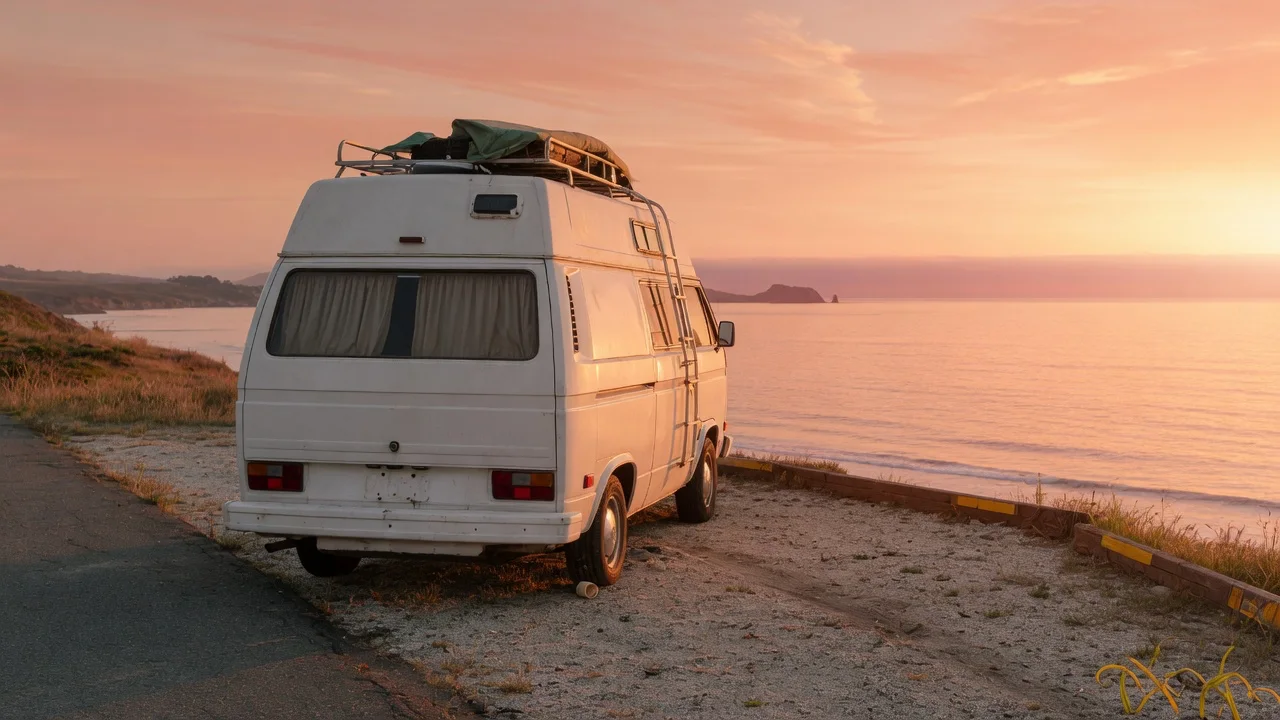
What's required, what's optional, what your personal auto insurance won't cover, and what the optional checkout waiver actually does.
Five distinct coverage types (often confused)
(1) Liability: covers damage YOU cause to others (their vehicle, their property, their medical bills). Legal minimum to drive in all 50 states.
(2) Collision: covers damage to the RV itself from vehicle-on-vehicle collision (you hit another vehicle, or get hit). Optional but recommended.
(3) Comprehensive: covers damage to the RV from non-collision causes (theft, vandalism, fire, hail, falling tree).
(4) Collision Damage Waiver (CDW): rental-platform-specific add-on that waives the deductible on collision/comprehensive claims. Typically $30-60/night.
(5) Roadside assistance: tow + lockout + flat tire + dead battery service. Typically included in rental policies, but verify tow distance + RV-specific limits.
- Liability: required by law in all 50 states
- Collision: optional · vehicle-on-vehicle damage
- Comprehensive: optional · non-collision damage
- CDW: optional · waives deductible on rental
- Roadside: optional · tow + lockout + flat tire
State minimum liability — and why it's not enough
Per state DMV regulations, minimum liability requirements vary dramatically. Examples from state insurance commissioners:
Florida: $10,000 property damage + $10,000 personal injury protection (PIP). No bodily injury liability required for in-state residents.
California: 15/30/5 ($15K bodily injury/person, $30K/accident, $5K property).
New York: 25/50/10 ($25K BI/person, $50K/accident, $10K property).
Texas: 30/60/25.
Per NAIC + NHTSA data, average medical cost of a serious injury accident exceeds $50,000 + permanent injury claims commonly reach seven figures. State minimums are catastrophically inadequate for any real accident involving an RV.
Personal auto insurance — what it does + doesn't cover
Most personal auto policies have a 'permissible uses' clause that defines what vehicles are covered. RV rentals are typically NOT automatically covered, especially:
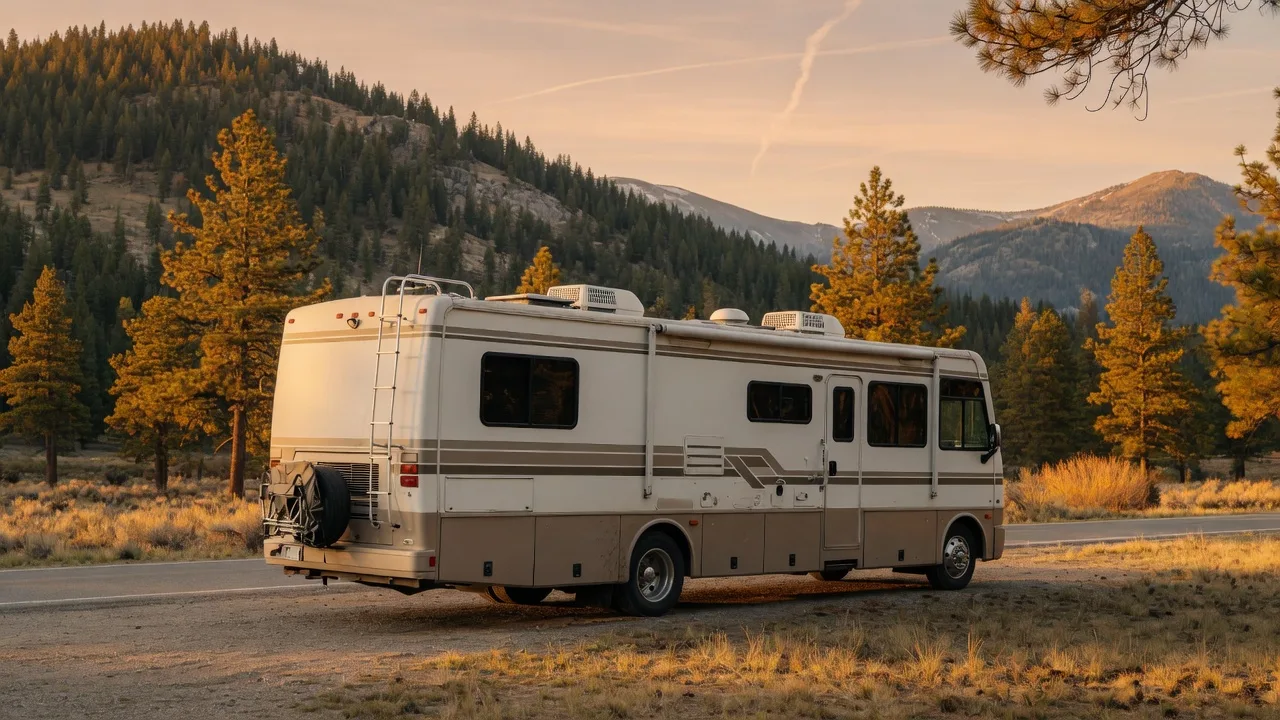
Class A or C over 26 ft (excluded by length thresholds in most policies).
Diesel-pusher motorhomes (excluded by chassis type in most policies).
Travel trailers + fifth-wheels (covered through tow vehicle policy, BUT trailer-specific liability + comprehensive separate).
Class B camper vans (sometimes covered as 'temporary rental car' under personal auto, varies by carrier).
- Class A/C 26 ft+: typically NOT covered by personal auto
- Diesel-pusher: typically NOT covered
- Travel trailer/5th wheel: tow vehicle covers liability, trailer needs separate coverage
- Class B 22 ft: sometimes covered, varies by carrier — verify in writing
Credit card rental coverage — what it does + doesn't cover for RVs
Most premium credit cards (Chase Sapphire Reserve, Amex Platinum, Capital One Venture X) offer secondary CDW coverage on auto rentals. Per the card-benefit terms:
RVs over 18 ft length or 6,000 lbs GVWR typically excluded.
RVs in 'recreational/commercial' use category typically excluded.
Travel trailers/fifth-wheels almost always excluded.
Net: most credit card rental coverage does NOT extend to RVs. Verify the specific card's policy in writing.
Roadside assistance — read the fine print
Most rental policies include 'roadside assistance' but with severe RV-specific limits:
Tow distance: typically capped at 50-100 miles. RV-specific tows in remote areas (Alaska, Rockies, Sierras) routinely exceed this.
Response time: typically 60-120 minutes in populated areas, 4-8 hours in remote areas.
Tow operator: standard tow trucks can't handle Class A motorhomes — need heavy-duty wrecker, often 24+ hr wait in remote areas.
- Major RV-roadside membership tier: annual fee, 100-200 mi tow, RV-specific operator network
- Some Class A purchases include a manufacturer-bundled RV-roadside membership for the first year
- Compare current memberships independently via consumer-report sources before binding
- Worth the upgrade for any trip outside dense Interstate corridors
What a collision damage waiver actually does
A collision damage waiver (CDW) is a standard rental-industry product, typically $30-60/night where a rental company offers one. PickRV is not an insurer and does not sell or offer a CDW — you bring your own coverage.
What it covers: deductible on collision claims (typically $1,500-3,000 without CDW, $0 with CDW). Often covers minor interior damage + tire/glass damage.
What it doesn't cover: gross negligence (DUI, reckless driving, unauthorized drivers), off-road use in non-off-road-rated vehicles, intentional damage, deliberate policy violations.
First-time renters: always take the CDW. The math: average claim severity for first-timers is 2.3x experienced renters per industry data, and CDW caps your downside at $0 vs $3,000.
Mexico travel — the LIISF Art. 5 reality
Per Mexico's Insurance Contract Law (LIISF) Art. 5, US auto insurance is NOT valid in Mexico beyond the border zone. Mexico requires Mexican-issued auto insurance for legal operation.
PickRV policy: we do NOT recommend specific Mexican insurance providers (regulatory + carrier-relationship considerations). If you plan to drive an RV into Mexico, research Mexican insurance options independently before crossing the border.
Per US State Department travel advisories, verify current safety + legal conditions for your specific route. Some Mexican states have active travel advisories that affect insurance coverage availability.
State minimum liability — the numbers that compare badly to real medical costs
Per state insurance commissioner publications + NAIC consumer-protection summaries, here is the bodily-injury minimum required to operate any motor vehicle (including a rented RV) in selected high-traffic RV-travel states. These numbers were set decades ago in most states and have not been adjusted for medical-cost inflation.
Cross-reference these minimums against the cost data the CDC publishes for serious crash injuries: average inpatient hospitalization for a serious motor-vehicle injury runs $40,000-80,000; permanent-injury claims (spinal cord, traumatic brain injury) routinely reach seven figures. Any state minimum at or below 25/50 ($25K per-person bodily injury, $50K per-accident total) is structurally inadequate for a real RV crash involving multiple occupants. The PickRV recommendation is 300/500/100 minimum ($300K BI/person, $500K/accident, $100K property) for any RV travel; a $1M umbrella adds another order of magnitude for $200-400/year.
- Florida: 10/20/10 (PIP $10K + property $10K minimum; no BI required in-state)
- California: 15/30/5 — among lowest in country
- Texas: 30/60/25
- New York: 25/50/10
- Arizona: 25/50/15
- Colorado: 25/50/15
- Utah: 25/65/15
- Alaska: 50/100/25 — among highest in country
- Recommended baseline for RV travel: 300/500/100 + $1M umbrella ($200-400/yr)
Deposit holds + the claims math that actually determines your out-of-pocket
Per US rental marketplace industry practice, the typical rental RV ships with a $1,000-3,000 refundable security deposit hold authorized on the renter's credit card at pickup. The host releases the hold within 3-14 days of return assuming no damage claim. If damage is found, the host may convert the hold into a charge OR escalate to the platform's CDW claim process if the renter purchased the optional waiver.
Three deposit-handling models exist in 2026 marketplaces: (1) full pre-authorized hold at pickup, partial release on undamaged return (the strictest model, used by RVshare + Outdoorsy historically); (2) deposit-on-claim model where no hold is placed but the renter agrees to a deposit-equivalent charge if damage occurs (more renter-friendly cash-flow but adds dispute risk); (3) escrow model where the renter's payment is held by the platform until the host signs off on undamaged return (used by some boutique operators).
PickRV's deposit handling: the deposit amount + hold-vs-charge model is disclosed on every listing's Insurance + Deposit panel BEFORE booking. The renter agrees to the specific dollar amount + the specific release timeline at checkout, and the deposit is processed through Stripe Connect with full Stripe-issued receipts and a built-in dispute path. PickRV is not an insurer and does not sell or offer a collision damage waiver — you bring your own coverage.
What insurance agents + rental platforms don't volunteer
Under-shared truth #1: 'state minimums' are catastrophically inadequate for RV liability. Florida's 10/10 limits were set decades ago and have NEVER been updated. Today's healthcare costs have outpaced them by ~10x. Any RV liability under $300K bodily / $500K total puts your personal assets at risk in a real accident.
Under-shared truth #2: the most-common rental claim is NOT collision — it's interior damage + consumables (broken awning, ripped screen door, lost leveling block, propane regulator dropped on gravel). Standard CDW often EXCLUDES interior damage. Photograph every panel + every interior surface at pickup AND return; timestamps cap dispute risk to documented damage only.
Under-shared truth #3: 'roadside assistance' bundled with rental policies often uses third-party networks with 60-120 minute response in populated areas + 4-8 hours in remote areas. Tow distance often capped at 50-100 mi. An independent RV-specific roadside-assistance membership is a worth-it overlay for any trip outside dense Interstate corridors.
Frequently asked questions
Does my personal auto insurance cover an RV rental?›
Usually no for Class A/C over 26 ft and diesel pushers. Sometimes yes for Class B camper vans (verify with carrier in writing). Travel trailers/fifth-wheels are typically covered by your tow vehicle's liability but need separate trailer-specific coverage. Read your 'permissible uses' clause.
Should I buy a Collision Damage Waiver (CDW) when renting?›
First-time renters: yes. CDW caps your downside at $0 vs $1,500-3,000 deductible without it. Experienced renters with 5+ trips: consider self-insuring. Math: claim severity for first-timers is 2.3x experienced renters per industry data.
What state has the lowest minimum liability requirement?›
Florida has the lowest, requiring only $10K PIP + $10K property damage (no bodily injury liability required for in-state residents). Most other states require 15/30 or 25/50 minimums. All state minimums are catastrophically inadequate for any real accident.
Can I drive a US-rented RV into Mexico?›
Most US rental contracts EXPLICITLY EXCLUDE Mexico travel. US auto insurance is not valid in Mexico beyond the border zone per LIISF Art. 5. Crossing without host approval voids coverage + may result in contract termination + impound. Confirm in writing with the host before any Mexico travel.
What liability coverage limits do you recommend for RV travel?›
300/500/100 minimum ($300K bodily injury per person, $500K per accident, $100K property damage) plus a $1M personal umbrella policy ($200-400/year). State minimums (Florida 10/10, California 15/30/5, Texas 30/60) are catastrophically inadequate — CDC data shows serious crash injuries average $40-80K hospital costs and permanent-injury claims routinely reach seven figures.
What is the security deposit hold on a rental RV?›
Typical $1,000-3,000 refundable hold authorized on your credit card at pickup. Released within 3-14 days of return assuming no damage. If damage occurs, the host may convert hold to charge OR (if you purchased CDW) escalate through the platform's CDW claim process. PickRV discloses the deposit amount + release timeline on every listing's Insurance + Deposit panel before booking.
Continue your research on PickRV
Sources
- 1.NAIC State Insurance RegulatorsNAICcompany or industry source
- 2.Florida Office of Insurance RegulationFlorida OIRgovernment or university source
- 3.California Department of InsuranceCalifornia DOIgovernment or university source
- 4.NHTSA crash statisticsNHTSAgovernment or university source
- 5.US State Department Mexico Travel AdvisoryUS Department of Stategovernment or university source
- 6.CDC motor vehicle crash injury cost dataUS CDCgovernment or university source
Sources are a mix of government and university publications and the company or industry documentation for the specific equipment, store policy or standard discussed — each row above says which one it is, so you can weigh it yourself. Last verified 2026-05-25. Report broken links to support@pickrv.com.
Ready to roll?
Pick a rig. Write the road.
Complete nightly price on every listing — your exact total itemized before you pay · 48h full rental refund. Every rig near you, one checkout.
Related reads


Plan around this guide · 3
Hub anchors · mega-guides · cost calculator — one click each.
Related on PickRV
Tell us when you want to travel.
Owners list their own rigs on PickRV. Add your dates and we'll email you when one is listed for them — nothing else, no spam.
Was this guide helpful?