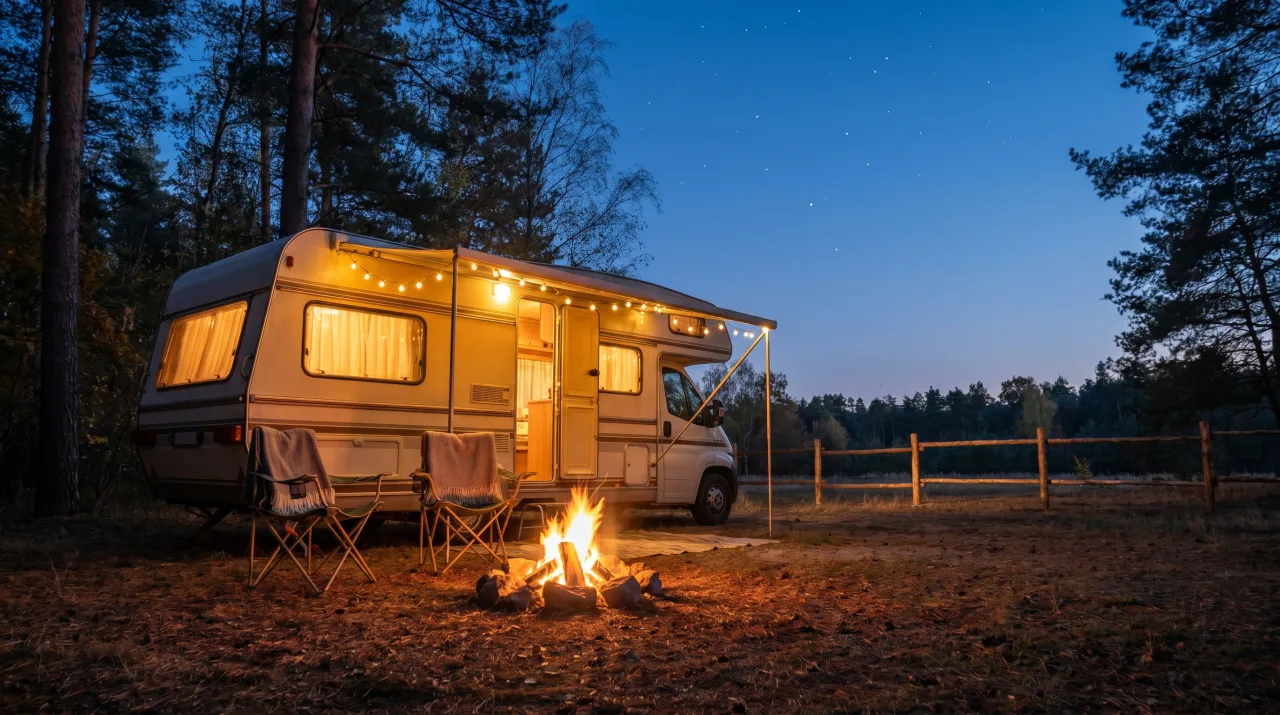
Where the 8 PM rule is actually law (with decibel teeth), where it's only a host suggestion, and the 6 states that will ticket you for a Honda EU2200i at 10 PM if a neighbor complains.
Federal land baseline (NPS, USFS, BLM, USACE)
Per the National Park Service Management Policies 2006 §8.2.3 and 36 CFR 2.12, operating a generator that exceeds 60 dBA measured on the A-weighted scale at 50 feet is prohibited in NPS units, regardless of posted 'quiet hours.' Most front-country NPS campgrounds add a time window (commonly 8 AM–8 PM or 10 PM–6 AM quiet). Joshua Tree, parts of Big Bend, and some back-country or wilderness-adjacent sites ban generators entirely.
USFS (36 CFR 261.16) and BLM developed campgrounds (43 CFR 8365) publish per-unit rules. The most common default is 10 PM–6 AM or 9 PM–8 AM quiet with generators allowed only during daylight or posted generator hours (often 8 AM–10 PM or 9 AM–9 PM). Dispersed BLM and USFS camping has no posted hours in most districts — the universal rural convention is 'no generators after 8 PM or before 8 AM' to avoid neighbor complaints.
Army Corps of Engineers lakeside campgrounds follow a similar pattern (10 PM–6 AM quiet, generators 8 AM–10 PM in most units). The posted kiosk rule at the entrance always supersedes any 'typical' federal standard.
- NPS: 60 dBA at 50 ft hard limit + posted time windows (most units 8 AM–8 PM generator hours).
- USFS developed: 10 PM–6 AM quiet typical; generator hours posted per forest (often 8 AM–10 PM).
- BLM developed: similar to USFS; some districts stricter (e.g., Quartzsite 10 PM–8 AM quiet).
- Dispersed federal land: no posted hours — 8 PM–8 AM is the de-facto rural standard.
State park rules — the real variation (verified from official state codes 2026)
California State Parks (Title 14 CCR §4319): generators 10 AM–8 PM. Quiet 10 PM–6 AM. Hard 60 dBA at 50 ft limit. Violation is an infraction; rangers write tickets.
Colorado State Parks (CPW Reg 4.300): generators 9 AM–9 PM. Quiet 10 PM–7 AM. 60 dBA at the neighbor site. One of the stricter enforcement states.
Oregon State Parks (OAR 736-010-0026): generators 9 AM–9 PM. Quiet 10 PM–7 AM. 70 dBA at 25 ft (the most lenient decibel number among the strict states).
Washington State Parks (WAC 352-32-040): generators 8 AM–9 PM. Quiet 10 PM–6:30 AM. 65 dBA at 50 ft.
New York State Parks (9 NYCRR 376.1): 55 dBA at the property line (very strict). Quiet hours posted per park, typically 10 PM–7 AM.
Hawaii State Parks (HAR §13-146-30): 60 dBA at 30 ft. Quiet 9 PM–7 AM in most units.
Florida, Texas, Utah, Arizona, New Mexico, Michigan: generators allowed during posted hours (commonly 8 AM–10 PM or 9 AM–9 PM). No statewide decibel limit in the park code — enforcement is complaint-driven and subjective ('unreasonable noise').
The 44 other states: posted generator hours exist in most state park systems, but the rule is almost always 'quiet hours' rather than generator-specific. A neighbor complaint at 9:30 PM can still get you a warning or a trespass even if the posted generator window is open.
The 6 states with actual decibel teeth (and what the numbers mean in real rigs)
California 60 dBA at 50 ft (Title 14 CCR §4319) — a Honda EU2200i at quarter load (48 dBA at 23 ft) is usually under the limit at 50 ft. A full-load EU2200i or any open-frame contractor generator (65-75 dBA at 23 ft) is over the limit at the pad in still air. Rangers have used smartphone apps + calibration in enforcement actions.
Colorado 60 dBA at the neighbor site (not at the generator) — this is the hardest standard for RVers. Even a quiet inverter can trip the limit if the neighbor's site is 30-40 ft away and wind is carrying sound.
Oregon 70 dBA at 25 ft — the most lenient of the strict states. Most modern inverter generators pass at 25 ft; open-frame units often fail.
Washington 65 dBA at 50 ft — similar to California in practice for inverter generators.
New York 55 dBA at the property line — extremely strict. Many NY state parks effectively require inverter generators only and will ask you to shut down on complaint.
Hawaii 60 dBA at 30 ft — measured closer than the mainland 50 ft standard, so the effective limit is tighter than the number suggests.
What the numbers mean for the generators you actually own
Honda EU2200i / EU2200i Companion: 48 dBA quarter load, 57 dBA full load at 23 ft (Honda ISO 7574 data). Stays under 60 dBA at 50 ft in most conditions. The most common 'safe' choice for strict state parks.
Yamaha EF2000iS / EF2200iS: comparable numbers to the Honda (low 50s dBA range at 23 ft). Also safe in 60 dBA states.
Champion 2000W / 2500W inverter models: low-to-mid 50s dBA at 23 ft — usually pass 60 dBA tests.
Open-frame contractor units (Champion 4500, WEN 56380, Predator 4375, etc.): 65-75+ dBA at 23 ft. These are over the limit in CA, CO, HI, NY even at the pad during posted generator hours. They are the units that generate the complaint calls.
Built-in RV generators (Onan QG 4000 / 5500, Cummins Onan RV QG): 66-68 dBA at 10 ft (much louder than portables when measured at the same distance). Most are over 60 dBA at 50 ft. The newer 'Quiet' or 'Inverter' Onan lines are better but still louder than a portable EU2200i in many installations.
Enforcement reality and host responsibilities (PickRV context)
Most rangers will give a warning first unless the complaint is egregious or repeated. A second complaint in the same stay can result in a citation or a request to leave.
In California and Colorado the decibel rules are written into the park code — a ranger with a calibrated meter (or even a well-documented phone app + distance measurement) can write a ticket without a neighbor complaint.
Hosts on PickRV must declare generator type + approximate dBA in the rig's published specs (per the listing schema). If the rig has an open-frame or built-in Onan, the host should note 'loud generator — not suitable for strict decibel state parks (CA, CO, HI, NY, etc.).' Renters who ignore that disclosure and get cited have little recourse.
Frequently asked questions
Can I run my Honda EU2200i in a California or Colorado state park?›
Usually yes during posted generator hours if it measures under the decibel limit at the required distance (60 dBA at 50 ft in CA, 60 dBA at the neighbor site in CO). Full-load or with a load that makes it louder can still draw a complaint or ticket. Open-frame contractor generators are the ones that reliably fail these tests.
Do National Parks have a uniform generator rule?›
The hard 60 dBA at 50 ft limit (36 CFR 2.12) applies system-wide. Most front-country campgrounds add time windows (commonly generators allowed 8 AM–8 PM). Some units (Joshua Tree, certain back-country or wilderness sites) prohibit generators entirely. Always check the specific park page on nps.gov.
What about built-in generators on Class A and large Class C rigs?›
Most conventional Onan QG units run 66-68 dBA at 10 ft — over the 60 dBA limit at 50 ft in the strict states. The newer Onan Quiet Inverter models are quieter but still louder than a portable EU2200i in many installations. Verify the exact model before booking for CA/CO/HI/NY parks.
Can a neighbor's complaint get me kicked out even if I'm within posted hours?›
Yes in most systems. Posted hours are the default; 'unreasonable noise' is still enforceable on complaint even during generator hours. The decibel states (CA, CO, etc.) give rangers an objective measurement they can use without a complaint.
How do I know if my generator is quiet enough?›
Check the manufacturer's dBA rating at a known distance (usually 23 ft or 7 m). If it is 57 dBA or lower at 23 ft, it will usually pass 60 dBA at 50 ft tests in still air. Anything 65+ dBA at 23 ft is risky in the strict states. When in doubt, call the specific park and ask for the current enforcement practice.
Continue your research on PickRV
Sources
- 1.36 CFR 2.12 NPS audio disturbances and 60 dBA limitUS National Park Servicegovernment or university source
- 2.NPS Management Policies 2006 §8.2.3 Use of Motorized EquipmentUS National Park Servicegovernment or university source
- 3.California Code of Regulations Title 14 §4319 (state parks noise)California Department of Parks and Recreationcompany or industry source
- 4.Colorado Parks and Wildlife Regulation 4.300 (generator noise)Colorado Parks and Wildlifecompany or industry source
- 5.EPA Office of Noise Abatement and Control guidanceUS Environmental Protection Agencygovernment or university source
- 6.Honda EU2200i generator specifications (dBA ratings)Honda Power Equipmentcompany or industry source
- 7.Cummins Onan RV generator sound dataCummins Inc.company or industry source
- 8.Oregon, Washington, New York, Hawaii state park noise regulations (OAR, WAC, NYCRR, HAR)Oregon State Parks (representative; similar for WA/NY/HI)government or university source
Sources are a mix of government and university publications and the company or industry documentation for the specific equipment, store policy or standard discussed — each row above says which one it is, so you can weigh it yourself. Last verified 2026-06-05. Report broken links to support@pickrv.com.
Ready to roll?
Pick a rig. Write the road.
Complete nightly price on every listing — your exact total itemized before you pay · 48h full rental refund. Every rig near you, one checkout.
Related reads
Plan around this guide · 3
Hub anchors · mega-guides · cost calculator — one click each.
Related on PickRV
Tell us when you want to travel.
Owners list their own rigs on PickRV. Add your dates and we'll email you when one is listed for them — nothing else, no spam.
Was this guide helpful?