Where the road meets the surf
National Seashores for RV Travelers
America's protected coastlines worth pointing an RV toward — miles of open beach and dune, what each seashore is, when to go, and how to find a rig nearby. Facts are sourced from official NPS pages.
Beach access, ferry runs, and oceanfront campgrounds move with the tide and the season — confirm on the official seashore page before you go.
- 10
- Field guides
- 9
- States covered
- 2
- Managing agencies
The coastlines
Every seashore in the guide
Massachusetts
Cape Cod
Massachusetts
Cape Cod National Seashore: An RV Traveler's Guide
Stretching along the Outer Cape from Chatham to Provincetown, Cape Cod National Seashore offers about 40 miles of undeveloped beach, salt marshes, freshwater ponds, and historic lighthouses. The NPS manages this coastal treasure but does not provide RV camping within its boundaries. Instead, visitors can enjoy hiking trails, scenic drives, ranger programs, and the region’s famous cranberry bogs. Always check the official site for current conditions and fees.
Read the field guide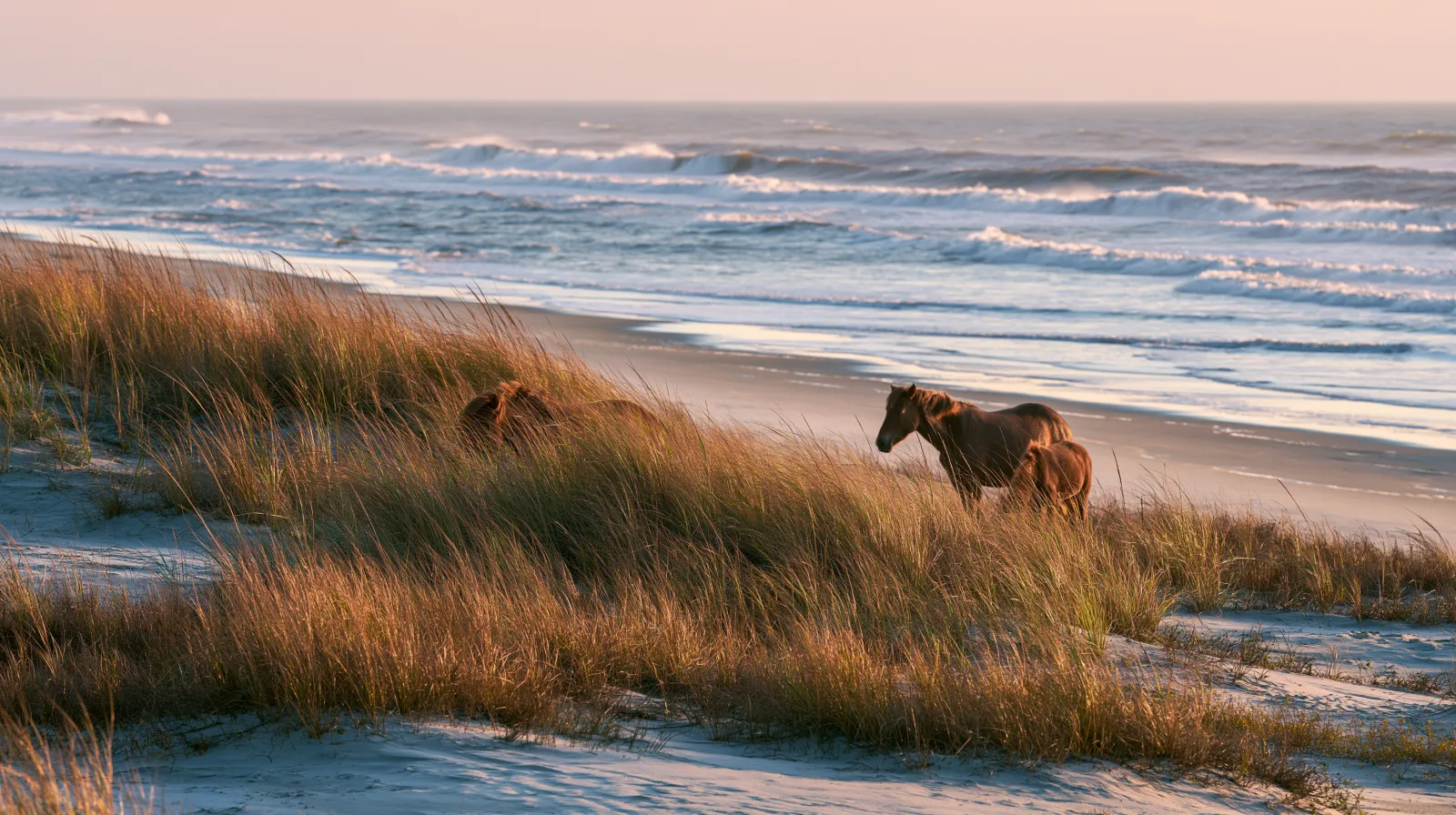
Maryland
Assateague Island National Seashore: An RV Traveler's Guide
Assateague Island National Seashore protects a dynamic barrier island ecosystem along the Atlantic coast. Famous for its wild horses, the seashore spans both Maryland and Virginia. RV camping is available in the Maryland district at Oceanside and Bayside campgrounds—all sites are primitive with no hookups, roughly $40 per night. The park’s address is 7206 National Seashore Lane, Berlin, MD 21811, and the phone number is (410) 641-1441. For current hours, fees, and permits, check the official site.
Read the field guideTexas
Padre Island
Texas
Padre Island National Seashore: An RV Traveler's Guide
Stretching roughly 66 miles along the Gulf of Mexico, Padre Island National Seashore is the world’s longest undeveloped barrier island. It’s famous for its Kemp’s ridley sea turtle conservation program and as a globally significant stopover for migratory birds. Campers can choose between two developed campgrounds or opt for primitive beach camping, with an RV dump station available.
Read the field guideFlorida
Gulf Islands
Florida
Gulf Islands National Seashore: An RV Traveler's Guide
Gulf Islands National Seashore protects a chain of barrier islands and mainland areas along the Gulf of Mexico in both Florida and Mississippi. Its signature features include dazzling white quartz-sand beaches, emerald waters, fertile marshes, and historic forts like Fort Pickens. RV camping is available at Fort Pickens Campground (FL) and Davis Bayou Campground (MS) with water/electric hookups and dump stations (no individual sewer hookups).
Read the field guideCalifornia
Point Reyes
California
Point Reyes National Seashore: An RV Traveler's Guide
Point Reyes National Seashore is a sprawling coastal preserve where rugged headlands meet the Pacific. Its 71,000 acres include diverse habitats from beaches to forests. Wildlife viewing is exceptional, with tule elk, northern elephant seals, and gray whale migrations. Camping is limited to hike-in and boat-in backcountry sites, requiring permits and reservations. This is a place for quiet immersion in nature, not for RV living.
Read the field guideNew York
Fire Island
New York
Fire Island National Seashore: An RV Traveler's Guide
A barrier island sanctuary with wide Atlantic beaches, rolling dunes, and the Sunken Forest—a rare maritime holly forest. The Fire Island Lighthouse and the historic William Floyd Estate add human history to the wild landscape. Access is by ferry only; no cars cross the island. Piping plovers and other shorebirds thrive here. For RV camping, head to adjacent Smith Point County Park.
Read the field guideGeorgia
Cumberland Island
Georgia
Cumberland Island National Seashore: An RV Traveler's Guide
Cumberland Island is a wild, remote barrier island off Georgia's coast, famous for its free-roaming feral horses and abundant natural beauty. With boat-only access and over 9,800 acres of designated Wilderness, it offers a rare primitive experience. Visitors can hike, camp in designated backcountry sites, and explore a landscape shaped by wind and tide. No RVs or cars are permitted on the island, preserving its quiet, undeveloped character.
Read the field guideFlorida
Canaveral
Florida
Canaveral National Seashore: An RV Traveler's Guide
This barrier-island sanctuary spans roughly 58,000 acres and includes the Mosquito Lagoon ecosystem. With about 24 miles of undeveloped beach, it’s the longest such stretch on Florida’s Atlantic coast. Sea turtles nest here by the thousands, making it a critical habitat for these protected creatures.
Read the field guideNorth Carolina
Cape Lookout
North Carolina
Cape Lookout National Seashore: An RV Traveler's Guide
Cape Lookout National Seashore protects 28,000 acres of barrier islands stretching 55 miles along the NC coast. Access is by boat or ferry only. The seashore features wild horses on Shackleford Banks, the historic Cape Lookout Lighthouse, and is an International Dark Sky Park. Primitive camping is available but no RV campgrounds exist on the islands.
Read the field guideOregon
Oregon Dunes
Oregon
Oregon Dunes National Recreation Area: An RV Traveler's Guide
Encompassing about 31,500 acres, this 1972 National Recreation Area is famous for its 40-mile corridor of towering sand dunes along the Oregon Coast. Some dunes rank among the tallest on the continent, creating a one-of-a-kind playground for OHV riding, hiking, and wildlife observation. Several Forest Service campgrounds, including Bluebill and Eel Creek, provide a place to stay and wake up surrounded by this extraordinary landscape.
Read the field guide
The long open beach
Seashore country, state by state
The national seashores hold the wildest edges of the coast — Atlantic barrier islands, Gulf sands, and Pacific dunes. Pick a state to see RV rentals and what else is along the shore.
Ready to fall asleep to the surf this season?