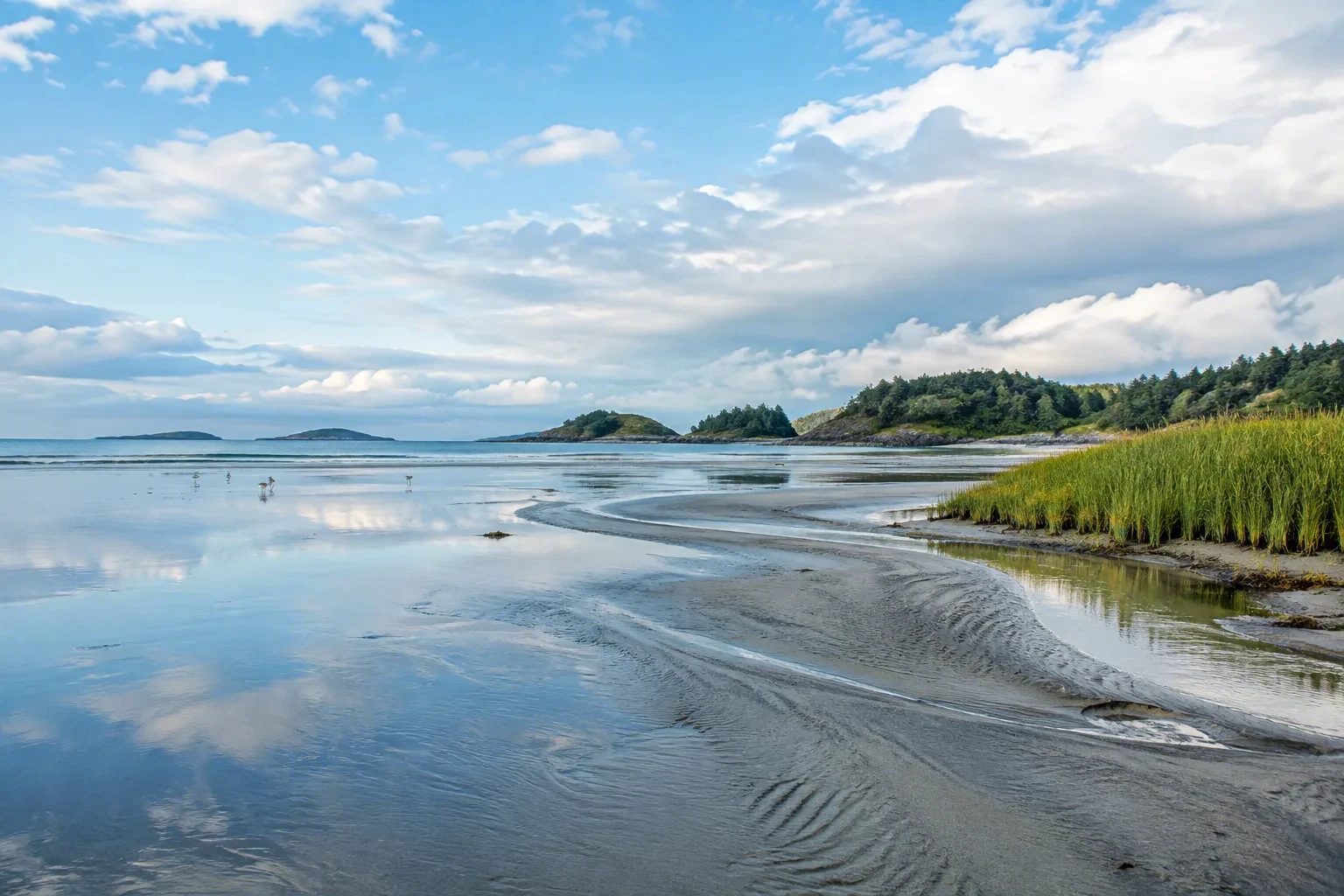
Stretching roughly 55 miles along North Carolina's coast, Cape Lookout National Seashore encompasses about 28,000 acres of pristine barrier islands. This remote paradise is accessible only by boat or ferry, offering primitive island camping under incredibly dark skies—the seashore is an International Dark Sky Park. Signature sights include the iconic Cape Lookout Lighthouse, wild horses roaming Shackleford Banks, and loggerhead sea turtles nesting on secluded beaches. There are no developed RV campgrounds on the barrier islands, making this a true escape for self-sufficient adventurers.
Best season — Spring (April–May) and fall (September–October) for milder temperatures, lower humidity, and fewer insects. Summer is hot and humid; winter can be cold and windy. For stargazing, aim for new moon nights and clear skies.
What makes Cape Lookout National Seashore unique?
Cape Lookout offers a remote, undeveloped barrier island experience with wild horses, a historic lighthouse, and pristine beaches under dark skies—accessible only by boat, with no RV campgrounds on the islands.
- Wild horses roam Shackleford Banks
- International Dark Sky Park with exceptional stargazing
- Loggerhead sea turtles nest on its beaches
At a glance
The facts worth checking before you roll out
Conservative, source-minded facts for planning your visit — always worth confirming against current conditions before you travel.
Managing agency
National Park Service (U.S. Department of the Interior)
Signature features
Wild horses (Shackleford Banks), Cape Lookout Lighthouse, loggerhead sea turtles; International Dark Sky Park
Size / extent
~28,000 acres, extending roughly 55 miles along the North Carolina coast (barrier islands)
Access & camping
Barrier islands reachable only by boat/ferry; primitive island camping only — no developed RV campgrounds on the islands
On the ground
Cape Lookout National Seashore preserves approximately 28,000 acres of barrier islands along 55 miles of North Carolina coastline. Managed by the National Park Service, its significance lies in protecting a largely undeveloped coastal ecosystem. Access is exclusively via boat or ferry; this remoteness contributes to the pristine nature of the beaches and offers unique opportunities for observing wildlife like wild horses on Shackleford Banks.
RV travelers visiting Cape Lookout typically utilize ferries to reach the islands with any necessary supplies. Activities center around exploring the natural environment, including beachcombing, birdwatching, and viewing loggerhead sea turtles. The iconic Cape Lookout Lighthouse is a key destination, while evenings offer exceptional stargazing as part of its International Dark Sky Park designation. Primitive camping is available for those prepared.
The most favorable times to visit are spring (April-May) and fall (September-October), offering milder temperatures and fewer insects. Summer months bring heat and humidity, while winter can be cold and windy. Stargazing is best during new moon phases with clear skies. Planning around these seasonal factors enhances the overall experience for visitors enjoying the seashore’s natural beauty.
Consider establishing a basecamp in a nearby area before venturing to Cape Lookout. From there, arrange ferry transportation to the islands, ensuring you have provisions for primitive camping. This approach allows RV travelers to enjoy the amenities of their vehicle while still accessing the remote and unique environment of the National Seashore and its protected features.
Official sources
- National Park Service — Cape Lookout National Seashore National Park Service
Nearby & related
Keep planning North Carolina
Sourced costs, campground directories, and the places worth a detour — the next layer of North Carolina trip planning.
- North Carolina RV rental costFuel · camping · tax, sourced
- North Carolina RV-friendly campgroundsHookups, rig limits, booking tips
- Campervan & van rentals in North CarolinaVan-life routes, rules & rigs
- LighthousesCoast-road waypoints
- Sand dunesDune fields worth the climb
- Fossil sitesDeep-time road stops
- Deep trip guidesLong-form seasonal playbooks
Planning an RV trip near Cape Lookout National Seashore: An RV Traveler's Guide?
Was this guide helpful?