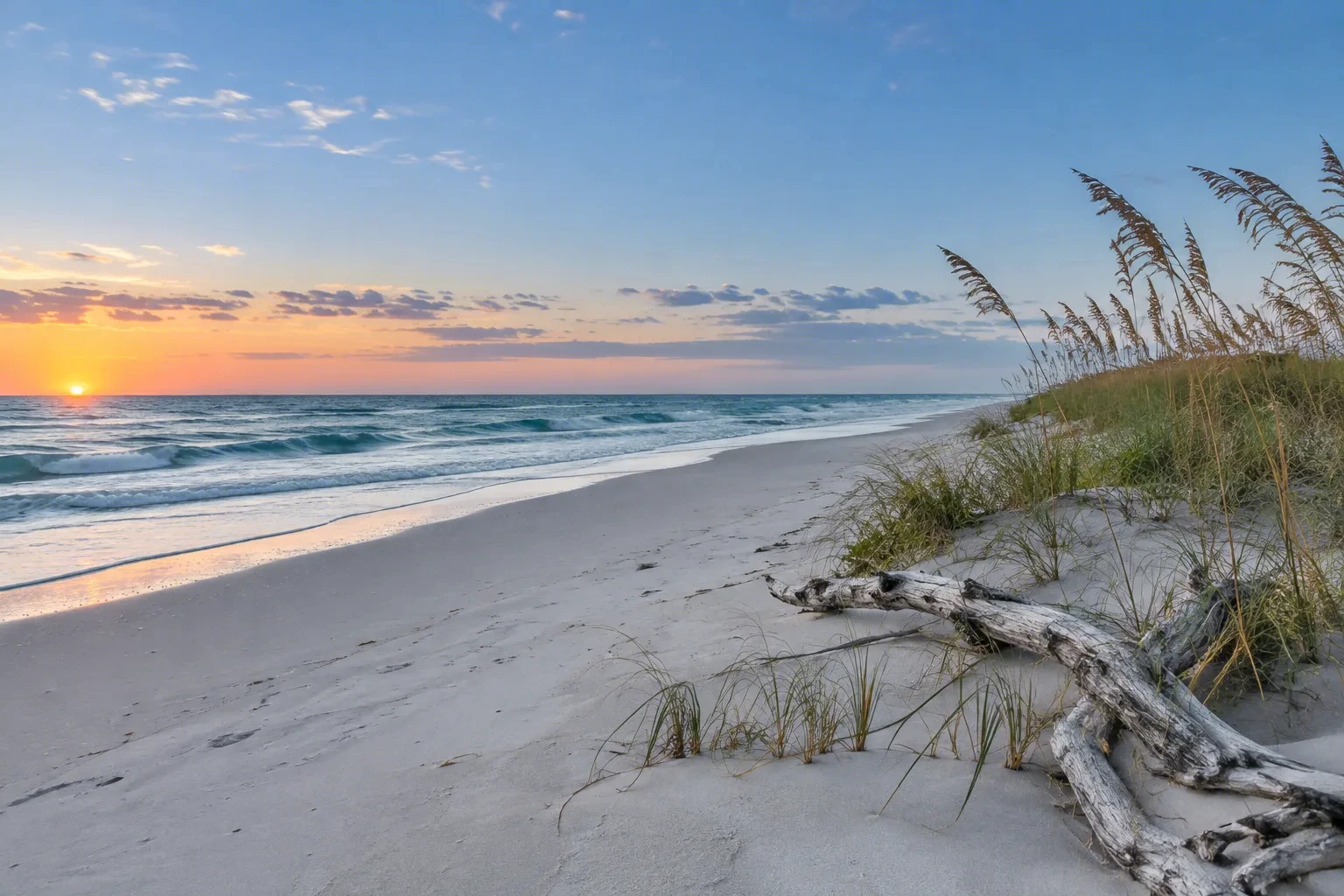
Managed by the National Park Service, Canaveral National Seashore protects approximately 58,000 acres of barrier island, lagoon, coastal hammock, and offshore waters. Its signature feature is the longest stretch of undeveloped Atlantic coastline in Florida—about 24 miles of pristine beach. The seashore is also a vital nesting ground for several thousand protected marine turtles, offering a rare glimpse into Florida’s wild coast.
Best season — Spring (March–May) and fall (September–November) for mild temperatures, lower humidity, and fewer crowds. Summer is hot and humid; winter can be windy and cool.
What makes Canaveral National Seashore special?
It protects the longest undeveloped Atlantic coastline in Florida, with about 24 miles of wild beach and a rich barrier-island ecosystem.
- Approximately 24 miles of undeveloped Atlantic beach
- Nesting habitat for several thousand protected marine turtles
- Spans roughly 58,000 acres including Mosquito Lagoon ecosystem
At a glance
The facts worth checking before you roll out
Conservative, source-minded facts for planning your visit — always worth confirming against current conditions before you travel.
Managing agency
U.S. National Park Service (Dept. of the Interior)
Signature feature
Longest stretch of undeveloped Atlantic coastline in Florida; ~24 miles of beach, plus Mosquito Lagoon barrier-island ecosystem
Signature wildlife
Sea turtles — nesting beaches for several thousand protected marine turtles
Size
Approximately 58,000 acres of barrier island, lagoon, coastal hammock and offshore waters
On the ground
Canaveral National Seashore, managed by the National Park Service, preserves approximately 58,000 acres of unique Florida ecosystems. This includes barrier island beaches, the Mosquito Lagoon, and coastal hammock lands extending into offshore waters. Its significance lies in protecting a rare stretch of wild coastline and its associated habitats from development.
RV travelers to Canaveral National Seashore primarily experience the area’s natural beauty. Opportunities include observing wildlife such as the several thousand protected marine turtles that nest here, exploring the barrier-island ecosystem, and enjoying approximately 24 miles of undeveloped Atlantic beach. Access is available for various recreational activities.
The most comfortable seasons to visit Canaveral National Seashore are spring, from March through May, and fall, September through November. These months offer mild temperatures with lower humidity and fewer visitors. Summer brings heat and humidity while winter can be characterized by wind and cooler conditions.
Consider establishing a basecamp in a nearby area to explore Canaveral National Seashore. This allows for flexible day trips to experience the seashore’s diverse environments. Plan visits to different sections of the 24-mile coastline, factoring in travel time from your chosen location to maximize exploration.
Official sources
- National Park Service — Canaveral National Seashore National Park Service
Nearby & related
Keep planning Florida
Sourced costs, campground directories, and the places worth a detour — the next layer of Florida trip planning.
- Florida RV rental costFuel · camping · tax, sourced
- Florida RV-friendly campgroundsHookups, rig limits, booking tips
- RV rental companies in FloridaLocal hosts & outfitters, verified
- Campervan & van rentals in FloridaVan-life routes, rules & rigs
- RV rentals in FloridaPickRV Wiki · 6 min read
- Florida RV + Boat dual-vehiclePickRV Wiki · 13 min read
- BattlefieldsHallowed-ground history stops
- National memorialsMonumental road stops
Planning an RV trip near Canaveral National Seashore: An RV Traveler's Guide?
Was this guide helpful?