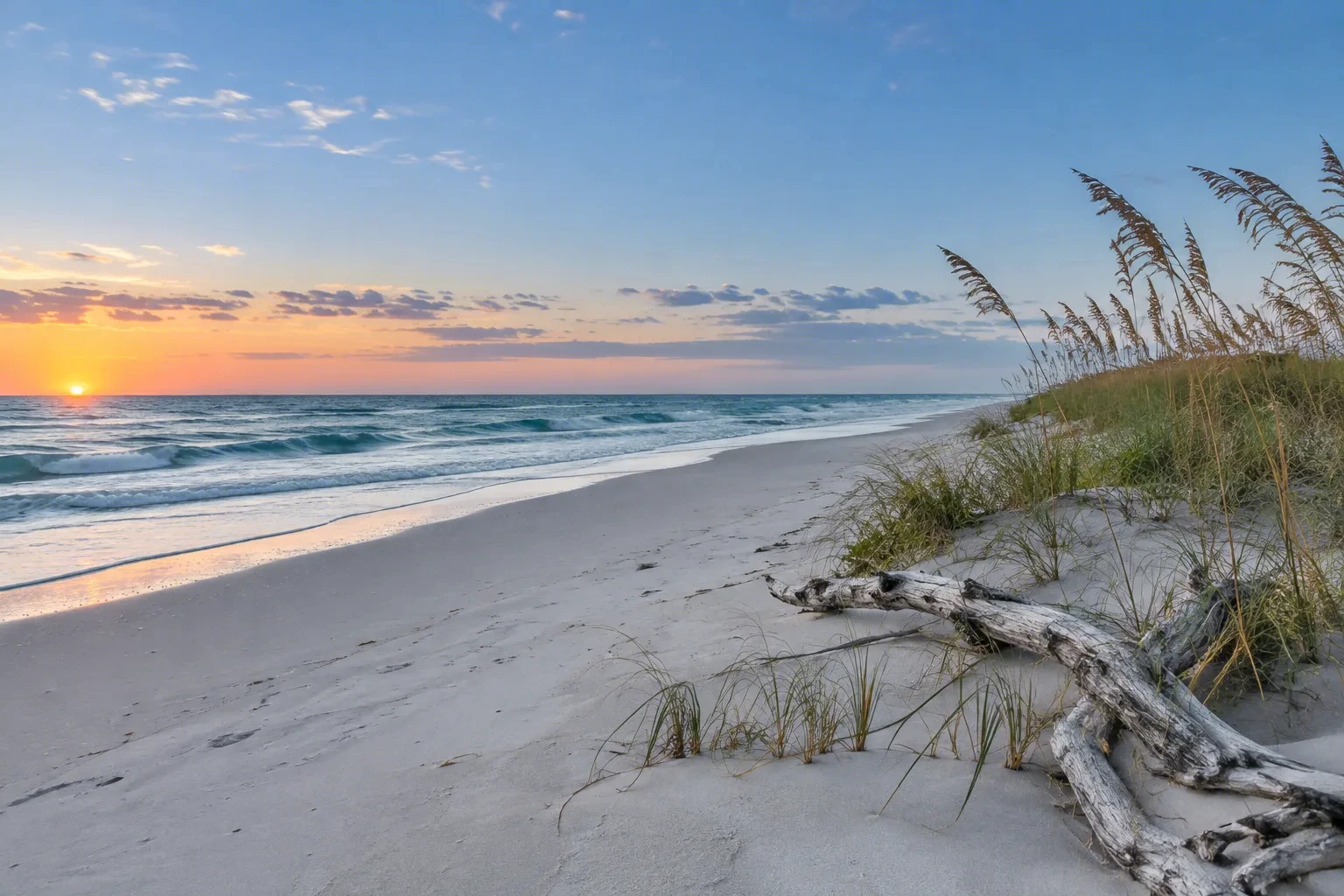
Gulf Islands National Seashore stretches across the Gulf of Mexico in Florida and Mississippi: white quartz-sand beaches, emerald coastal waters, marshes, and historic coastal forts like Fort Pickens. It protects both barrier islands and mainland sections for their nature and history. Walk the shorelines or hike the maritime forests. RV campers can set up at Fort Pickens Campground in Florida or Davis Bayou Campground in Mississippi, both offering water/electric hookups and dump stations (no individual sewer hookups).
Best season — Spring (March–May) and fall (September–November) for mild temperatures and lower humidity. Summer is hot and humid but popular for swimming.
Where can I go RV camping at Gulf Islands National Seashore?
RV camping is available at two campgrounds within Gulf Islands National Seashore: Fort Pickens Campground in Florida and Davis Bayou Campground in Mississippi. Both offer water/electric hookups and dump stations. Note that there are no individual sewer hookups. For current fees and reservations, check the official site.
- White quartz-sand beaches stretch along the Florida and Mississippi coastlines.
- Historic coastal forts like Fort Pickens tell stories of the past.
- RV campgrounds offer water and electric hookups but no individual sewer connections.
At a glance
The facts worth checking before you roll out
Conservative, source-minded facts for planning your visit — always worth confirming against current conditions before you travel.
Managing agency
National Park Service (U.S. Dept. of the Interior)
Location
Barrier islands and mainland along the Gulf of Mexico in Florida and Mississippi (sites in both states)
Signature feature
White quartz-sand beaches, emerald coastal waters, fertile marshes, and historic coastal forts (e.g. Fort Pickens)
RV camping
Available — Fort Pickens Campground (FL) and Davis Bayou Campground (MS) offer water/electric hookups and dump stations (no individual sewer hookups)
On the ground
Gulf Islands National Seashore preserves a remarkable stretch of coastline across Florida and Mississippi. This area safeguards barrier islands, mainland areas, white quartz-sand beaches, emerald waters, and fertile marshes. Historic coastal forts like Fort Pickens stand as reminders of the region’s past, making it an important destination for both natural beauty and cultural heritage.
RV travelers to Gulf Islands National Seashore primarily enjoy exploring the pristine shorelines and historic sites. The seashore offers opportunities to experience barrier island ecosystems and learn about the area's military history. Camping is available with water/electric services and dump stations, allowing visitors to establish a base for these activities within the park.
The most pleasant times to visit are spring (March–May) and fall (September–November), when temperatures are mild and humidity is lower. Summer brings warmer conditions that appeal to those seeking swimming opportunities. Planning your trip considering seasonal weather will enhance your outdoor experiences throughout this coastal preserve.
Consider establishing a basecamp in the general vicinity of the seashore, allowing for flexible exploration of both Florida and Mississippi segments. From there, RVers can easily access different sites within Gulf Islands National Seashore, enjoying its varied landscapes and historical features with convenient returns to established amenities.
Official sources
- National Park Service — Gulf Islands National Seashore National Park Service
Nearby & related
Keep planning Florida
Sourced costs, campground directories, and the places worth a detour — the next layer of Florida trip planning.
- Florida RV rental costFuel · camping · tax, sourced
- Florida RV-friendly campgroundsHookups, rig limits, booking tips
- RV rental companies in FloridaLocal hosts & outfitters, verified
- Campervan & van rentals in FloridaVan-life routes, rules & rigs
- RV rentals in FloridaPickRV Wiki · 6 min read
- Florida RV + Boat dual-vehiclePickRV Wiki · 13 min read
- BattlefieldsHallowed-ground history stops
- National memorialsMonumental road stops
Planning an RV trip near Gulf Islands National Seashore: An RV Traveler's Guide?
Was this guide helpful?