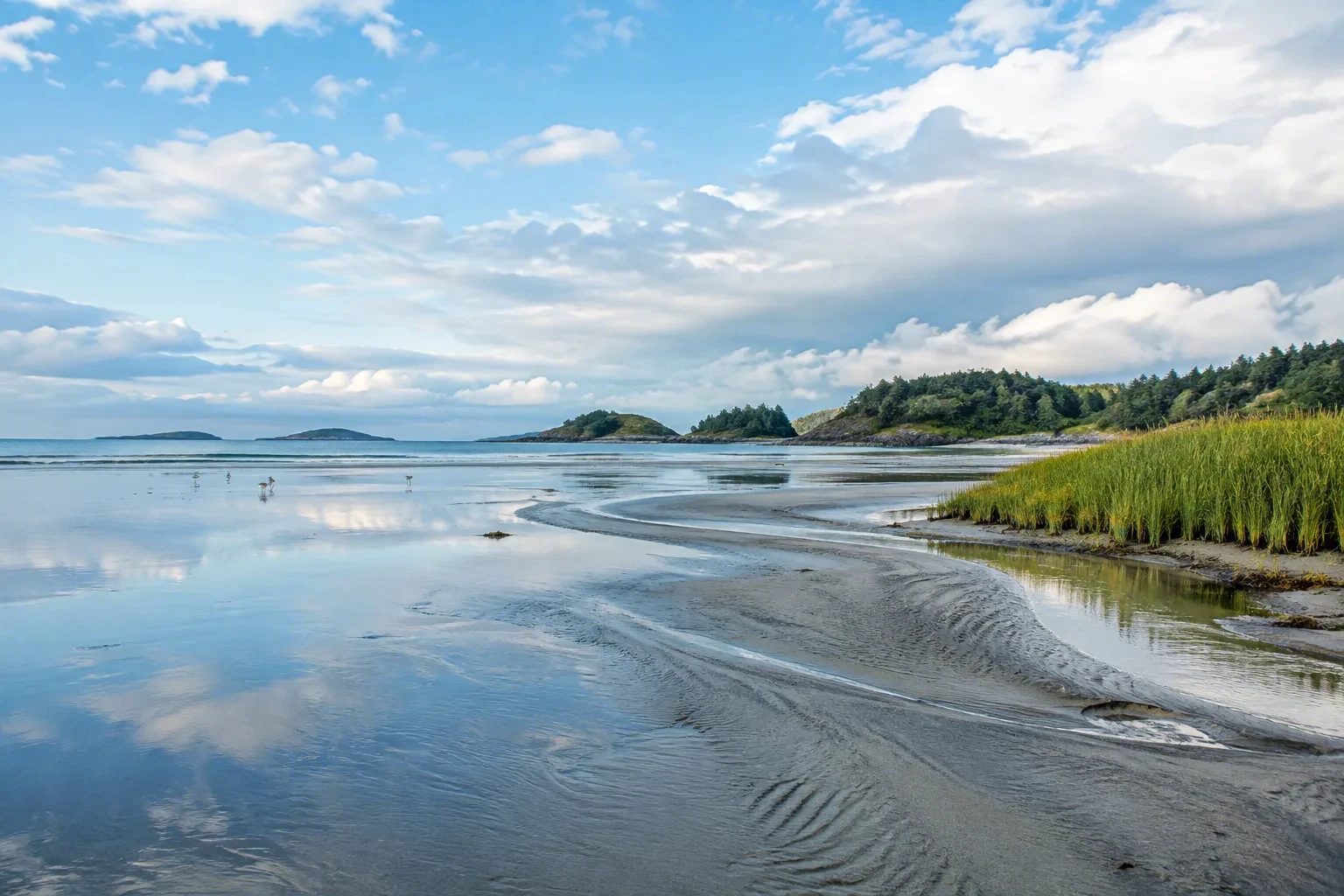
Fire Island National Seashore stretches across a dynamic barrier island off the south shore of Long Island, New York. Managed by the National Park Service, this slender strip of Atlantic Ocean beaches, shifting dunes, and the unique Sunken Forest offers a wild escape just a ferry ride from the mainland—there’s no through-road, keeping the island car-free. Watch for federally protected piping plovers nesting on the sands and explore diverse salt-marsh ecosystems. While no NPS RV campground exists on the island itself, nearby Smith Point County Park provides RV-friendly camping.
Best season — Late spring through early fall (May–October) for swimming and warm weather; fall offers fewer crowds and clear skies for stargazing on the beach.
Can you camp with an RV at Fire Island National Seashore?
There is no NPS RV campground on Fire Island. Watch Hill offers walk-in tent camping only. The nearest option for RVs and trailers is Smith Point County Park just east of the seashore.
- Barrier island off southern Long Island, accessible mainly by ferry with no through-road.
- Signature features include Atlantic beaches, the Sunken Forest, Fire Island Lighthouse, and the William Floyd Estate.
- Federally protected piping plovers nest on the beaches amid diverse salt-marsh ecosystems.
At a glance
The facts worth checking before you roll out
Conservative, source-minded facts for planning your visit — always worth confirming against current conditions before you travel.
Managing agency
National Park Service (U.S. Department of the Interior)
Location
Barrier island off the south shore of Long Island, New York; accessible mainly by ferry (no through-road along the island)
Signature features
Atlantic Ocean beaches and dunes, the Sunken Forest maritime forest, Fire Island Lighthouse, and the William Floyd Estate
Signature wildlife
Federally protected piping plovers nest on the beaches; diverse barrier-island and salt-marsh ecosystems
On the ground
Fire Island National Seashore protects a dynamic barrier island off Long Island’s south shore. Managed by the National Park Service, this slender strip of beach and dunes provides habitat for federally protected piping plovers and diverse salt-marsh ecosystems. Its unique character stems from being car-free; access is primarily via ferry, preserving a wild Atlantic landscape.
RV travelers experience Fire Island through day trips after securing accommodations elsewhere. The island offers exploration of wide beaches, the unusual Sunken Forest, and historic sites like the Lighthouse and William Floyd Estate. Shorebird observation is popular, but remember to respect nesting areas for these sensitive species.
The best time to visit extends from late spring through early fall, offering warm weather suitable for swimming. Fall brings fewer visitors and clearer night skies ideal for stargazing on the beach. The barrier island’s natural features are accessible throughout this period, providing consistent opportunities for exploration.
Plan your trip by establishing a basecamp at an RV-friendly location nearby; there is no RV camping within Fire Island National Seashore itself. From that point, utilize the ferry system to reach the island and enjoy its car-free environment, returning each evening to your RV site.
Official sources
- National Park Service — Fire Island National Seashore National Park Service
Nearby & related
Keep planning New York
Sourced costs, campground directories, and the places worth a detour — the next layer of New York trip planning.
Planning an RV trip near Fire Island National Seashore: An RV Traveler's Guide?
Was this guide helpful?