Where the river meets the tide
National Estuarine Research Reserves for RV Travelers
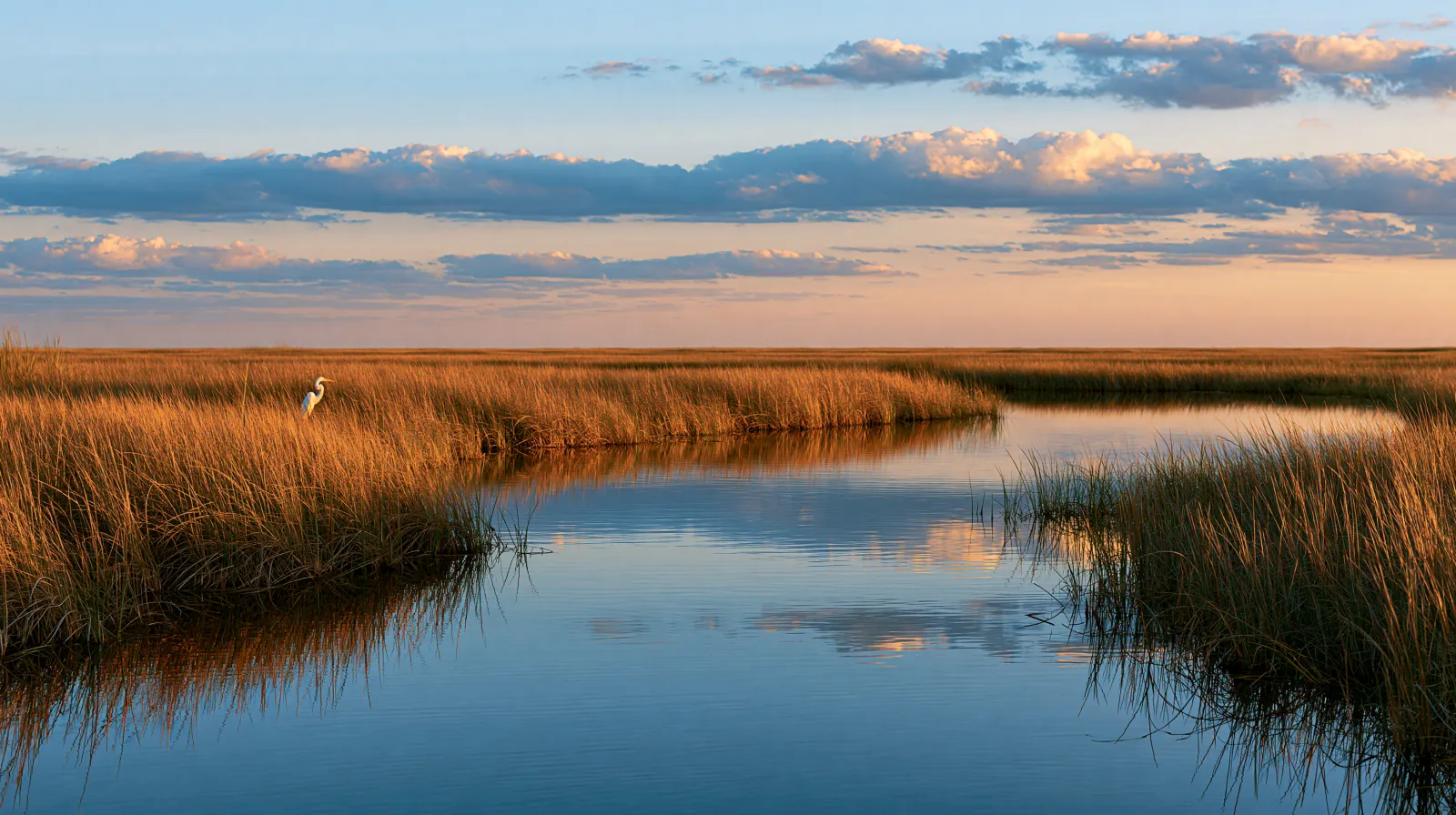
The brackish edge where freshwater rivers meet the sea — NOAA's protected estuaries, with visitor centers, boardwalks, and paddle trails through some of the richest nursery water on the coast. Each guide covers what a reserve protects, what you can walk or paddle, and where to base a rig. Facts trace to official NOAA pages.
Tides govern the paddle trails and some boardwalks — check the reserve's official page and a tide table before you go.
- 26
- Field guides
- 22
- States covered
- 26
- Official sources cited
The reserves
Every estuary reserve in the guide
Virginia
Chesapeake Bay
Virginia
Chesapeake Bay National Estuarine Research Reserve: An RV Traveler's Guide
Spanning diverse estuarine habitats, the reserve blends research, education, and outdoor recreation. Visitors find tranquil boardwalks, kayak launches, and an interpretive center. It’s a prime destination for observing waterfowl, wading birds, and the rhythms of a major estuary without leaving Virginia’s coastal plain.
Read the field guideNorth Carolina
North Carolina
North Carolina
North Carolina National Estuarine Research Reserve: An RV Traveler's Guide
A multi-site reserve along North Carolina’s coast, the NERR safeguards essential estuarine nurseries across its four sites. Visitors encounter maritime forests, upland pine hammocks, and pristine beaches, alongside opportunities to explore the dynamic edge where land meets sea. It’s a prime destination for kayaking, photography, and discovering how tides and salt gradients shape life.
Read the field guideSouth Carolina
ACE Basin
South Carolina
ACE Basin National Estuarine Research Reserve: An RV Traveler's Guide
Encompassing a vast estuarine system in the South Carolina Lowcountry, the reserve is a haven for migrating waterfowl, wading birds, and marine life. Visitors explore by kayak, boat, or on foot at public landings; interpretive programs are often available at the field station. It's a living laboratory of coastal ecology and a photographer's paradise.
Read the field guideGeorgia
Sapelo Island
Georgia
Sapelo Island National Estuarine Research Reserve: An RV Traveler's Guide
Encompassing tidal salt marsh, maritime forest, and barrier island habitats, this NOAA reserve safeguards a pristine estuarine ecosystem along the Georgia coast. The landscape shifts with immense tides, revealing mudflats rich with life and drawing osprey, egrets, and spoonbills. Visitors can experience a rare, undeveloped coastal setting reached by water.
Read the field guideFlorida
Rookery Bay
Florida
Rookery Bay National Estuarine Research Reserve: An RV Traveler's Guide
A 110,000-acre estuarine reserve in Florida, designated in 1978. It features expansive open waters and extensive mangrove forests, marshes, and uplands. Managed by the Florida DEP under NOAA, the reserve protects a rich mosaic of coastal habitats, providing a peaceful retreat for exploring Florida’s natural shoreline.
Read the field guideFlorida
Apalachicola
Florida
Apalachicola National Estuarine Research Reserve: An RV Traveler's Guide
Part of the NOAA National Estuarine Research Reserve System, this coastal treasure safeguards 234,715 acres of bay, marsh, and forest. Its waters support a productive oyster fishery and draw immense flocks of shorebirds and wading birds. A visitor center and nature trails offer easy ways to learn about the estuary, while paddling routes let you glide past spartina grass and oyster bars.
Read the field guideAlabama
Weeks Bay
Alabama
Weeks Bay National Estuarine Research Reserve: An RV Traveler's Guide
Weeks Bay NERR safeguards a productive estuarine complex along Mobile Bay. Visitors can walk an interpretive boardwalk through salt marsh and wetlands, scan for osprey and herons, and explore waterways by kayak or canoe. The visitor center explains estuary ecology and ongoing research. It’s a tranquil day-trip destination that showcases the rich aquatic life and bird habitat where freshwater meets the Gulf.
Read the field guideTexas
Mission-Aransas
Texas
Mission-Aransas National Estuarine Research Reserve: An RV Traveler's Guide
This vast estuarine system encompasses coastal marshes, oyster reefs, and wind-tidal flats, with the Bay Education Center in Rockport offering hands-on exhibits. Kayakers and anglers find miles of shallow, sheltered water. Year-round, brown pelicans and roseate spoonbills enliven the shores, while winter brings rare bird sightings to the area.
Read the field guideCalifornia
Tijuana River
California
Tijuana River National Estuarine Research Reserve: An RV Traveler's Guide
This NOAA reserve, established in 1982, safeguards a coastal lagoon system with tidal wetlands and uplands that support rich biodiversity. A mosaic of salt marsh, mudflats, dunes, and riparian corridors provides habitat for migratory birds and native wildlife. Educational programs highlight the estuary’s role in water quality, offering an accessible natural escape near the U.S.-Mexico border.
Read the field guideCalifornia
Elkhorn Slough
California
Elkhorn Slough National Estuarine Research Reserve: An RV Traveler's Guide
This 1,739-acre estuarine reserve, designated in 1979, sits along the central California coast between Monterey Bay and Watsonville. Under the stewardship of California Fish and Wildlife and NOAA, it preserves a rich mosaic of tidal channels, mudflats, and salt marshes. Accessible from Highway 1, the reserve offers a peaceful stop to experience a thriving coastal ecosystem, with ample shoreline vistas and a sense of quiet seclusion.
Read the field guideOregon
South Slough
Oregon
South Slough National Estuarine Research Reserve: An RV Traveler's Guide
Immerse yourself in a protected estuary where freshwater ponds, salt marsh, and eelgrass create a dynamic coastal landscape. Walk boardwalks or trails that reveal sweeping slough views, launch a kayak onto calm waters, or visit the interpretive center. The reserve’s blend of science and wild beauty makes it an inspiring stop for RVers exploring the southern Oregon coast.
Read the field guideWashington
Padilla Bay
Washington
Padilla Bay National Estuarine Research Reserve: An RV Traveler's Guide
A NOAA reserve spanning 11,000 acres of shallow bay and uplands, Padilla Bay safeguards the West Coast's largest contiguous eelgrass bed. Visit the Breazeale Interpretive Center for aquariums, then walk the boardwalk or paddle the calm estuary. Birders come for huge flocks of shorebirds and waterfowl, especially during spring and fall migrations. The reserve's blend of science, scenery, and solitude makes it a standout stop on Washington's scenic Chuckanut Drive.
Read the field guideMassachusetts
Waquoit Bay
Massachusetts
Waquoit Bay National Estuarine Research Reserve: An RV Traveler's Guide
Waquoit Bay NERR is a 2,804-acre coastal reserve protecting salt marshes, barrier beaches, and the bay on Cape Cod’s south shore. Its boardwalks and paddling routes offer immersive ways to experience the estuary up close, while barrier beaches provide wild, car-free shoreline accessible by boat. The visitor center explains the reserve’s research on water quality and climate adaptation. A quiet destination for birders, paddlers, and anyone seeking unspoiled Cape Cod shoreline.
Read the field guideMaine
Wells
Maine
Wells National Estuarine Research Reserve: An RV Traveler's Guide
Designated in 1984, the reserve spans 2,250 acres of diverse habitats including salt marsh, freshwater wetlands, forests, fields, and a sandy beach. These environments are home to rare species like least terns and piping plovers. Managed by Wells Reserve Management Authority in partnership with NOAA, it’s a peaceful coastal preserve ideal for nature appreciation.
Read the field guideNew Jersey
Jacques Cousteau
New Jersey
Jacques Cousteau National Estuarine Research Reserve: An RV Traveler's Guide
Nestled within the New Jersey Pinelands near Tuckerton, the reserve safeguards a rare, largely unspoiled mosaic of salt marsh, tidal creek, and maritime forest along the Mullica River-Great Bay estuary. With less than one percent human development, it remains a serene haven for wildlife and a peaceful destination for nature observation. Visitors can immerse themselves in a resilient coastal ecosystem, where the rhythms of tides reveal thriving habitats easily appreciated by quiet exploration.
Read the field guideNew York
Hudson River
New York
Hudson River National Estuarine Research Reserve: An RV Traveler's Guide
A network of four publicly accessible tidal wetlands, the reserve spans marshes, wooded swamps, and shallows that change with the tides. Boardwalks, hiking trails, and paddle launches give visitors an intimate look at the Hudson’s freshwater estuary, while interpretive signs and a research center at Piermont explain its ecological importance. The sites are known for eBird hotspots and quiet paddling routes away from river traffic.
Read the field guideRhode Island
Narragansett Bay NERR
Rhode Island
Narragansett Bay NERR: An RV Traveler's Guide
Designated in 1980 and managed by the Rhode Island Department of Environmental Management within NOAA’s reserve system, this is a walking, birding and paddling landscape rather than a driving one. Trails and the Lab and Learning Center sit toward the island’s south end, roughly four miles from the Homestead ferry landing. Camping is prohibited on reserve property and there is no lodging, so visits are day trips built around the ferry schedule.
Read the field guideNew Hampshire
Great Bay
New Hampshire
Great Bay National Estuarine Research Reserve: An RV Traveler's Guide
A 10,235-acre living laboratory, this reserve preserves a mosaic of estuarine habitats—salt marsh, mudflats, eelgrass beds, and rocky shores—where upland forests and fields meet the tides. It protects New Hampshire’s largest estuarine system, including Great Bay, Little Bay, and five tidal rivers. Birders and nature lovers find a serene escape with abundant wildlife and views across wide, shifting waters.
Read the field guideDelaware
Delaware
Delaware
Delaware National Estuarine Research Reserve: An RV Traveler's Guide
A NOAA-protected gem, this reserve safeguards tidal wetlands vital to migratory birds, horseshoe crabs, and juvenile fish. Explore St. Jones River by kayak, stroll the boardwalk through salt marsh, and learn about estuary research at the visitor center. The vast skies and quiet waters make it a peaceful, wildlife-rich escape for RV travelers exploring Delaware’s coastal side.
Read the field guideOhio
Old Woman Creek
Ohio
Old Woman Creek National Estuarine Research Reserve: An RV Traveler's Guide
This cherished freshwater estuary on Lake Erie’s southern shore in Ohio offers a rare glimpse of an intact Great Lakes coastal wetland. Co-managed by NOAA and Ohio DNR, the 573-acre reserve protects diverse habitats. Visitors can explore the natural landscape and learn about estuarine ecology. No camping on-site, but nearby state parks welcome RVs.
Read the field guideWisconsin
Lake Superior
Wisconsin
Lake Superior National Estuarine Research Reserve: An RV Traveler's Guide
The reserve spans the St. Louis River estuary, a large freshwater estuary on the Great Lakes. Miles of paddle trails and boardwalks wind through expansive wetlands that shelter diverse birds, fish, and native plants.
Read the field guideMississippi
Grand Bay
Mississippi
Grand Bay National Estuarine Research Reserve: An RV Traveler's Guide
A coastal reserve of salt marshes and bayous along the Mississippi Gulf Coast, Grand Bay NERR blends scientific research with public discovery. Visitors can experience pristine wetlands and abundant birdlife, including herons, egrets, and bald eagles. With its tranquil beauty and exceptional birding, this NOAA reserve offers RV travelers an off-the-beaten-path coastal experience steeped in natural wonder.
Read the field guideFlorida
Guana Tolomato Matanzas
Florida
Guana Tolomato Matanzas National Estuarine Research Reserve: An RV Traveler's Guide
A coastal reserve near St. Augustine protecting over 73,000 acres of salt marsh, tidal rivers, and pristine beach. Trails wind through oak hammocks and dunes, offering birding, kayaking, and sweeping views where the Guana, Tolomato, and Matanzas rivers meet the Atlantic. RV travelers can park at the day-use lot to explore, then retreat to nearby campgrounds.
Read the field guideCalifornia
San Francisco Bay
California
San Francisco Bay National Estuarine Research Reserve: An RV Traveler's Guide
A partnership reserve protecting 3,710 acres of tidal wetlands and uplands at two distinct sites. Visitors find wheelchair-accessible boardwalks through pickleweed marshes, kayak launches, and interpretive trails. The reserve serves as a living laboratory for estuarine science, research and education programs, and a vital stopover for shorebirds and waterfowl on the Pacific Flyway.
Read the field guideAlaska
Kachemak Bay
Alaska
Kachemak Bay National Estuarine Research Reserve: An RV Traveler's Guide
Cold, nutrient-rich waters sustain a vast coastal reserve encompassing 372,000 acres and over 320 miles of shoreline with tidewater glaciers, seabird colonies, sea otter rafts, and salmon-filled creeks. Visitors explore by boat or on foot, discovering dramatic tidal shifts, beaches, wetlands, and mountain views. A local visitor center provides insights into the largest estuarine reserve in the national system.
Read the field guideHawaii
Heʻeia
Hawaii
Heʻeia National Estuarine Research Reserve: An RV Traveler's Guide
A 1,385-acre estuarine reserve on windward Oʻahu, managed by NOAA in partnership with the University of Hawaiʻi Institute of Marine Biology. It encompasses upland areas, the Heʻeia stream, coral reefs, and sand flats, offering habitat for endangered Hawaiian stilt, moorhen, coot, duck, and hoary bat. Visitors can kayak, spot wildlife, and enjoy views across Kaneʻohe Bay. Check the official site for current access and activities.
Read the field guide
Along the brackish edge
Estuary country, state by state
Estuarine reserves ring the coasts where rivers fan into the sea — barrier-island lagoons, tidal marshes, and river mouths. Pick a state to see RV rentals and what shares the water.
Chasing tidal marsh and quiet paddle trails this season?