
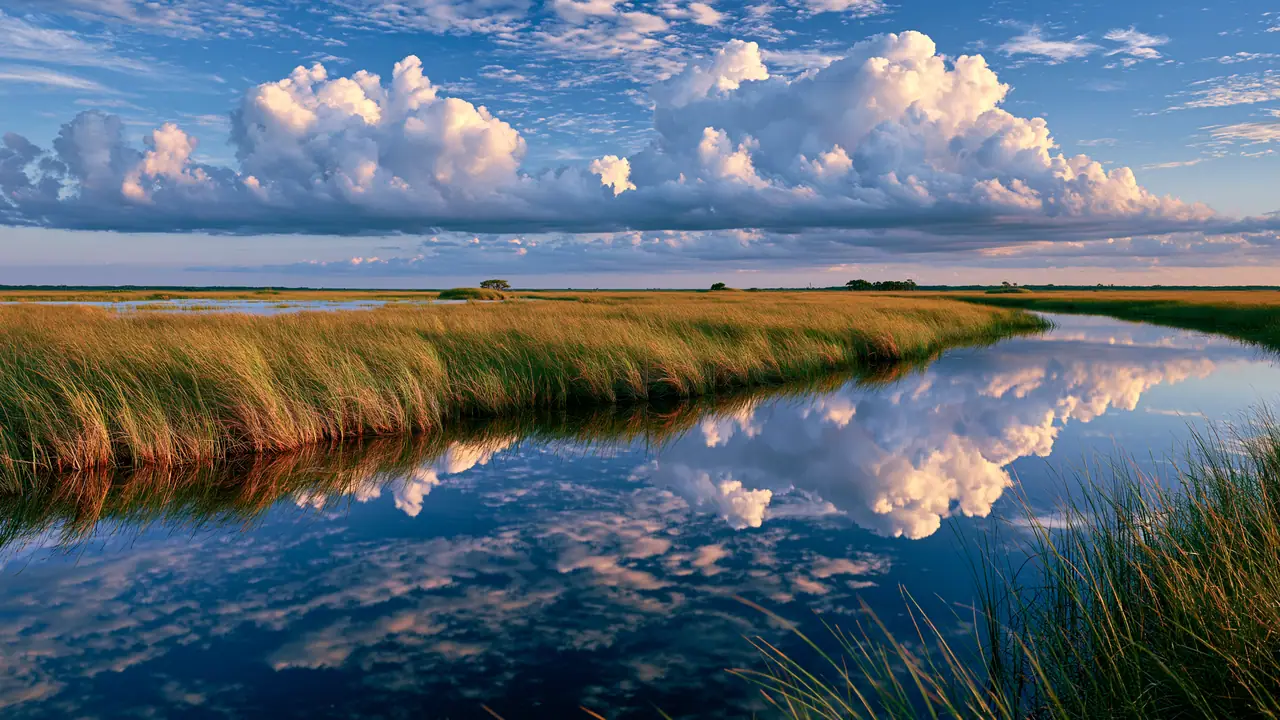
The Apalachicola National Estuarine Research Reserve protects a vast expanse of Apalachicola Bay and its surrounding floodplain, salt marshes, and uplands. This 234,715-acre reserve is a highly productive estuarine system, known for its wild oyster beds and as a crucial stopover for migratory birds. For RV travelers, it offers a calm coastal destination with boardwalks through maritime forests, paddle trails along tidal creeks, and a visitor center exploring the region's ecology and working waterfront heritage.
Best season — Fall through spring bring mild weather and peak bird migrations, while summer is hot and humid.
Why is Apalachicola NERR a must-visit for RV travelers?
The reserve combines a wild, undeveloped coastline with rich ecological diversity. RVers can base camp nearby and spend days kayaking calm tidal creeks, birdwatching on remote beaches, and learning about the bay's legendary oyster industry at the nature center. The quiet roads and waterfront towns make it a relaxing Gulf Coast retreat.
- Protects 234,715 acres of Apalachicola Bay and surrounding wetlands.
- Established in 1979 as part of the NOAA National Estuarine Research Reserve System.
- Managed by the Florida Department of Environmental Protection.
At a glance
The facts worth checking before you roll out
Conservative, source-minded facts for planning your visit — always worth confirming against current conditions before you travel.
Managing agency
Florida Department of Environmental Protection (part of the NOAA National Estuarine Research Reserve System)
State
Florida
Established
1979
Size
234,715 acres
On the ground
The Apalachicola National Estuarine Research Reserve safeguards 234,715 acres encompassing bay waters, salt marshes, and upland forests. Established in 1979 as part of the NOAA network and managed by Florida’s Department of Environmental Protection, it's a highly productive estuarine system. Its importance stems from preserving wild oyster beds and providing habitat for migratory birds along the Gulf Coast.
RV travelers can experience this reserve through several accessible activities. Boardwalk trails offer exploration of maritime forests, while designated paddle routes allow leisurely journeys through tidal creeks among spartina grass and oyster bars. The visitor center provides educational exhibits detailing the region’s ecology and its working waterfront heritage for a deeper understanding.
The optimal time to visit falls between fall and spring when mild temperatures coincide with peak migratory bird activity. Summer months bring hotter, more humid conditions. Planning around these seasons can enhance wildlife viewing opportunities and overall comfort during outdoor activities within the expansive 234,715-acre reserve.
Consider establishing a basecamp in the general area to explore the Apalachicola National Estuarine Research Reserve at your own pace. From this location, RVers can easily access the visitor center and launch points for paddling or hiking. Days spent observing wildlife and learning about the bay’s ecosystem create a relaxing coastal experience.
Official sources
- NOAA — Apalachicola National Estuarine Research Reserve Government source
Nearby & related
Keep planning Florida
Sourced costs, campground directories, and the places worth a detour — the next layer of Florida trip planning.
- Florida RV rental costFuel · camping · tax, sourced
- Florida RV-friendly campgroundsHookups, rig limits, booking tips
- RV rental companies in FloridaLocal hosts & outfitters, verified
- Campervan & van rentals in FloridaVan-life routes, rules & rigs
- RV rentals in FloridaPickRV Wiki · 6 min read
- Florida RV + Boat dual-vehiclePickRV Wiki · 13 min read
- National grasslandsWide-open prairie drives
- LighthousesCoast-road waypoints
Planning an RV trip near Apalachicola National Estuarine Research Reserve: An RV Traveler's Guide?
Was this guide helpful?