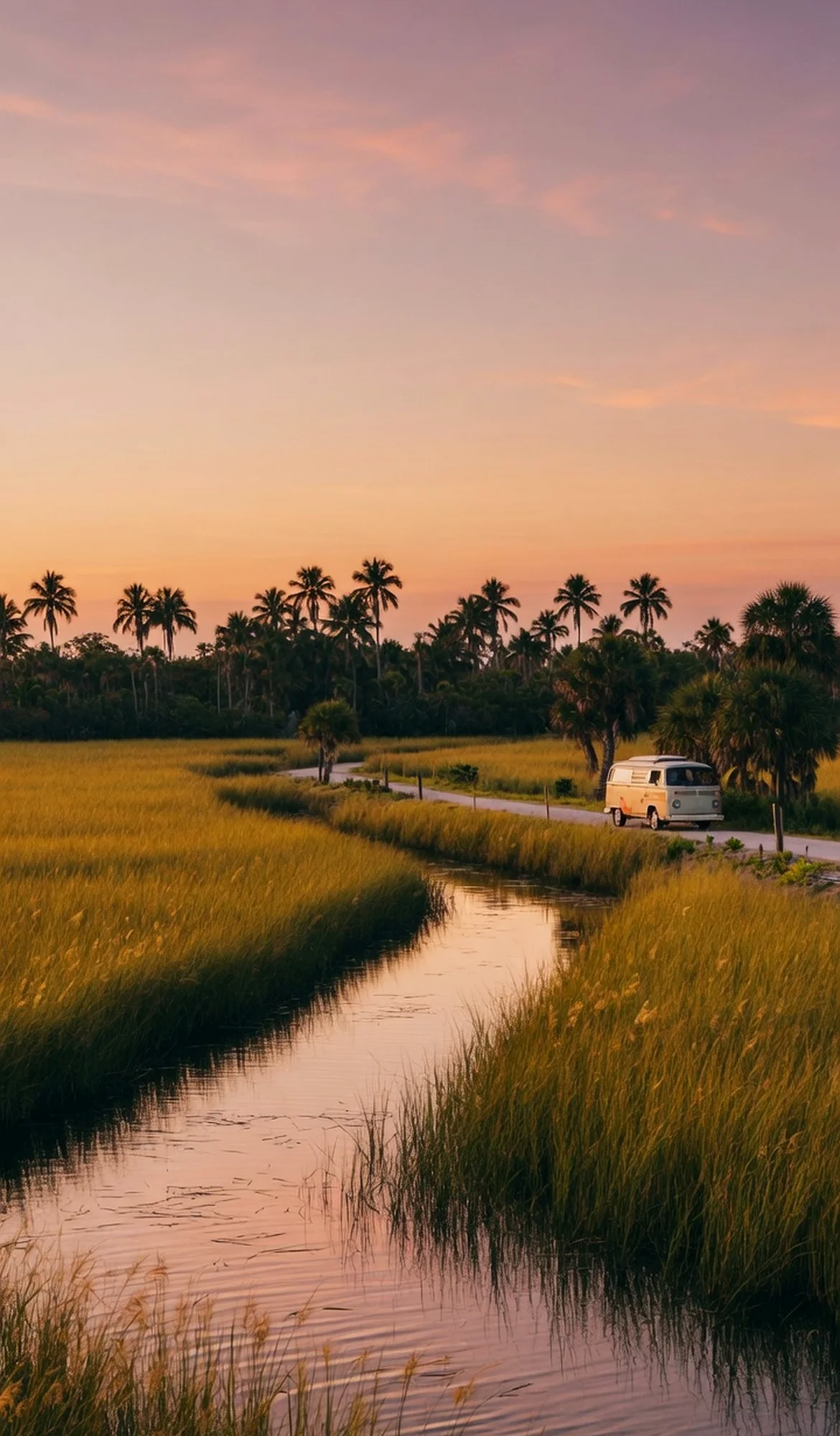
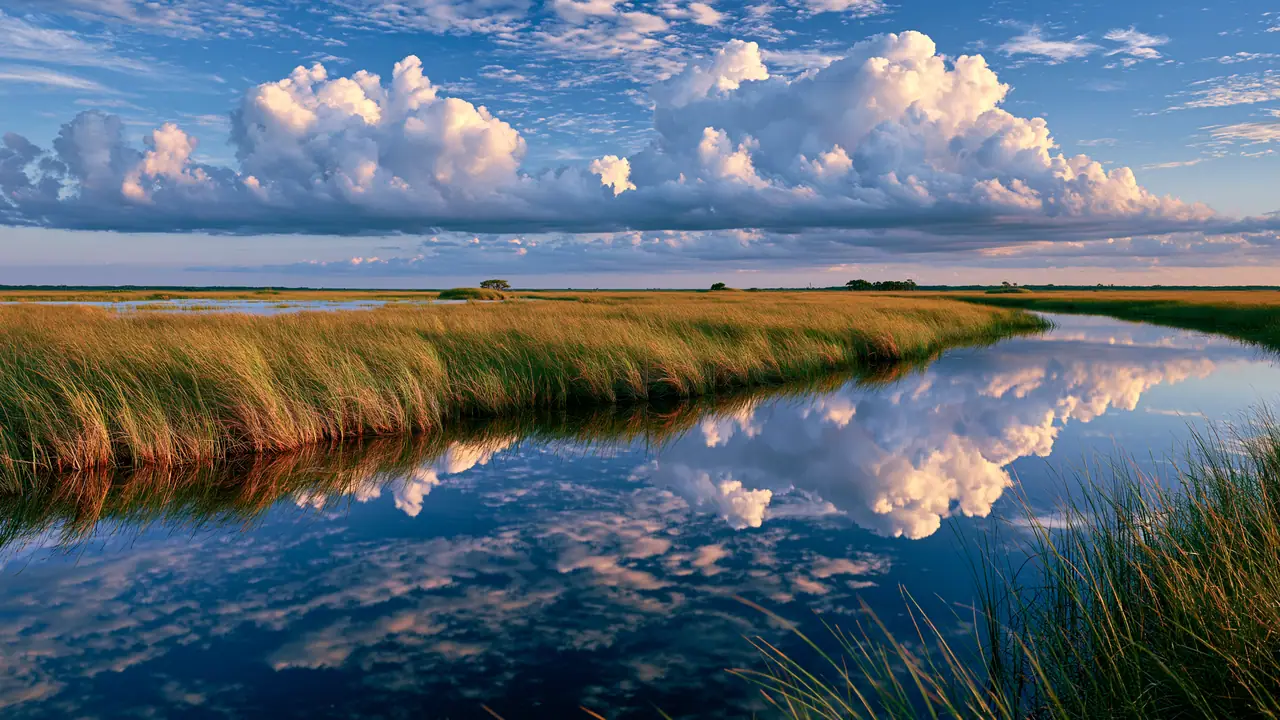
The Guana Tolomato Matanzas National Estuarine Research Reserve protects a sprawling mosaic of salt marsh, tidal creeks, maritime hammocks, and coastal dunes along Florida’s northern Atlantic coast. Just north of St. Augustine, this living laboratory safeguards the confluence of the Guana, Tolomato, and Matanzas rivers. Visitors can paddle serene waterways, hike miles of wild beachfront, and watch for roseate spoonbills, dolphins, and manatees. The reserve’s Environmental Education Center introduces the estuary’s ecology and cultural history, making it a vibrant stop for nature-loving RV travelers seeking an authentic coastal Florida experience.
Best season — Fall through spring brings mild temperatures and excellent birding; summer offers lush greenery and warm-water paddling but higher humidity and insects.
What can I do at Guana Tolomato Matanzas National Estuarine Research Reserve?
Explore tidal creeks by kayak, hike miles of beach and dune trails, and observe wading birds, dolphins, and manatees in a protected coastal landscape. The Environmental Education Center offers interactive exhibits and guided programs on estuary ecology.
- Paddle the Guana River and Tolomato River waterways
- Walk the beach and dune trails for shorebird sightings
- Visit the Environmental Education Center to learn about estuarine ecology
At a glance
The facts worth checking before you roll out
Conservative, source-minded facts for planning your visit — always worth confirming against current conditions before you travel.
Managing partner
Co-managed by NOAA's National Estuarine Research Reserve System and the Florida Department of Environmental Protection
State
Florida (St. Johns and Flagler counties, Atlantic coast)
Year designated
1999
Defining characteristic
Northernmost extent of mangrove habitat on the U.S. east coast; features some of Florida's highest dunes (30 to 40 feet); official page states it protects 76,760 acres
On the ground
The Guana Tolomato Matanzas National Estuarine Research Reserve is a protected area safeguarding Florida’s Atlantic coast. Co-managed by NOAA and the Florida Department of Environmental Protection, it preserves over 76,760 acres of salt marsh, tidal creeks, and dunes. This reserve protects where the Guana, Tolomato, and Matanzas rivers meet the ocean, functioning as a vital ecological resource.
RV travelers can access this coastal landscape via a day-use parking area to explore on foot or by water. Paddling opportunities exist along the Guana River and Tolomato River waterways. Miles of beachfront and dune trails provide views and birding prospects. The Environmental Education Center offers insights into estuary ecology for interested visitors.
The best time to visit is during fall through spring, when mild temperatures support excellent birdwatching. Summer months bring lush vegetation and warm water suitable for paddling, though higher humidity and insects are present. This reserve experiences a unique climate as the northernmost extent of mangrove habitat on the U.S. east coast.
Consider establishing a basecamp in the area near St. Augustine to explore the Reserve. After experiencing the trails and waterways, returning to nearby accommodations provides comfort and convenience. The Reserve offers a chance to connect with authentic coastal Florida while enjoying outdoor recreation.
Official sources
- NOAA — Guana Tolomato Matanzas National Estuarine Research Reserve Government source
Nearby & related
Keep planning Florida
Sourced costs, campground directories, and the places worth a detour — the next layer of Florida trip planning.
- Florida RV rental costFuel · camping · tax, sourced
- Florida RV-friendly campgroundsHookups, rig limits, booking tips
- RV rental companies in FloridaLocal hosts & outfitters, verified
- Campervan & van rentals in FloridaVan-life routes, rules & rigs
- RV rentals in FloridaPickRV Wiki · 6 min read
- Florida RV + Boat dual-vehiclePickRV Wiki · 13 min read
- National recreation areasBig-water recreation guides
- National grasslandsWide-open prairie drives
Planning an RV trip near Guana Tolomato Matanzas National Estuarine Research Reserve: An RV Traveler's Guide?
Was this guide helpful?