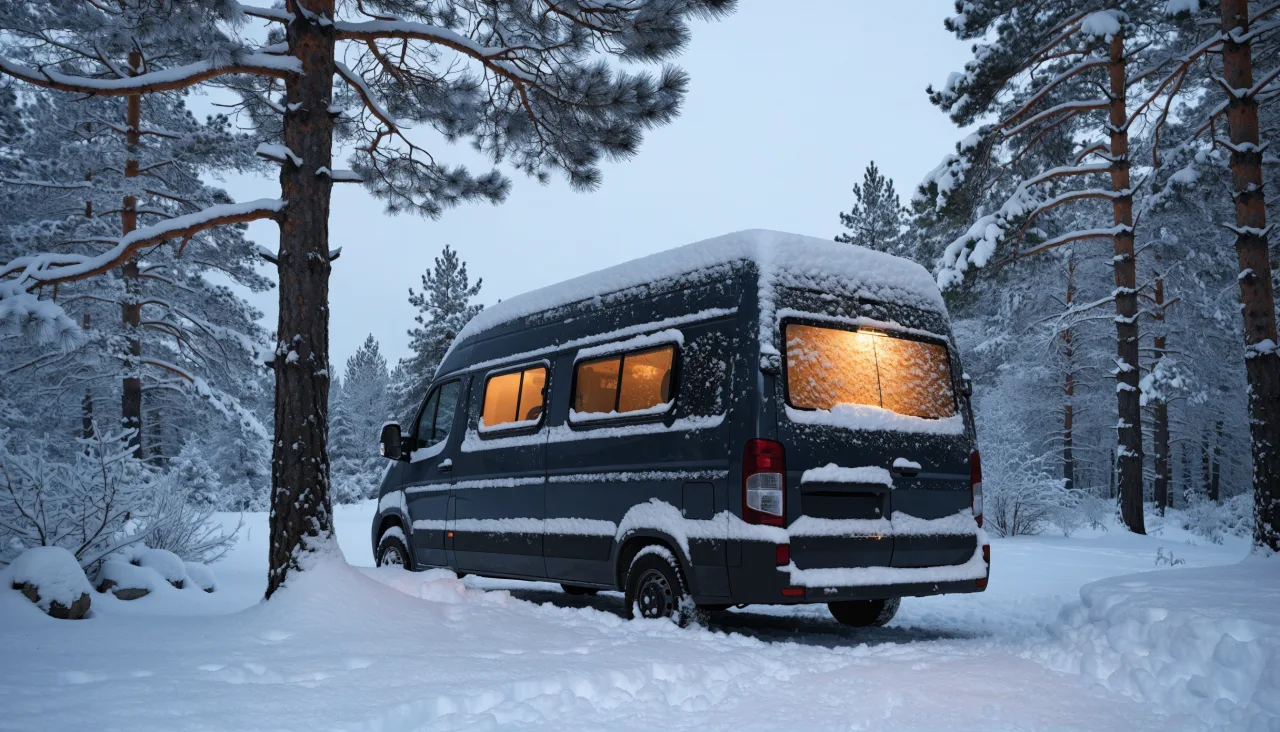
The difference between a comfortable winter camp and a $5,000+ repair bill is the actual design low temperature at your specific elevation and site, combined with effective skirting, tank protection, and a reliable heat source sized for multi-day cold snaps.
Design temperatures and micro-climates (NOAA NCEI normals and elevation effects)
NOAA's 1991–2020 U.S. Climate Normals provide the standard reference for 'design temperatures' — the cold temperatures a system should be expected to handle. These are not record lows but the values exceeded only a small percentage of the time (1% or 0.4% design dry-bulb for heating). For RV planning, the 1% design low for your camping latitude and elevation is a realistic planning number for the coldest nights you are likely to experience in a typical winter.
Elevation is the dominant variable in the West. A site at 2,000 ft can have design lows 10–20 °F warmer than a site 50 miles away at 8,000 ft. NOAA station data and interpolation tools (or state climate office summaries) give the numbers. Micro-climates — cold air drainage into valleys, radiative cooling on clear calm nights, or wind exposure on ridges — can make the rig 5–15 °F colder than the official station a few miles away. Plan for the worst micro-climate you are likely to use.
Long-term normals do not prevent 'once in a generation' arctic outbreaks. The 2021 Texas freeze and periodic plains/mountain events show that even mild-normal areas can see multi-day periods well below the 1% design low. Skirting, heat tape, and tank heaters sized only for 'normal' winters will be overwhelmed. Data as of June 2026 — always pull the nearest NOAA/NCEI or state climate office design low for your exact elevation and planned sites, add a safety margin for micro-climate and extremes, and size protection accordingly.
Wind chill affects perceived temperature and increases heat loss from the rig but does not change the actual air temperature the plumbing and tanks experience. Clear, calm nights with radiative cooling are often the coldest for the rig even if the 'feels like' number is not the lowest.
Water, waste and tank protection — antifreeze, heat tape, skirting and bypass strategies
The most common expensive cold-weather failure is frozen or burst fresh, gray, or black tanks and lines. Tanks are often in exposed underbelly compartments with large surface area and thin insulation. Even with skirting, wind and radiative cooling can drop tank temperatures below 32 °F when ambient is only a few degrees below freezing.
Two main strategies: (1) winterize with non-toxic RV antifreeze (propylene glycol) using the bypass kit to protect the pump, water heater, and lines when the rig will be unoccupied or power is unreliable; (2) keep systems 'live' with thermostatically controlled heat tape on exposed pipes, electric or forced-air tank heaters, and effective skirting/insulation so the rig can be used without draining. Many full-timers use a hybrid — antifreeze when leaving the rig for days, heat-tape + skirt when living in it.
Heat tape and tank heaters require reliable power (shore, generator, or solar + battery sized for continuous load). Use only tape/pads listed for RV or pipe use, installed per instructions (no overlap, correct side of insulation, GFCI where required). 12 V and 120 V options exist; match to your power budget. Data as of June 2026 — always verify the specific tape/pad is rated for the application and that your inverter/charger and battery bank can support the continuous wattage plus furnace and other loads in cold weather.
Black and gray tanks are harder to protect than fresh (larger volume, more exposed dump valves and pipes). Some owners add small tank heaters or aim a small space heater (safely) inside a well-sealed skirt at the tanks. Others simply do not use the tanks in sub-freezing weather and rely on portable toilets or facility dumps. Antifreeze in tanks protects against freezing but requires proper dilution, dumping, and flushing when weather warms. Never use automotive antifreeze.
Skirting, underbelly insulation and air sealing for real heat retention
Good skirting with sealed top edge to the rig and bottom edge to the ground (or ground skirt) can raise underbelly temperature 15–30+ °F above ambient on calm nights, dramatically cutting heat loss from tanks, lines, and the floor. Rigid foam board, reflective bubble, or commercial RV skirting systems all work; the seal quality matters more than the material. Vents and access panels must remain for combustion air, exhaust, and service.
The underbelly itself is often the weak point — thin material or large openings for tanks and wiring. Adding insulation (rigid foam or fiberglass with vapor retarder) above the tanks and lines, plus sealing penetrations with expanding foam or tape, multiplies the benefit of skirting. Slide-out floors and walls are common thermal bridges; temporary interior insulation panels or heavy curtains help when slides are extended.
Windows and doors are the largest single source of heat loss in most RVs. Heavy curtains, reflective interior window insulation, and minimizing open windows/doors make a measurable difference. Some owners add shrink-film interior storms or magnetic panels for the worst months. Data as of June 2026 — always verify that added insulation or skirting does not block required combustion air, exhaust, or access, and complies with any park or field office rules for skirting appearance or fire safety.
In snow country, skirting must be designed or removed before heavy snow loads accumulate against it, and must not trap moisture against siding or underbelly. In high-wind areas it must be securely anchored. These are practical ownership details that affect both immediate comfort and long-term rig durability.
Furnace, supplemental heat, propane planning and power budget in real cold
Most RV furnaces (20k–40k BTU) will run near-continuously in single-digit or sub-zero temperatures on a poorly skirted rig and may still struggle to maintain comfortable temps, especially with slides extended. High-altitude orifice kits are required above ~4,500–5,000 ft for proper combustion and efficiency on many models.
Heat pumps lose capacity and efficiency below ~35–40 °F and often switch to power-hungry resistance strips. In cold weather the power budget (shore, generator, or inverter) becomes the limiter more than the heat source rating. Supplemental catalytic or infrared propane heaters, or a small diesel heater, can offload the main furnace and reduce propane use, but all combustion heaters require proper ventilation and functioning CO detection.
Propane consumption can reach 2–4+ gallons per day for the furnace alone in single-digit temps on a poorly protected rig. Plan tank capacity, refill strategy (or delivered propane), and conservation (good skirting + supplemental heat + lower thermostat at night). Data as of June 2026 — track your actual usage in real conditions at your planned elevations and temperatures; 'normal' winter numbers do not apply to extremes.
Power for heat tape, tank heaters, furnace fan, and lights must be budgeted. A modest solar array + battery that works in summer may be insufficient for continuous heat loads in winter. Generator or shore power is often the reliable backup for extended cold. Never run combustion heaters without adequate ventilation and CO alarms.
Frequently asked questions
Do I need to winterize with antifreeze if I have heat tape and skirting?›
It depends on whether the rig will be occupied and heated continuously with reliable power. If you are living in it and the protection is powered and effective, many owners run 'live.' If the rig will be unoccupied for days or power is uncertain, winterizing with RV antifreeze (bypassing pump and water heater) is the safer default. Have a backup plan for power loss. Data as of June 2026 — verify your system's freeze protection limits.
How much will good skirting actually raise underbelly temperature?›
Well-sealed skirting with top and bottom closure can raise underbelly temps 15–30+ °F above ambient on calm nights. Poorly sealed or short skirting provides far less benefit. Combine with underbelly insulation above tanks and heat tape on exposed lines for best results. Test in real conditions before relying on it for long stays. Data as of June 2026 — results vary with wind, sky cover, and seal quality.
Are there BLM or USFS rules about skirting or heat tape in cold weather?›
Skirting rules are usually aesthetic, fire-safety, or wildlife-related and vary by field office or campground. Some require removable or vented skirting or prohibit it in certain seasons. Heat tape is generally allowed if installed safely and not creating a fire hazard. Check the specific area rules before installing permanent-looking skirting. Data as of June 2026 — verify with the local office.
How much propane should I expect in real single-digit or sub-zero weather?›
On a poorly skirted rig the furnace alone can consume 2–4+ gallons per day. Good skirting, supplemental heat, and conservation lower it significantly. Plan tank capacity and refill strategy (or delivered propane) for your actual rig and conditions. Track usage in real winter conditions at your elevations. Data as of June 2026 — 'normal' winter numbers do not cover extremes.
What is the single most common expensive cold-weather RV failure?›
Frozen or burst water, gray, or black tanks and lines from inadequate protection. Even 'minor' leaks or a single night below the protection threshold can cause delamination, rot, or tank damage costing thousands. Effective skirting + tank/line heat + reliable power (or proper winterizing) prevents the vast majority. Data as of June 2026 — prevention is far cheaper than repair.
Continue your research on PickRV
Sources
- 1.NOAA NCEI 1991–2020 U.S. Climate Normals (design temperatures by location and elevation)NOAA NCEIgovernment or university source
- 2.NREL resources on temperature effects on PV and battery systems (applicable to winter power and heat budgets)NRELgovernment or university source
- 3.BLM and USFS recreation and fire restriction guidance (cold-weather camping, skirting, fire rules)BLM / USFSgovernment or university source
- 4.State climate office and NOAA summaries for western and northern design lows and extremesNOAA / State Climate Officesgovernment or university source
- 5.RVIA and manufacturer cold-weather operation and winterization guidance (cross-referenced with agency data)RVIAcompany or industry source
- 6.EPA and state guidance on antifreeze and RV waste handling in cold weatherEPA / State Agenciesgovernment or university source
- 7.ABYC / RVIA context for electrical and propane systems in cold weather (heat tape, ventilation, CO)RVIA / ABYCcompany or industry source
- 8.NWS and NOAA winter preparedness for mobile and remote locations (power, heat, extreme cold)NOAA / NWSgovernment or university source
Sources are a mix of government and university publications and the company or industry documentation for the specific equipment, store policy or standard discussed — each row above says which one it is, so you can weigh it yourself. Last verified 2026-06-06. Report broken links to support@pickrv.com.
Ready to roll?
Pick a rig. Write the road.
Complete nightly price on every listing — your exact total itemized before you pay · 48h full rental refund. Every rig near you, one checkout.
Related reads
Plan around this guide · 3
Hub anchors · mega-guides · cost calculator — one click each.
Related on PickRV
Tell us when you want to travel.
Owners list their own rigs on PickRV. Add your dates and we'll email you when one is listed for them — nothing else, no spam.
Was this guide helpful?