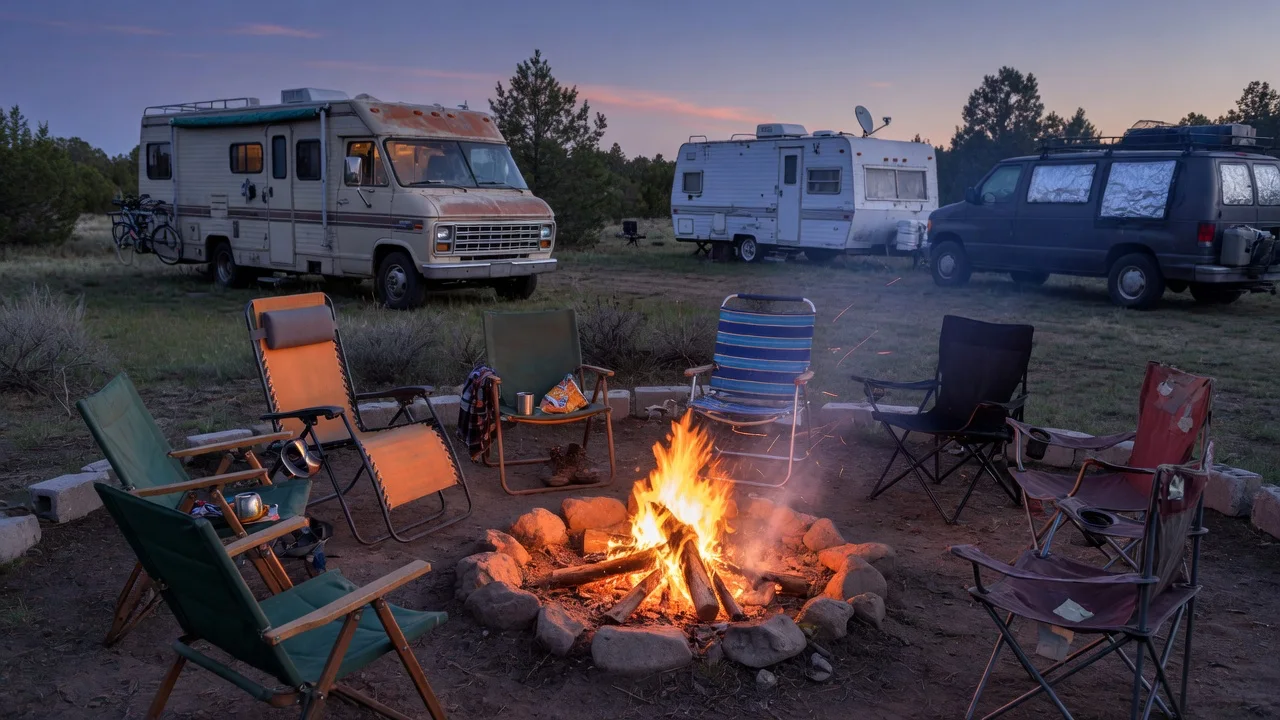
Group size limits, reservation windows, and fire restrictions are set by the specific site and the managing agency, not by a single national rule — and they can change with drought, fire danger, or administrative order with little notice.
Agency-specific rules and where to find the authoritative source (USFS, BLM, NPS, Recreation.gov)
Group camping on federal public land is managed by the specific agency and often the specific district or site. The U.S. Forest Service (USFS), Bureau of Land Management (BLM), and National Park Service (NPS) each have their own regulations, and individual forests, field offices, and parks add site-specific rules. There is no single 'group size limit' that applies nationwide.
For USFS, group size limits and reservation requirements are typically in the forest or district order or on the specific campground page. Many developed campgrounds have group sites that can be reserved through Recreation.gov; dispersed group camping may have different limits or require a permit. Fire restrictions (stage 1, stage 2, or full closure) are issued by forest or district and can change daily during fire season.
For BLM, group size and permit requirements are often in the resource management plan or a specific recreation area management plan. Some popular areas (e.g., certain river corridors or OHV areas) have group size caps or require permits for groups above a certain size. Fire restrictions are issued at the field office or state level and are posted on the BLM state or field office website.
For NPS, group camping is often limited to designated group sites in developed campgrounds, with size limits set by the park. Backcountry or wilderness group size limits are in the park's compendium or wilderness management plan (often 6–12 people depending on the park and zone). Fire restrictions and closures are park-specific and can be more restrictive than surrounding federal land. Data as of June 2026 — always verify current group size limits, reservation requirements, fire restrictions, and any permit needs on the specific agency's site or Recreation.gov for the exact campground or area you plan to use, and check again close to your travel date.
Reservation systems, walk-up availability and timing
Recreation.gov is the primary reservation platform for many USFS, BLM, and some NPS developed campgrounds and group sites. Reservations typically open 6 months in advance for most sites, with some high-demand group sites opening earlier or having a lottery. Group sites often have a minimum number of nights or a minimum group size and may have higher fees than individual sites.
Walk-up availability for group sites is limited and unpredictable, especially on weekends and holidays in popular areas. Some group sites can be reserved only as a whole; others may have a 'group' designation but can be used by smaller parties if not reserved. If you are planning a group trip, assume you will need a reservation and have a backup plan (smaller sites, dispersed camping if allowed and legal for your group size, or a different area).
Some popular dispersed areas or 'first-come' group sites have informal or formal queuing systems or host volunteers who manage occupancy. These are not reservations and do not guarantee a spot. Data as of June 2026 — always check Recreation.gov and the specific agency's site for the current reservation window, fees, and any special rules for the group site or area, and have a Plan B that complies with the rules for your actual group size and vehicle configuration.
Cancellation and change policies vary. Recreation.gov has its own policies; agency-specific rules may add additional restrictions or fees. For large groups, last-minute changes can be logistically difficult and financially costly. Build buffer days and have a cancellation policy understood by the group before collecting money or making non-refundable plans.
Fire restrictions, cooking, and open flame rules that actually apply to RVs and groups
Fire restrictions (Stage 1, Stage 2, or full closure) are the most common reason a planned group campout is disrupted or moved. Stage 1 usually prohibits wood fires and charcoal outside of designated fire rings or grills in developed sites; camp stoves using propane or liquid fuel are often still allowed. Stage 2 is more restrictive (no wood, charcoal, or smoking outside enclosed vehicles or buildings; some areas prohibit all open flames). Full closure prohibits all fires and often limits or prohibits dispersed camping.
The restrictions are issued by the managing agency (forest, district, field office, or park) and can differ from neighboring jurisdictions. A USFS forest may be in Stage 2 while an adjacent BLM field office is still in Stage 1, or a national park may have its own restrictions that are stricter than the surrounding forest. Always check the specific site or area you plan to use, not just the general region.
RV propane appliances (stove, oven, water heater, furnace, refrigerator) are generally allowed even under Stage 1 or 2 restrictions because they are enclosed and vented per the RV's design. However, the use of a portable propane fire pit, charcoal grill, or wood-fired pizza oven outside the RV may be prohibited under the restriction language. Data as of June 2026 — always read the exact language of the current fire restriction order for the specific forest, district, field office, or park, and confirm with a ranger or host if you are unsure whether your cooking or heating appliance is allowed.
Even when fires are allowed, many group sites have fire rings with size or height limits, and some have 'no wood gathering' rules (you must bring your own or purchase from an approved vendor). In high-use areas, downed wood is quickly depleted and gathering can damage the site. Some parks and forests prohibit wood from outside the area to prevent spread of invasive pests (e.g., emerald ash borer). Plan accordingly.
Vehicle configuration, parking, and site capacity realities for groups with RVs
Group sites are often designed for a mix of tents and a limited number of vehicles. A group with 8–10 RVs (towables or motorized) plus support vehicles and trailers may exceed the physical parking capacity or the agency's definition of 'group size' even if the headcount is within the posted limit. Some sites have length or turn-radius limits that make them unsuitable for longer rigs or combinations.
Overflow parking is not guaranteed and may be prohibited or limited. In popular areas, groups that exceed the site's capacity may be asked to split across multiple sites (if available) or to move to a different area. Some agencies count the number of vehicles or 'sleeping units' rather than (or in addition to) the number of people. Data as of June 2026 — always verify the site's vehicle capacity, length limits, and how the agency counts 'group size' (people vs vehicles vs sleeping units) before committing the group to a specific site.
Quiet hours, generator hours, and pet rules are often stricter or more strictly enforced in group settings because the impact is multiplied. Some sites have seasonal or day-of-week restrictions on generators or amplified sound. Pet rules (leash length, number of pets, waste cleanup) are usually the same as for individual sites but are more visible and more likely to result in complaints or enforcement action when a large group is involved.
Leave No Trace and site stewardship expectations are higher for groups. A group that leaves a site with fire rings full of trash, scattered micro-trash, or damaged vegetation can result in the site being closed or the group being banned from future reservations. Many popular group sites have volunteer hosts or stewards who will enforce the rules and report violations. Plan for a thorough site cleanup before departure and assign responsibility within the group.
Frequently asked questions
How do I find the current group size limit and reservation rules for a specific USFS, BLM, or NPS site?›
Start with Recreation.gov for developed group sites (search by name or location, then check the site details and alerts). For dispersed or non-reservable areas, check the specific forest, district, field office, or park website and the current fire restriction order. Call the local ranger station or visitor center for the most current information — web pages are not always updated in real time. Data as of June 2026 — verify directly with the managing office before finalizing group plans.
Can I use a portable propane fire pit or pizza oven under fire restrictions?›
It depends on the exact language of the restriction order for that specific forest, district, field office, or park. Many Stage 1 orders allow propane appliances inside RVs or in designated rings but prohibit portable wood or charcoal devices outside. Stage 2 is usually more restrictive. Always read the current order and confirm with a ranger if you are unsure. Data as of June 2026 — do not assume a device is allowed because it is 'propane' or ' smokeless' — read the order.
What happens if my group is too large for the site we reserved?›
You may be asked to split across multiple sites (if available), to move to a different area, or to reduce the number of vehicles or people. Some agencies will cancel or refuse a reservation that clearly exceeds the site's capacity. In extreme cases, groups that exceed capacity or violate rules can be cited or trespassed. Data as of June 2026 — verify the site's capacity and the agency's counting method (people vs vehicles vs sleeping units) before booking and before the group arrives.
Are generator hours and quiet hours different for group sites?›
They are often the same as for the campground or area, but enforcement may be stricter because the impact of multiple generators or loud groups is greater. Some popular group sites have additional or seasonal restrictions. Check the specific site's rules and the current fire restriction order (which may limit or prohibit generators during high fire danger). Data as of June 2026 — plan for quiet and generator compliance as part of group logistics.
Do I need a permit for a large group in dispersed (non-developed) camping?›
It depends on the agency, the specific area, and the group size. Some BLM and USFS areas have group size caps or require permits for groups above a certain number (e.g., 8, 12, or 25 people). Some river corridors, wilderness areas, or high-use zones have additional restrictions. Always check the specific area's rules and permit requirements. Data as of June 2026 — verify with the local field office or ranger station, not just the general agency website.
Continue your research on PickRV
Sources
- 1.USFS Recreation.gov group site reservations and rules (search by forest and site)USFS / Recreation.govgovernment or university source
- 2.BLM recreation and group use permits (field office and state-specific rules)BLMgovernment or university source
- 3.NPS group camping and backcountry permits (park-specific compendiums and plans)NPSgovernment or university source
- 4.36 CFR Part 2 — Resource Protection, Public Use and Recreation (NPS general rules, including pets and fires)NPSgovernment or university source
- 5.43 CFR Part 8365 — Rules of Conduct (BLM recreation rules, including group use and fires)BLMgovernment or university source
- 6.USFS fire restrictions and orders (forest and district level, current status)USFSgovernment or university source
- 7.BLM fire restrictions and closures (state and field office level)BLMgovernment or university source
- 8.Recreation.gov alerts and site-specific rules for group sites (capacity, reservations, fees)Recreation.gov / USFS / BLM / NPSgovernment or university source
Sources are a mix of government and university publications and the company or industry documentation for the specific equipment, store policy or standard discussed — each row above says which one it is, so you can weigh it yourself. Last verified 2026-06-06. Report broken links to support@pickrv.com.
Ready to roll?
Pick a rig. Write the road.
Complete nightly price on every listing — your exact total itemized before you pay · 48h full rental refund. Every rig near you, one checkout.
Related reads
Plan around this guide · 3
Hub anchors · mega-guides · cost calculator — one click each.
Related on PickRV
Tell us when you want to travel.
Owners list their own rigs on PickRV. Add your dates and we'll email you when one is listed for them — nothing else, no spam.
Was this guide helpful?