PickRV Academy · For hosts
Hosting at scale — fleet operations
- Total time
- 65 min
- Lessons
- 4
- Difficulty
- Advanced
By PickRV · published April 27, 2026 · 748 words
What you will learn
- Transition from personal-vehicle to commercial-fleet insurance.
- Build a dispatch process that handles concurrent handoffs.
- Manage W-2 staff vs. 1099 contractors for cleaning and inspections.
- Decide when to take on financing for additional rigs.
What this course teaches that others don't
This course names the moment a single-rig host should not buy a fifth rig — instead of pretending scaling is always the right move.
Lessons
- 1
The fifth-rig question
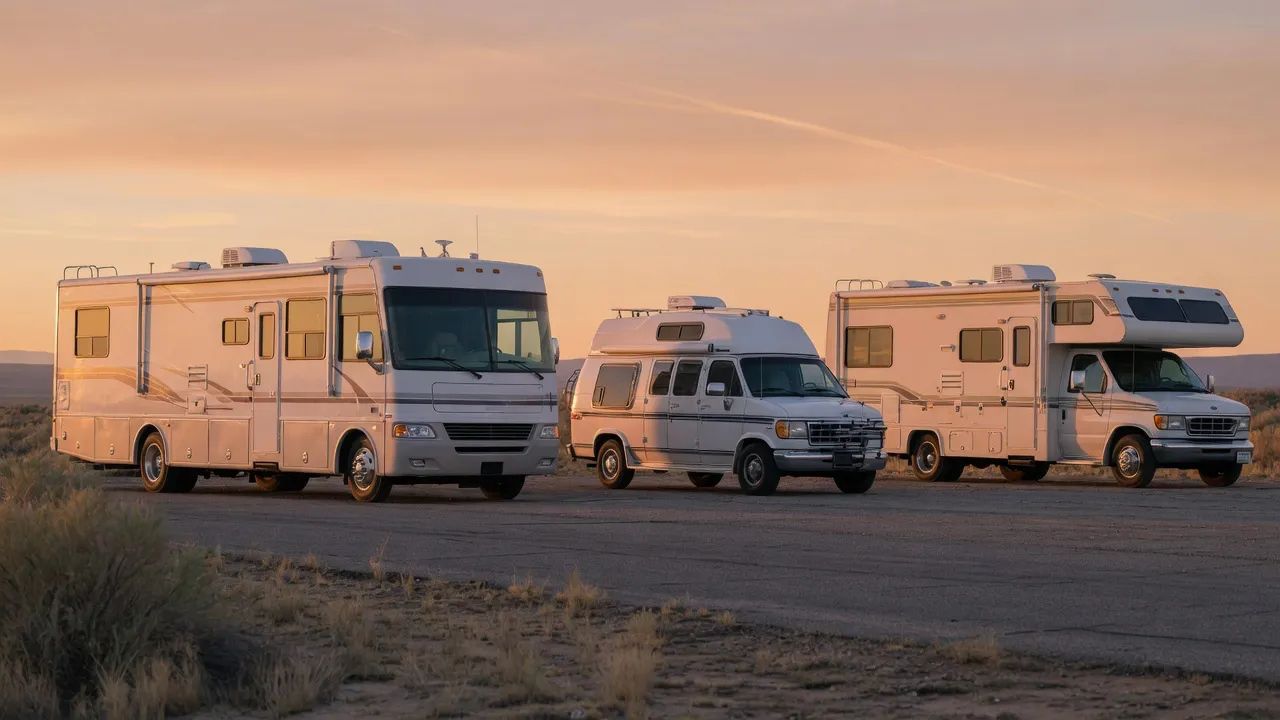
14 minMost single-rig hosts can grow to four rigs operating from a single household, on a single insurance policy, with one cleaning person. The fifth rig is a discontinuity. At five rigs, you cross most carriers' threshold from "owner-operator with rental income" to "commercial fleet," which typically doubles or triples the insurance premium per rig. At five rigs, you can no longer handle handoffs personally for every booking; you need either a co-host with full authority or a paid dispatcher. At five rigs, you owe self-employment tax on a level of income that often triggers quarterly estimated payments and an actual accountant.
The math: a fifth rig has to clear roughly $14,000/year in net profit just to pay the marginal insurance and admin cost. If your first four rigs are clearing $20,000/year each, the fifth has to match — and it competes with the first four on the same calendar. The honest answer is that the fifth rig only works if you are pivoting from hands-on to operator, with a real staff and a real LLC.
The pivot is fine. It is also a different business. PickRV will continue to list your first four rigs and your forty-fifth rig. We will not pretend they are the same operation.
- 2
Commercial fleet insurance
14 minOnce you cross five rigs, you are in fleet-insurance territory. The carriers that handle this well are different from the per-rig commercial rental carriers most single-host PickRV listings use. Look at: National Interstate, Lancer, Burlington (for higher-value Class A fleets), and the specialty division of Travelers. Expect underwriting to take 30 to 60 days and to require three years of operating loss runs (if you have history) or a personal-credit pull (if you don't).
Fleet insurance is typically structured as a master commercial auto policy with a schedule of vehicles. Adding a sixth, seventh, or tenth rig becomes a vehicle endorsement rather than a new policy. The trade-off: a single bad claim affects the entire fleet's renewal rate. A solo operator with one bad year can move carriers; a fleet operator usually can't.
The honest math on per-rig premium: a fleet of 10 Class C rigs in Florida typically pays $4,500 to $7,000 per rig per year in commercial fleet insurance. A solo Class C on a per-rig commercial rental policy in the same state typically pays $2,500 to $4,000. The premium step-up is real and is part of the fifth-rig math.
- 3
Dispatch and handoff systems
12 minAt five rigs operating concurrently, you need a dispatch board. The simplest version is a shared spreadsheet (Google Sheets is fine) with one row per rig and columns for: today's status (clean / dirty / ready / on rental), next handoff time, current renter contact, mechanical notes. The PickRV vendor dashboard surfaces most of this, but the operator's local view will always include details that don't fit the platform.
Handoff staffing: at five to ten rigs, one part-time dispatcher and two part-time cleaners is the minimum. At ten to twenty rigs, a full-time dispatcher and a part-time mechanic on call. At twenty-plus rigs, you are running a real operation and the staff question is HR, not optimization.
Cleaning is the failure point. A rig that arrives back at 3pm and is rebooked for 9am the next day has 18 hours to be cleaned, photographed, walked through pre-rental, and have its consumables (propane, water, the renter's welcome basket) restocked. If your cleaner is unavailable, the rebooking fails. Build a backup cleaner before you need one.
- 4
Staff classification (W-2 vs. 1099)
10 minThe classification of your cleaning and inspection staff is a legal question, not a tax-optimization question. The IRS and the state labor boards (especially in California after AB-5) define employees vs. independent contractors using a three-prong test: behavioral control (do you tell them how to do the work), financial control (do you provide tools and pay regardless of result), and relationship (is the relationship permanent and integral to the business).
A cleaner who shows up at your storage lot, uses your supplies, follows your checklist, and works on a regular schedule is almost certainly an employee, not a contractor. The honest answer is W-2 with payroll-tax withholding. The shortcut of paying everyone 1099 to avoid payroll tax is a tax-fraud risk that grows with the size of the fleet.
Two-bucket model that works at most scales: a 1099 mobile-RV-tech contractor who handles diagnostic and warranty issues (independent business, their own tools, irregular schedule), and W-2 cleaners (your schedule, your tools, your checklist). PickRV is not a tax advisor; consult a real one before five rigs.
End-of-course quiz
5 questions. Answer honestly. The questions exist to be useful at handoff or pickup — not to be a vanity score.
Q1.At what fleet size does insurance typically transition from per-rig commercial to fleet commercial?
Q2.What is the IRS three-prong test for employee vs. contractor classification?
Q3.Which kind of staff is most likely a W-2 employee?
Q4.What's a realistic per-rig insurance premium for a 10-rig Class C fleet in Florida?
Q5.What is the chief failure point at five-to-ten rig scale?
Completion and credentials
Your quiz answers are saved in this browser only. There is no account-level completion tracking, and no certificate is issued. Nothing in this course is a regulatory credential, and it does not replace state licensing, DOT, or insurance requirements.
Your next step
Put this course to work on a real listing.
You set your own price, calendar and rules — you keep 100% of that price and PickRV's 15% markup goes on top of it, reflected in the price renters see. Listing costs nothing and nothing is charged until a booking is paid.
Continue learning
For renters
Trip planning — from itinerary to reservations
The 90-day curve, the reservation cadence, and the buffer day you forgot to build.
For renters
Off-grid systems — power, water, waste
The mechanical truth behind the rig's tank gauges, the propane regulator, and the inverter.
For renters
Boondocking 101 — off-grid camping basics
Free dispersed camping, water rationing, the solar question, and the rule that protects the next camper.