The format, not the floorplan
What a Class C motorhome actually is
The same shape, drawn
A bunk over the cab
- Getting it there
- You drive it
- Where people sleep
- Bunk over the cab, bed at the back, dinette converts
- The trade-off
- Sleeps a family, drives like a big truck
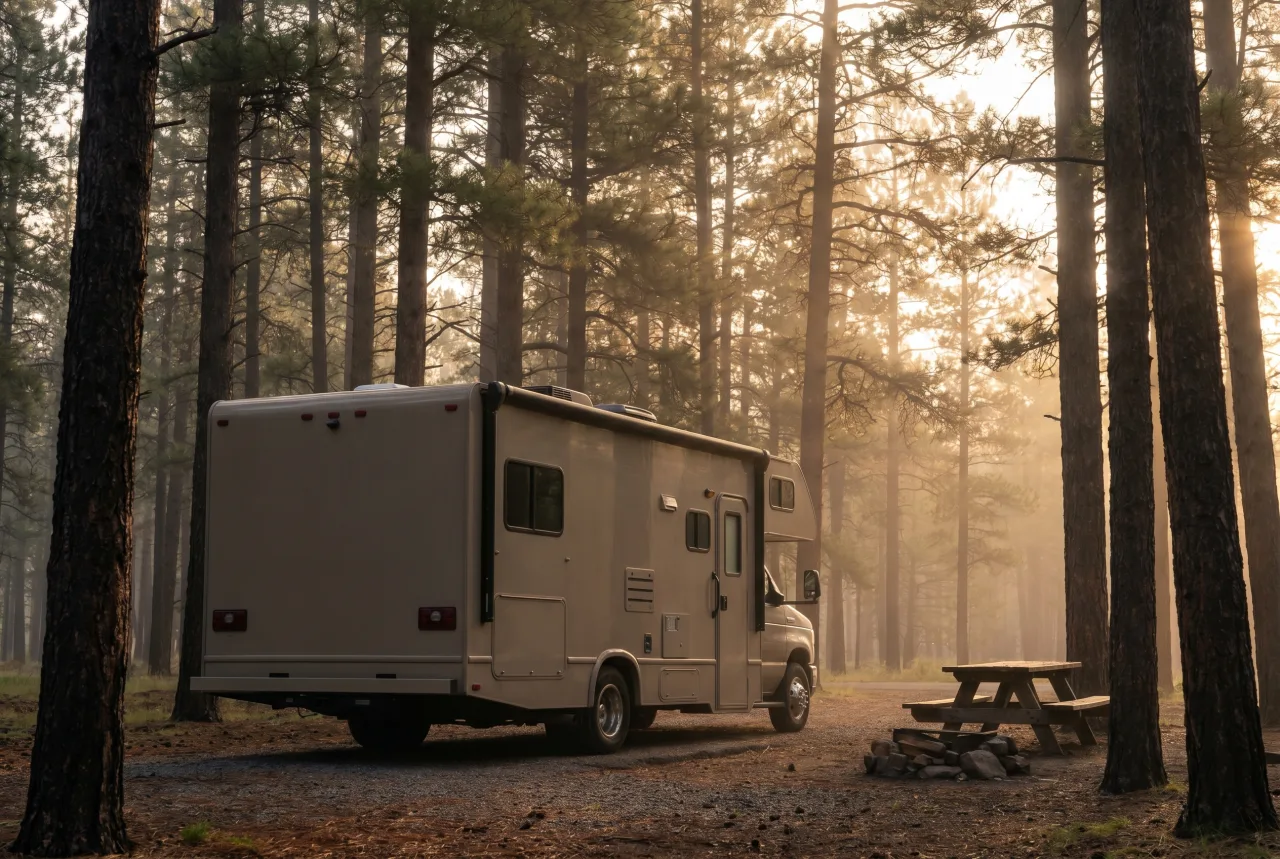
The photograph and drawing above show the Class C motorhome format that the Winnebago View belongs to — not the Winnebago View itself, and not a rig you can book here. Layout, length and what is actually inside change with model year, floorplan and the individual rig, so check the photos on the listing you are booking.
Who the View suits
Couples and small families who want full motorhome amenities without full motorhome bulk. The View shines on long itineraries — cross-country routes, multi-park loops — where its diesel economy and manageable size compound day after day. It fits standard campsites that turn away larger coaches, and drivers stepping up from an SUV adapt to it quickly. It is less ideal for big families or groups: sleeping capacity is real but modest compared to full-size Class Cs, and the living area rewards people who spend their days outside. Renters who prioritize maximum interior space per dollar should look at gas Class Cs instead.
What you get inside
Expect a functional galley, a proper bathroom, a cab-over bunk, and a main sleeping area whose configuration varies by floorplan — some years favor a rear corner bed, others a Murphy-style arrangement. Many floorplans include a slide-out that meaningfully widens the living area when parked. Build quality across the line is a step above typical rental-fleet coaches, which is why owner-hosted Views are common on the platform. As always, tank capacities, bed dimensions, and appliance details shift with model year and floorplan, so treat the individual listing as the spec sheet rather than anything a general guide tells you.
Driving and parking
The View drives smaller than it looks. The Sprinter chassis gives it car-like steering feel, strong sightlines, and a diesel that holds speed on mountain grades where gas Class Cs downshift and roar. The cab-over section still demands attention to height — memorize the clearance number posted in the cab and route around low bridges and drive-throughs. Fuel stops are ordinary: it fits standard pumps, though truck-stop lanes are more comfortable. Parking takes two ordinary spaces end-to-end in most lots. No special license is needed, and most renters report feeling confident by the end of the first driving day.
What it costs to rent
View rentals are typically priced above gas Class Cs of similar size, reflecting the chassis and build quality, but the diesel economy claws some of that back on long routes. Actual rates depend on model year, season, region, and each host's mileage and generator policies — there is no useful universal number. When comparing listings, look at the whole trip cost: nightly rate, mileage allowance, generator hours, cleaning, and insurance all move the total. Our RV cost guide explains each line item and how to compare two listings honestly before you commit to dates.
Pickup checklist
Run the slide-out through a full cycle yourself and learn the manual retract procedure. Have the host demonstrate the leveling process, the fresh and waste tank connections, and the diesel-exhaust-fluid top-up — running that fluid low can put a Sprinter into reduced-power mode mid-trip. Verify the cab-over bunk weight rules if kids will sleep there, photograph existing damage on all four corners and the roof edges, and confirm the awning operation. Ask for the height of the coach in writing and tape it to the dash if the host has not already.
Every format, side by side
The shape you rent decides where you can park, what you sleep in and whether you tow. Here is the whole family, with the Class C motorhome marked.
A-frame folding camper
You tow it behind your own vehicle
Class B camper van
You drive it
Class B camper van with a pop-top roof
You drive it
Travel trailer
You tow it behind your own vehicle
Compact coach-built motorhome
You drive it
Class C motorhome — this one
You drive it
Fifth-wheel trailer
You tow it with a pickup
Class A motorhome
You drive it
Common questions
Is the Winnebago View hard to drive for a first-timer?
It is widely considered one of the easier Class C motorhomes to drive because of its Sprinter chassis and size. You still need to respect its height and length, but no special license is required and most renters adapt within a day.
Does the View use diesel fuel?
Yes, the line is built on a diesel Mercedes-Benz Sprinter chassis. Budget for diesel prices and ask your host about diesel-exhaust-fluid top-ups on longer trips.
How many people can sleep in a Winnebago View?
It is built for couples and small families, with a cab-over bunk plus a main bed, and configurations vary by floorplan and year. Check the sleeping capacity on the specific listing before booking for a group.
Ready to look at real Class C motorhomes?
Every rig on PickRV is listed by the person who owns it, so what you can book comes down to your dates and how close you are to a host — not to a depot with a fleet. If the Winnebago View is the shape you want, start with the format and widen from there.
Renting a Winnebago View? Tell us the nights.
Local owners list their own rigs here. Pick your nights and you get one email when one like this is listed for them.