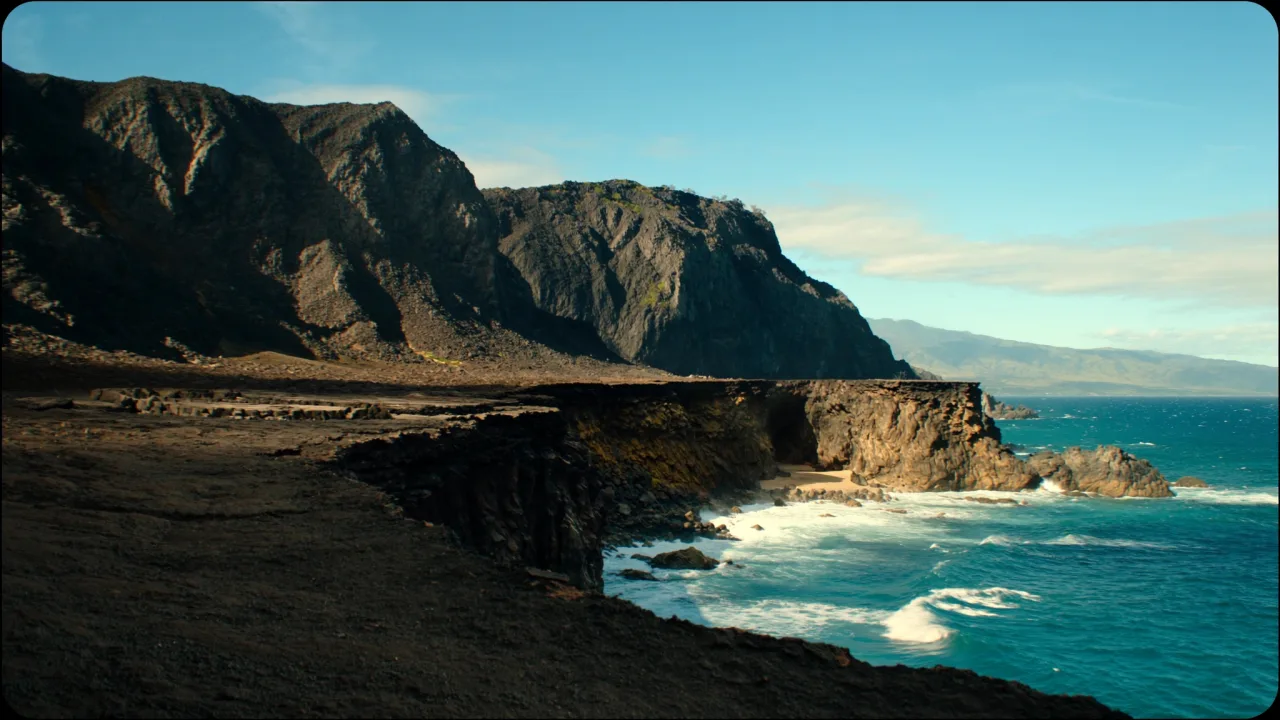

Rent from local hosts across all 50 states, starting at $215/night. The listed price is the all-in host price — renters add only a transparent 10% service fee at checkout. Pick the view, pick the rig, write the road.
Lava-field tours + windward-side micro-climates · Best window: Year-round (lava varies by Kilauea activity)
Yes — PickRV is live across 50 states and we're onboarding local Hawaii hosts right now; booking opens with your host match. Planned pricing starts at 215/night, and the listed price is the all-in host price. The renter's 10% service fee and state tax are the only checkout add-ons, both itemized, and free cancellation runs up to 48 hours before pickup.
·Applications open for new hosts in Hawaii
·From $215/night — Pacific regional pricing
·You choose the coverage — your own policy or the host's, agreed before pickup
·48-hour free cancellation; refund eligibility for confirmed government evacuation orders is reviewed per booking and disclosed at checkout
·New pickup locations open as Hawaii hosts onboard
Starts at
215/nt
Insurance
Optional at checkout
Free cancellation
48h before pickup
Budget by class
RV rental prices in Hawaii
Every Hawaii host sets their own nightly rate, and the listed price is the all-in host price — Hawaii rentals start at $215/night. Budget by class with the public-market medians below before you compare rigs.
Public-market nightly medians (NADA + RVTrader listings) — not PickRV booking data. The exact price for your dates is shown on every listing before you book.
Yes — we're onboarding local Hawaii hosts right now; booking opens with your host match. Save this page to get matched the moment a Hawaii rig fits your dates. Planned pricing starts at $215/night.
How much does it cost to rent an RV in Hawaii?+
Planned pricing: Class C motorhomes in Hawaii will start at $215/night. Smaller travel trailers typically rent for less and larger Class A motorhomes for more — each host sets their own nightly rate, and the exact price for your dates is shown before you book. PickRV publishes its full commission table — no surprise fees on top.
PickRV is not an insurer and does not sell coverage. Trips run on the coverage you and the host agree on before pickup — your own personal auto / RV policy where it covers rental use, or the host's own commercial policy per their certificate of insurance. Confirm with your insurer before the trip.
PickRV defaults to flexible cancellation: full refund up to 48 hours before pickup. Owner-set strict listings show explicit terms before checkout. Tax (varies by county) auto-refunds with the booking.
Can I take an RV off-road in Hawaii?+
Most Hawaii listings are paved-road only per owner terms. The off-road premium tier (Class B and converted Sprinters) grows as hosts with off-road-rated rigs onboard.
The Hawaii field guide
When to go: April to October
Best window
Trade winds keep temperatures pleasant; winter brings more rain on windward sides and higher surf that can affect coastal camping.
Watch out: Flash floods are common in valleys during heavy rain. Tsunami warnings occur periodically. Limited RV infrastructure outside big islands.
Shoulder-season tip: November and March can be good but expect more rain and wind; book campgrounds early as they are limited.
Month by month
Hawaii, month by month
Pick your travel month for the honest verdict — weather, verified events, and what to watch out for.
Source: NOAA CO-OPS (tidesandcurrents.noaa.gov). Predictions in station-local time, MLLW datum.
About Hawaii · written by people who've actually rented here
Why Hawaii earns its place on PickRV
Single sea turtle gliding through clear turquoise Hawaiian
Hawaii is the only US state where an RV trip must be planned as an inter-island circuit (each island is a separate basecamp), and where a single campervan can take you from the Pacific's only US lava-tube national park (Hawaii Volcanoes NP, Big Island) to the only road in the US ending at a 10,000-ft observatory mountain (Mauna Kea, summit road restrictions apply). PickRV's Hawaii inventory is small (8 listings on the seed map per `usStates.ts`) and concentrated on Maui + the Big Island where state and national park camping is realistic. Vehicle culture is dominated by 4WD campervan conversions (rather than large motorhomes) because of switchback roads + ferry impossibility between islands.
▮
What this state demands of your rig
Hawaii caps RV size at island-specific limits — Maui's Road to Hana (HI-360) has a 4-ton vehicle weight limit on certain bridges, Hawaii County's South Point Road is gravel + sometimes single-lane, and Kauai's Waimea Canyon Road tops at 22 ft length advisable.
The Saddle Road (Mauna Kea Access Road, Daniel K.
Inouye Highway HI-200) crosses 6,632 ft and prohibits regular passenger cars past 9,000 ft per Hawaii County DOT and Mauna Kea Visitor Center policy — 4WD required above the visitor center, and most rental contracts prohibit summit travel.
There is no inter-island automobile ferry currently operating (the Hawaii Superferry shut down 2009); inter-island vehicle moves require barge shipment ($800+, scheduled weeks in advance).
◴
When to come
Best window: April through October (dry season for leeward shores) — but the windward shores (Hilo on Big Island, Hana on Maui) are wet year-round.
Whale season (humpback) is December through April — the only US state where whales are a calendar-defining season. The 2028 LA Olympics will pull mainland traffic west to LAX which can complicate Hawaii-bound flight pricing.
Hurricane season (Central Pacific) is June through November per the NWS Central Pacific Hurricane Center; Hawaii has been struck rarely but Hurricane Iniki (1992, Kauai) and Hurricane Lane (2018, near-miss) define the planning baseline.
↝
How to think about your trip
Don't plan a single trip across all islands — pick one island per visit.
Big Island 7 days: Kona pickup → South Point → Hawaii Volcanoes NP (Crater Rim Drive — confirm with NPS for current eruption status) → Hilo → Mauna Kea visitor center (do NOT attempt summit in a rental campervan unless contract permits 4WD above 9,000 ft) → Waimea → return.
Maui 7 days: Kahului pickup → Pa'ia → Road to Hana (overnight in Hana, return loop via Kipahulu and Haleakala backside) → Haleakala summit at sunrise (NPS timed-entry reservations required) → Lahaina (verify current rebuild + access status post-2023 wildfire) → return.
Don't sleep at trailheads — Hawaii enforces strict day-use-only parking at most beach + summit lots.
Three things only Hawaii can claim
01
Hawaii is the only US state with an active volcanic national park where lava flows have repeatedly redrawn roads (Hawaii Volcanoes NP, NPS — Kīlauea eruption status)
02
Mauna Kea is the only US mountain where the road to the summit crosses three vertical climate zones (rainforest → alpine desert → snow above 13,000 ft) — the international observatory complex sits at 13,803 ft
03
Haleakala National Park's sunrise timed-entry reservation (NPS Recreation.gov) is the only national-park entry system that requires the reservation 60 days in advance for the 3 AM – 7 AM window
How Hawaii breaks down regionally
Four PickRV-relevant Hawaiis. Big Island (largest, most diverse): Kona, Hilo, Hawaii Volcanoes NP, Mauna Kea. Maui: Kahului, Road to Hana, Haleakala, Lahaina (verify current access status post-2023). Kauai: Lihue, Waimea Canyon, Na Pali Coast (boat or hike only). Oahu: Honolulu metro, Waikiki, North Shore — most urbanized, RV culture limited. Inter-island travel is flight-only for vehicles in 2026; campervans must barge between islands.
Signature routes
Road to Hana HI-360 (Maui)
Kahului → Hana (~52 mi · 620 curves · 59 bridges, most single-lane) — plan an overnight in Hana to drive back via the southern Pi'ilani Hwy loop
Hawaii open-container law (Hawaii Revised Statutes §291-3.4) prohibits open alcoholic containers in any area of a vehicle (more restrictive than mainland — even passenger consumption in a moving vehicle is prohibited). Mauna Kea altitude sickness is real (13,803 ft summit, sub-zero overnight, 40 % less oxygen than sea level) — most rentals contractually prohibit summit travel. Saddle Road weather changes within minutes — fog + freezing fog occur monthly. Hurricane evacuation routes are posted on each island; consult NWS Central Pacific Hurricane Center + Hawaii Emergency Management Agency before travel June–November.
What other Hawaii guides don't tell you · 3 insightsShowHide
Insider tip: Haleakala NP (NPS Maui) sunrise timed-entry reservations (recreation.gov) open EXACTLY 60 days in advance at 7:00 AM HST and routinely sell within 90 seconds. The under-shared truth per nps.gov/hale: a separate 'next-day' release happens at 7:00 PM HST daily with 50 slots — checking Recreation.gov at 6:55 PM HST the day before arrival is the realistic backup moat against the 60-day sellout.
Insider tip: Hawaii Volcanoes NP (NPS Big Island) Crater Rim Drive closures vary with active Kīlauea eruption status — per nps.gov/havo, current eruption + closure status is updated multiple times daily. The under-shared truth: even during active eruption phases, the Devastation Trail + Kīlauea Iki Overlook typically stay open AND offer the safest active-eruption viewing in the US national park system.
Insider tip: Mauna Kea Visitor Information Station (University of Hawaii, ifa.hawaii.edu/info/vis) sits at 9,200 ft AND is the highest point most rental contracts permit for non-4WD vehicles. The under-shared truth: the station's free nightly star-watching program (sunset to ~10 PM) shows planets through 11-inch + 16-inch telescopes — no summit driving required, and the 9,200 ft altitude already delivers Mauna Kea's signature dark-sky moat.
What Hawaii visitor guides leave off the itinerary
Vehicle-ferry gaps, summit-road rental bans, and the one state park that actually takes campervans.
There is no inter-island vehicle ferry — you re-rent on every island
Hawaii has no car ferry between its major islands. The Hawaii Superferry, which once carried vehicles, shut down in March 2009 after the state Supreme Court voided its environmental exemption, and it never returned. The only passenger ferry — Expeditions, Lahaina (Maui) to Manele Bay (Lanai) — does not carry rental cars or RVs. Plan a separate rental, pickup, and drop-off on each island; you cannot drive your Maui rig onto a boat to the Big Island.
Source: Hawaii Supreme Court / Hawaii Superferry shutdown (2009)
Haleakala sunrise needs a $1 reservation booked exactly 60 days out
On Maui, every vehicle entering Haleakala National Park between 3:00 a.m. and 7:00 a.m. needs a pre-booked sunrise reservation — it covers the Summit, Visitor Center, Kalahaku, and Leleiwi parking lots. The $1.00 non-refundable reservation releases on recreation.gov 60 days ahead at 7:00 a.m. HST (a second batch drops 48 hours out), and you can hold only one per three-day period. Bad weather is not a refund; the ticket only guarantees entry, not a parking space.
No rental RV is allowed past the Mauna Kea Visitor Station
On the Big Island, the Maunakea Visitor Information Station sits at 9,200 ft and the summit at 13,796 ft. 2WD vehicles are banned above the station, and every national rental company prohibits driving its cars past the station to the summit — only a single local agency (Harper) permits it in true low-range 4WD. A rented motorhome cannot legally make the summit climb, and the steep unpaved grade above the station risks brake failure on descent.
Source: University of Hawaii at Hilo — Maunakea public safety
Only one Hawaii state park actually has a campervan spot
Waiʻanapanapa State Park (Hana, Maui) is the only state park in Hawaii with a designated area for camper vans — most state campgrounds are tent-and-cabin only and not set up for vehicle camping. The maximum stay at any one park is 5 consecutive nights, and you must buy and print your permit in advance through camping.ehawaii.gov. Show up in a rig at any other state park expecting to plug in and you will be turned away.
Source: Hawaii DLNR Division of State Parks
Hawaii has no state income tax on out-of-state net rental — but you can't drive a mainland RV here; West Coast pickups need separate planning
There is no road or ferry connection between any Hawaiian island and the US mainland, and Pasha Hawaii's container-ship vehicle service (Oakland → Honolulu) does not accept motorhomes for personal-use shipping — only stripped commercial vehicles via a roll-on/roll-off freight broker, with one-way rates routinely north of $3,500 plus 7-14 days transit and a Big Island lava-zone insurance surcharge. The realistic play is two separate trips: book a mainland coastal RV out of /list-your-rv/california/ for the Pacific Coast Highway leg (see /road-trips/oregon-coast-101-7day/ for the OR-coast handoff), then fly to Hawaii and rent a campervan locally from a Honolulu or Kahului operator. Hawaii itself sources rental income tax as Hawaii-source under HRS §235-4.5, so non-resident hosts file Form N-15 — see hawaii.gov/tax.
Source: Pasha Hawaii — Vehicle Shipping FAQs (vehicle restrictions); Hawaii Department of Taxation — HRS §235 non-resident rules
Top experiences in Hawaii
Public-land, state-park, and scenic-route entries sourced from official .gov and agency sites. Links open the operator’s page.
Kilauea and Mauna Loa still reshape the Big Island; Namakanipaio Campground is the main RV option, but narrow roads and recent lava flows limit large rigs.
The summit crater and the Kipahulu bamboo forest sit 10,000 feet above the sea; both drive-up campgrounds are tent-only with no hookups or large-vehicle access.
Fifty-nine bridges and 620 curves wind through tropical valleys to Hana; the road is narrow, one-lane in places, and large RVs are prohibited by rental contracts and common sense.
Black-sand beach and sea arches mark this East Maui park; cabins and a small tent campground require advance reservations, and the day-use gate is strictly enforced.
Above Waimea Canyon on Kauai's high plateau, Kokee offers cool nights and trailheads into the Alakai Swamp; only tent sites and cabins, reached by a steep, winding road.
RV regulatory notes for Hawaii
Hawaii vehicle registration is county-run (Honolulu, Hawaii, Maui, Kauai) with no single state DMV page for RVs. Owners deal with county offices for weight tax plus local add-ons, making the process feel more like four separate states than one. Data as of June 2026 — contact the specific county for your island before shipping or driving over.
Touring the US from another country? For most rentals a valid driver's license from your home country is accepted for tourism — an International Driving Permit is often recommended (and required by some states or hosts when your license isn't in English), so bring both plus your passport. The listed price is the all-in host price shown before you book, with no drip-pricing surprises at checkout. Confirm each host's pickup requirements before you book.
HI — 4% GET + 0.5% Honolulu + 4.71% TAT + 5.5% Daily Surcharge
Min driver age
21+ standard · 25+ Class A
Gravel road policy
Varies by rig — verify with vendor
Generator quiet hours
22:00-07:00
OHV permit
Required · ~$75
Alcohol policy
Open container prohibited in cabin
Dump-station regulations
Strict enforcement
Must know
›Saddle Road (Big Island): rental restrictions vary by company — verify pre-booking
›Active volcano evacuation orders may qualify a booking for cancellation review; consult USGS Hawaiian Volcano Observatory + HI Emergency Management for current advisories
›Limited inter-island RV transport — most rigs island-locked
Compliance notes (2)
· HI DLNR special use permit for camping in undeveloped state lands
· Vehicle weight restrictions stricter than mainland — check rig before shipping
Per-state legal callout · HI
Before you rent in Hawaii — key local rules
Standard license; out-of-state honored; commercial threshold 26,001 lbs
Hawaii follows the federal 26,001 lbs CDL threshold. Most rental motorhomes/campervans on Hawaii fall under standard Class 3 license. Out-of-state license honored.
Hawaii Boater Education Card required for operators under 16
Hawaii requires the Boater Education Card for vessel operators under 16. Adults are encouraged but not required. NOAA + USCG rules apply to ocean-going vessels.
Beach camping requires Hawaii State Park permit; no overnight at most beach parks
Hawaii is strict about RV/van overnight stays. Most public beaches prohibit overnight camping. Hawaii State Park system requires advance permits at limited primitive campgrounds (e.g., Polipoli, Mauna Kea).
Hawaii BAC 0.08%; open container in passenger area prohibited
Hawaii enforces 0.08% BAC for non-commercial drivers. Open alcoholic containers prohibited in passenger areas of motor vehicles on public highways. Living-quarters use while parked is generally permitted.
Brush-fire risk on leeward sides; verify open-flame restrictions
Hawaii's leeward coasts (e.g., West Maui, Kona) face increasing brush-fire risk. After the 2023 Lahaina fire, county-level restrictions on open flames + smoking outdoors are more frequent. Check the county fire department site.
Hawaii Erupting Volcano Tee — Retro RV Travel Poster — an original Hawaii travel-poster design, printed on demand on a soft combed-cotton tee. Sizes XS–5XL.
You keep 100% of your base rate — PickRV's flat 15% commission is built into the displayed price, and renters pay their own 10% service fee at checkout. Applying takes about 10 minutes: photos, rig details, and the host checklist.
We're onboarding Hawaii hosts right now. One email when your HI host match is ready. No spam.
Was this guide helpful?
Important: travel + safety + insurance disclaimer
This guide is provided for general informational purposes only. PickRV is not an insurer, legal advisor, or vehicle-safety authority. Trip planning, route selection, rig suitability, weather, and emergency decisions are the renter's responsibility. Always consult the rig manufacturer's owner's manual, your insurance provider, the U.S. National Park Service (nps.gov), NOAA / NWS weather alerts (weather.gov), state and local emergency-management agencies, and current local regulations before and during travel. Cost figures, season windows, road conditions, and fee references on this page are estimates as of May 2026 and vary by season, location, rig, carrier, and operator. Mentions of brand names, state-tourism marks, national-park feature names, or third-party programs are informational only and do not imply affiliation, sponsorship, or endorsement.