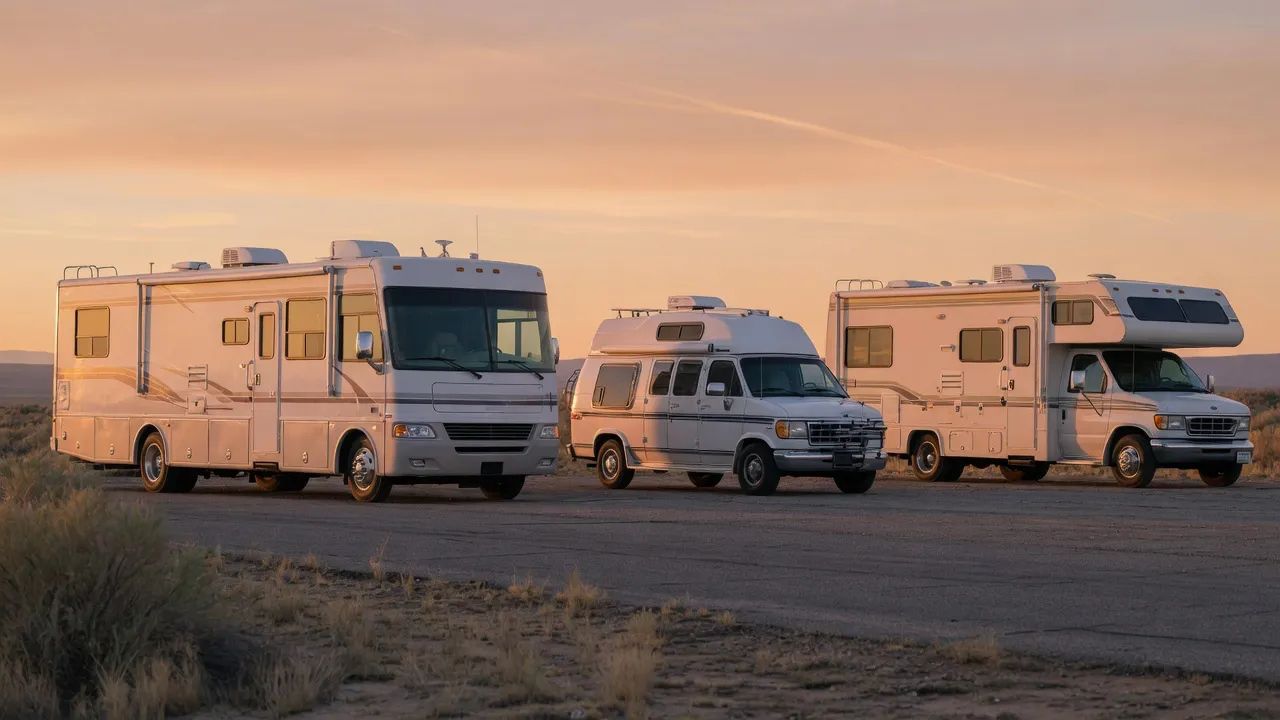
Host + vendor insurance
Multi-Listing Host Insurance — Scaling from One Rig to Many
Educational only · not insurance advice. PickRV is not an insurance broker, agent, producer, or carrier. Coverage varies by carrier and policy. Verify any decision with a licensed insurance professional in your state.
TL;DR
Hosts with multiple rigs can transition from individual policies to fleet commercial coverage, often with per-vehicle pricing that drops 15-30% from single-rig pricing. Multi-listing hosts also typically benefit from LLC structures, fleet-discount roadside, and dedicated risk management. Coverage architecture changes around the 3-5 rig threshold.

The boundary
Where this coverage stops

Covered
4- Fleet commercial RV insurance covering multiple rigs under one policy.
- Per-vehicle pricing efficiencies on volume.
- Aggregate liability limits across the fleet.
- Loss-of-income coverage scaling with rental volume.
Not covered
3- Individual rigs that fall outside fleet underwriting (high-value, vintage).
- Personal-use periods (rigs must be classified consistently).
- Coverage gaps when fleet policies do not align with single-rig defaults.
In practice
Real-world examples

Anonymized composite scenarios illustrating typical outcomes.
Host scaled from 1 to 5 rigs; total insurance cost dropped 22% per rig
A host added rigs over 18 months, scaling from 1 to 5. After negotiating fleet coverage with a specialty commercial RV insurer, total per-rig insurance cost dropped from $2,400/year (individual) to $1,870/year (fleet) — a 22% efficiency. Aggregate liability rose meaningfully through the fleet-aggregate structure; specific limits set by the licensed carrier.
Outcome: Net savings: $2,650/year on insurance + better aggregate coverage. Lesson: fleet pricing is meaningful at 3+ rigs; renegotiate when crossing the threshold.
The money
Cost ranges

Industry-typical pricing from published carrier and industry sources. Actual quotes vary by state, vehicle, and driver history.
Per-rig pricing for individual policies.
Volume discount typical at 3-5+ rigs.
Additional efficiency at larger fleet sizes.
Fine print
What insurance companies don't say

Industry insider knowledge surfaced for educational transparency.
Specialty commercial RV insurers serve multi-listing hosts better
Mainstream RV insurers often cap commercial endorsements at 2-3 rigs. Specialty commercial-fleet insurers handle fleets of 5-50+ rigs routinely. Switching at the 3-rig threshold is common.
Fleet structure influences LLC strategy
Multi-listing hosts often place each rig in a separate LLC (asset-isolation strategy) or all in one LLC with operating agreements. Insurance must reflect the chosen structure — fleet policies are easier with single-LLC ownership.
Loss-of-income coverage matters at scale
When 1 of 5 rigs is in repair, the host loses 20% of rental revenue. Loss-of-income coverage offsets this. At single-rig scale, the impact is binary (operating or not); at fleet scale, the loss-of-income line is more nuanced and often more valuable.
FAQ

When should I switch to fleet coverage?
Typically at 3-5 rigs. Below 3, individual policies are usually fine; above 5, fleet pricing becomes meaningful.
Can I have rigs in multiple states?
Yes — fleet policies typically cover multi-state operations. Specialty marketplace insurers handle this routinely.
Do I need an LLC for fleet?
Not legally, but the asset-isolation and operational benefits scale with rig count. Multi-LLC structures are common for serious fleet operators.
Are there volume discounts on roadside assistance?
Yes — many fleet roadside assistance plans offer per-rig discounts for multi-vehicle operations.
How do I find a fleet broker?
Specialty commercial RV insurance brokers serve marketplace hosts; a licensed commercial-lines broker can point you to the regional commercial-fleet markets that write this risk.
When to consult a broker

Talk to a licensed insurance professional and a commercial-use specialist before you scale to 3 or more rigs or consider scaling significantly. Commercial-use insurance for vehicles listed on peer-to-peer marketplaces is its own underwriting category; many personal-policy gaps surface only at claim time.
Sources
- [1]III — Facts + Statistics — RV / recreational vehicle industry stats
- [2]III — Auto Insurance Basics — Auto insurance basics
- [3]U.S. Small Business Administration — Business Insurance — Small business + commercial insurance
- [4]NAIC — Consumer Insurance Search — Consumer regulator + complaint portal
- [5]III — Rental Car Insurance — Rental vehicle coverage
Your next step
Now the thing you were going to insure
Coverage only makes sense against a specific rig and a specific week — the deductible on a 30-foot Class C is not the deductible on a towable. Start from what you would actually drive.
What you'll see there
Nothing is bookable on PickRV yet — the search page says so in those words. What it shows instead are labelled sample rigs, so you can see what a listing looks like before there is one to book.
What you'd pay
The complete price sits on every listing, and the exact total is itemized before you pay — nothing appears at the last step.
If plans change
Full rental refund 48h+ before pickup on every booking, in every state.
Tell us when you want to go.
Nothing is bookable today. Dated requests are what we take to owners, so give us the window you actually want — you get one email the day a rig covers it, and nothing else.