The format, not the floorplan
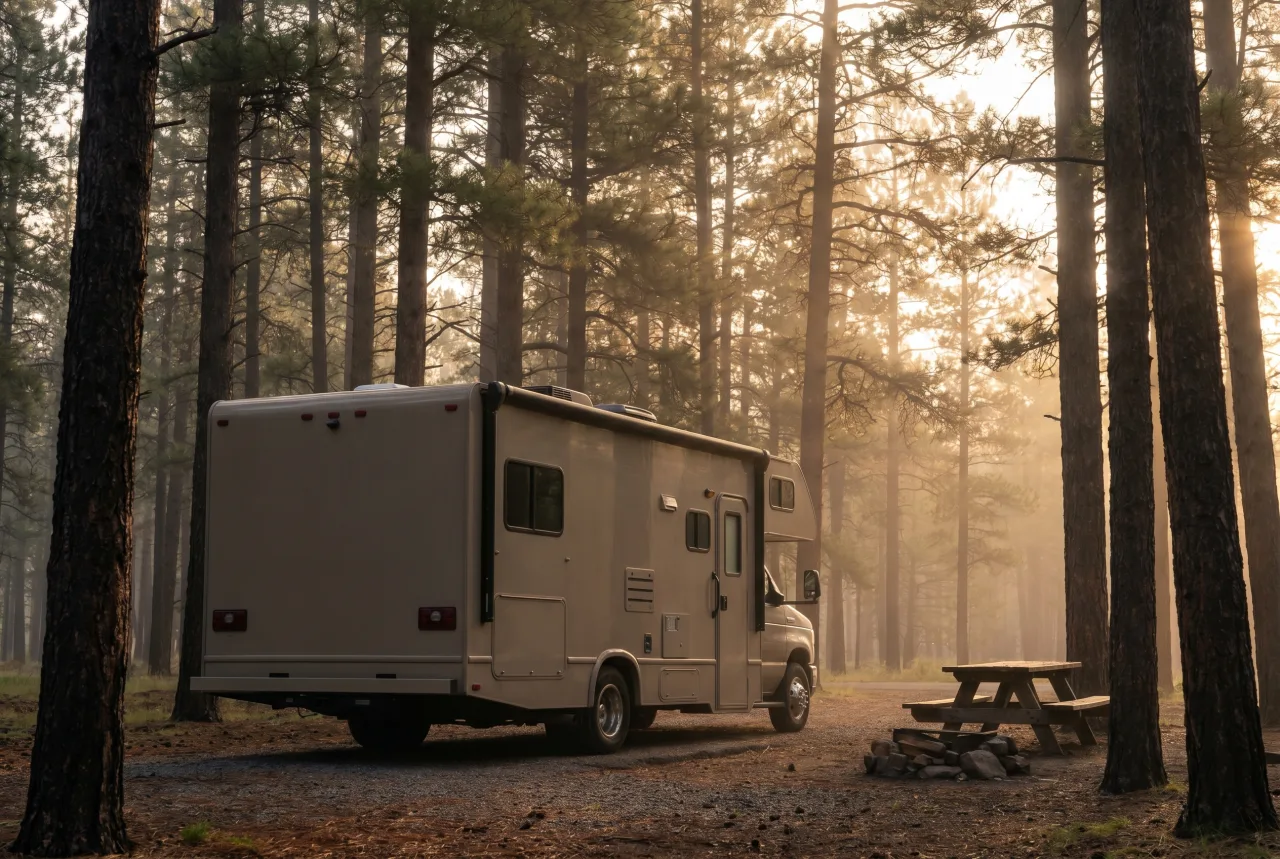
What a Class C motorhome actually is
The same shape, drawn
A bunk over the cab
- Getting it there
- You drive it
- Where people sleep
- Bunk over the cab, bed at the back, dinette converts
- The trade-off
- Sleeps a family, drives like a big truck
The photograph and drawing above show the Class C motorhome format that the Thor Four Winds belongs to — not the Thor Four Winds itself, and not a rig you can book here. Layout, length and what is actually inside change with model year, floorplan and the individual rig, so check the photos on the listing you are booking.
Who the Four Winds suits
Families and groups who need beds, a kitchen, and a bathroom rolling down the road with minimum fuss. The cab-over bunk plus convertible dinette architecture means the line swallows more sleepers than its footprint suggests, and floorplan variety across model years includes proper bunk layouts for bigger crews. It is the classic national-park summer rig, the tailgate base, the family-reunion overflow suite. Couples who prize driving ease over space have better options in the Class B world, and anyone allergic to truck-like driving dynamics should test their expectations before booking a long mountain route.
What you get inside
Expect the full family kit: galley with cooktop, microwave, and fridge; bathroom with shower; cab-over bunk; a main bed; and a dinette that converts for extra sleepers. Slide-outs appear on many floorplans and make the parked living area genuinely comfortable. Rental listings in this line typically include a generator, air conditioning, and a furnace — the equipment that makes boondocking and hot campgrounds workable. Layouts vary widely across model years and floorplan codes, so berth count, bed sizes, and tank capacities belong to the specific listing, not to this guide or anyone's memory of a previous rental.
Driving and parking
The Four Winds drives like a rental truck with weight up high, most commonly on a Ford chassis. Give it space: wide turns, early braking, patient hill climbs. The cab-over section is the classic novice hazard — know your height and route around low clearances, gas-station canopies included. Crosswinds and passing semis push the tall body around, so both hands on the wheel through open country. Fuel at truck stops or end pumps. Nearly every campground in America fits this rig, and no state requires a special license. Most first-timers are comfortable by the second day; the first hour deserves an empty road.
What it costs to rent
Because the Four Winds is everywhere, it is often the sharpest-priced Class C in a given market — competition works in your favor. Rates still swing meaningfully with model year, season, and location: a school-holiday week near a national park is peak pricing, while the same coach in the shoulder season can cost dramatically less. The nightly rate is only the start; mileage allowances, generator hours, cleaning, and insurance shape the real total. Compare complete trip costs across live listings for your dates, and read our RV cost guide first so no checkout line item surprises you.
Pickup checklist
Film the full walkthrough. Operate the generator, slide-out, awning, and leveling gear yourself. Learn the dump-station routine hands-on and confirm hoses and adapters are aboard. Check all tires — including inner rear duals — the propane level, and fluid levels if the host shows you. Photograph the front cap above the cab, the rear corners, and the roofline where scrapes accumulate. Confirm belted seating positions for every passenger, bunk weight limits for kids, and get mileage and generator allowances in writing. Ask what the host wants you to do if a warning light appears mid-trip; good hosts have an answer ready.
Every format, side by side
The shape you rent decides where you can park, what you sleep in and whether you tow. Here is the whole family, with the Class C motorhome marked.
A-frame folding camper
You tow it behind your own vehicle
Class B camper van
You drive it
Class B camper van with a pop-top roof
You drive it
Travel trailer
You tow it behind your own vehicle
Compact coach-built motorhome
You drive it
Class C motorhome — this one
You drive it
Fifth-wheel trailer
You tow it with a pickup
Class A motorhome
You drive it
Common questions
Do I need experience to rent a Thor Four Winds?
No prior RV experience is required, and no special license is needed in any state. Hosts routinely rent this line to first-timers and provide a full walkthrough at pickup.
How many people can a Four Winds sleep?
The line spans many floorplans, from compact layouts to bunk-equipped family plans, so capacity varies by model year and floorplan. Check the specific listing's sleeping and belted-seat counts before booking for a group.
Can I drive a Four Winds to a music festival or tailgate?
Yes, this line is a staple at festivals and tailgates. Confirm event vehicle rules and ask your host about generator-hour allowances, since off-hookup events lean on the generator heavily.
Ready to look at real Class C motorhomes?
Every rig on PickRV is listed by the person who owns it, so what you can book comes down to your dates and how close you are to a host — not to a depot with a fleet. If the Thor Four Winds is the shape you want, start with the format and widen from there.
Renting a Thor Four Winds? Tell us the nights.
Local owners list their own rigs here. Pick your nights and you get one email when one like this is listed for them.