The format, not the floorplan
What a Class C motorhome actually is
The same shape, drawn
A bunk over the cab
- Getting it there
- You drive it
- Where people sleep
- Bunk over the cab, bed at the back, dinette converts
- The trade-off
- Sleeps a family, drives like a big truck
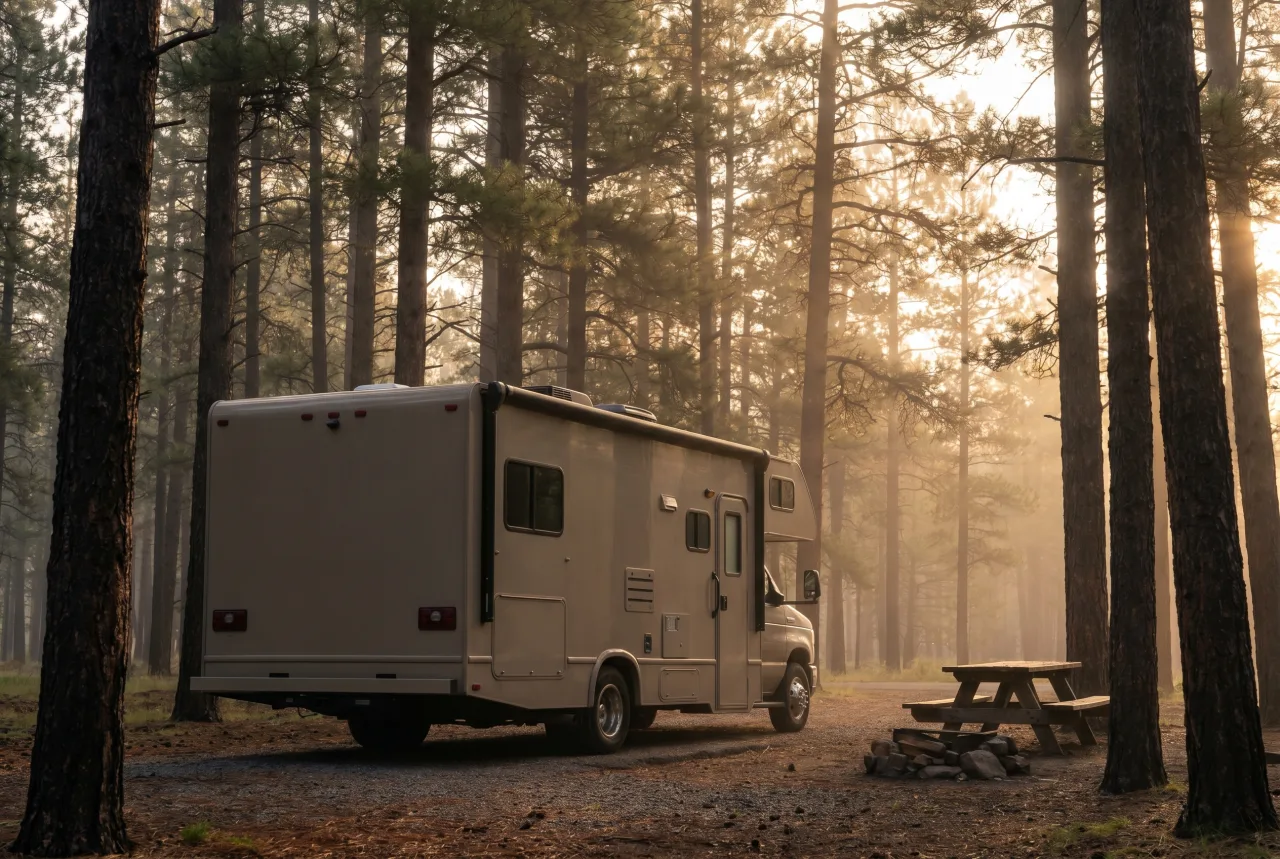
The photograph and drawing above show the Class C motorhome format that the Thor Chateau belongs to — not the Thor Chateau itself, and not a rig you can book here. Layout, length and what is actually inside change with model year, floorplan and the individual rig, so check the photos on the listing you are booking.
Who the Chateau suits
The same audience as every successful gas Class C: families with kids who will fight over the cab-over bunk, groups splitting a road trip, and multi-generational crews doing the national-park circuit. Floorplans across the line range from compact couples' layouts to full bunkhouse plans, so the line covers more trip shapes than people expect. It suits renters who value practicality and price over brand cachet — nobody rents a Chateau for the badge, they rent it because it carries six people and their gear to Yellowstone without drama. Couples optimizing for driving pleasure should look at Class B vans instead.
What you get inside
The complete family package: galley with cooktop, microwave, and fridge; bathroom with shower; cab-over bunk; main bedroom or rear bed; convertible dinette; and on many floorplans a slide-out that opens the living area at camp. Generator, air conditioning, and furnace come standard on rental listings, covering hot campgrounds and off-hookup nights. As with its Four Winds twin, the spread of floorplans across model years is wide — bunk models, corner beds, different bathroom placements — so the specific listing defines what you get. Two Chateaus in the same city can serve very different party sizes.
Driving and parking
Truck-chassis Class C rules apply. The Chateau drives tall and wide, most commonly on a Ford platform: take turns deliberately, brake early, and treat the posted cab height as sacred — the cab-over bunk is what hits gas-station canopies and parkade beams when drivers forget. Let passing semis buffet you without overcorrecting. Fueling is easiest at truck stops. Standard campgrounds fit it comfortably, urban street parking effectively does not exist for it, and no US state requires a special license. Budget your first hour of driving on calm roads and the learning curve flattens fast.
What it costs to rent
Chateau pricing tracks the broader gas Class C market, which is the most competitive segment in RV rental — meaning renters get the benefit. Expect real variation by model year, season, and market, with school-vacation weeks near marquee destinations at the top of the curve. Because the coach itself is commodity-priced, the fee structure differentiates listings: mileage allowances, generator hours, cleaning fees, and insurance options often swing the total more than the nightly rate. Price the whole trip across a few live listings for your dates, and lean on our RV cost guide to decode every fee before checkout.
Pickup checklist
The standard Class C drill, done thoroughly: film the walkthrough, operate generator, slide-out, awning, and leveling jacks yourself, and rehearse the dump-station procedure with the host rather than just nodding along. Inspect tires including inner duals, check propane, and photograph the cab-over front cap, rear corners, and roofline. Count belted seats against your passenger list and confirm child-seat anchoring. Get mileage and generator-hour allowances in writing, plus the host's protocol for warning lights or breakdowns. Five extra minutes at pickup is the cheapest insurance available in this hobby.
Every format, side by side
The shape you rent decides where you can park, what you sleep in and whether you tow. Here is the whole family, with the Class C motorhome marked.
A-frame folding camper
You tow it behind your own vehicle
Class B camper van
You drive it
Class B camper van with a pop-top roof
You drive it
Travel trailer
You tow it behind your own vehicle
Compact coach-built motorhome
You drive it
Class C motorhome — this one
You drive it
Fifth-wheel trailer
You tow it with a pickup
Class A motorhome
You drive it
Common questions
What is the difference between a Thor Chateau and a Four Winds?
They are sibling lines sharing chassis and most floorplans, with differences mainly in styling and trim. For rental purposes, treat equivalent floorplans as the same coach and choose on price, condition, and host quality.
Is the Thor Chateau suitable for a family with young kids?
Yes — family floorplans with a cab-over bunk and convertible dinette are the core of the line. Verify belted seating positions and bunk weight limits on the specific listing for your crew.
Do I need a special license to drive a Chateau?
No. Standard consumer Class C motorhomes require only a regular driver's license in every US state.
Ready to look at real Class C motorhomes?
Every rig on PickRV is listed by the person who owns it, so what you can book comes down to your dates and how close you are to a host — not to a depot with a fleet. If the Thor Chateau is the shape you want, start with the format and widen from there.
Renting a Thor Chateau? Tell us the nights.
Local owners list their own rigs here. Pick your nights and you get one email when one like this is listed for them.