The format, not the floorplan
What a Travel trailer actually is
The same shape, drawn
Ball hitch — needs a tow vehicle
- Getting it there
- You tow it behind your own vehicle
- Where people sleep
- Bed at one end, dinette converts at the other
- The trade-off
- Unhitch and keep your car, but you must tow it
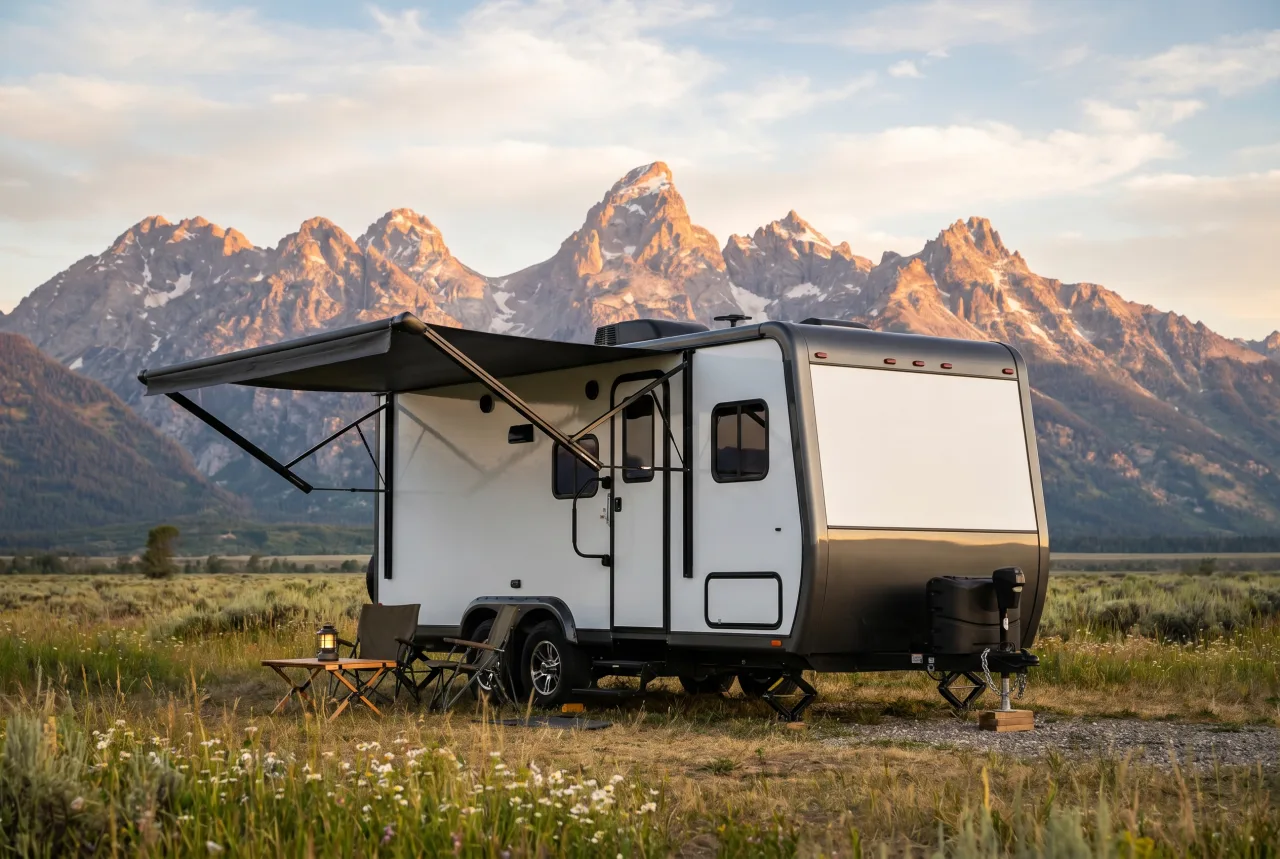
The photograph and drawing above show the Travel trailer format that the Forest River R-Pod belongs to — not the Forest River R-Pod itself, and not a rig you can book here. Layout, length and what is actually inside change with model year, floorplan and the individual rig, so check the photos on the listing you are booking.
Who the R-Pod suits
Couples and small families who own a mid-size SUV or truck and want more comfort than a tent without buying into heavy towing. It is the classic first towable: light enough to feel manageable, complete enough to deliver the campground payoff. Weekend campers, state-park regulars, and festival-goers form the core audience. Larger families will outgrow the space quickly, and travelers expecting residential storage or a spacious bathroom should size up. If your household debate is 'tent versus trailer,' the R-Pod is usually the trailer in question — and renting one settles the debate cheaply.
What you get inside
Efficient small-trailer living: a real bed, a compact galley with cooktop and refrigerator, a wet bath with toilet and shower on most floorplans, and a dinette that converts for an extra sleeper. Air conditioning and a furnace equip it for three-season comfort. The rounded profile that helps towing also shapes the interior — taller renters should check headroom notes on the listing. Floorplans vary across the line and model years: some favor a rear kitchen, others bunks or a larger bed. As always, the specific listing defines what you get; the constant is genuine comfort in a towable package.
Towing and parking
This is among the friendliest towing introductions available: modest weight, single axle, and a rounded shape that sheds crosswind better than boxy rivals. Friendlier still is not effortless — confirm your vehicle's tow rating against the loaded trailer with your host, verify hitch and wiring at pickup, and practice backing in an empty lot, because short trailers respond fast to steering inputs. It tucks into small campsites big rigs cannot touch, which opens older state parks. Many hosts offer delivery and setup if you would rather skip towing entirely; for a first taste of trailer camping, that option is worth its fee.
What it costs to rent
Small towables are the budget door into RV travel, and R-Pod rates typically sit at the accessible end of the market. You supply the tow vehicle and its fuel, so the trip's total cost stays transparent: nightly rate, campsite, gas, and any delivery or cleaning fees. Season and region move prices — summer weekends and holiday weeks peak — and newer model years command a premium over older but identical-in-function units. A shoulder-season R-Pod week at a state park is among the cheapest real vacations available. Compare live listings for your dates; our RV cost guide covers every fee you will meet.
Pickup checklist
Verify the hitch setup end to end: ball size, coupler latch, safety chains crossed, breakaway cable, and wiring — then test running lights, brake lights, and turn signals before moving. Check tire condition and the spare. Inside, run the water pump, water heater, fridge, air conditioning, and furnace, and rehearse the dump procedure with the host's hoses. Photograph the rounded front cap and lower corners where road debris and backing scars concentrate. Get the loaded weight and tongue-weight guidance in writing, confirm what camping gear is included, and take a slow test lap with the trailer attached before hitting the highway.
Every format, side by side
The shape you rent decides where you can park, what you sleep in and whether you tow. Here is the whole family, with the Travel trailer marked.
A-frame folding camper
You tow it behind your own vehicle
Class B camper van
You drive it
Class B camper van with a pop-top roof
You drive it
Travel trailer — this one
You tow it behind your own vehicle
Compact coach-built motorhome
You drive it
Class C motorhome
You drive it
Fifth-wheel trailer
You tow it with a pickup
Class A motorhome
You drive it
Common questions
Can my SUV tow a Forest River R-Pod?
Many mid-size SUVs and light trucks can, but ratings vary by vehicle, trim, and the trailer's loaded weight. Send your exact vehicle details to the host and confirm before booking — never assume from the badge on the trailer.
Does the R-Pod have a bathroom?
Most floorplans include a wet bath with toilet and shower, though layouts vary across the line and model years. Check the specific listing's floorplan to confirm.
Is an R-Pod good for winter camping?
It is fundamentally a three-season trailer with a furnace for chilly nights. For genuine freezing conditions, ask your host how the water system handles cold before planning the trip.
Ready to look at real travel trailers?
Every rig on PickRV is listed by the person who owns it, so what you can book comes down to your dates and how close you are to a host — not to a depot with a fleet. If the Forest River R-Pod is the shape you want, start with the format and widen from there.
Renting a Forest River R-Pod? Tell us the nights.
Local owners list their own rigs here. Pick your nights and you get one email when one like this is listed for them.