The format, not the floorplan
What a Class A motorhome actually is
The same shape, drawn
Flat front — you sit over the front wheels
- Getting it there
- You drive it
- Where people sleep
- Bedroom at the back, sofas and dinette convert
- The trade-off
- The most room inside, the hardest to park
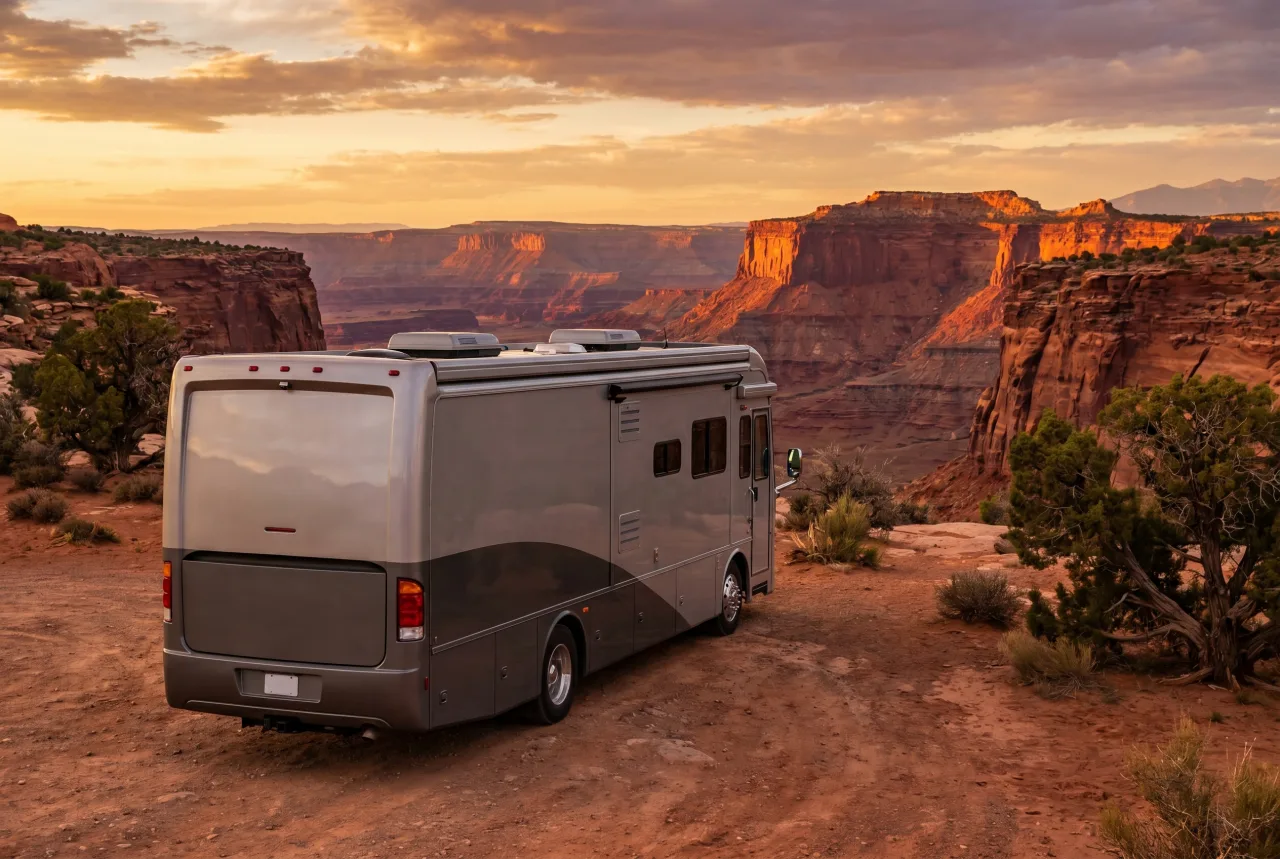
The photograph and drawing above show the Class A motorhome format that the Forest River Berkshire belongs to — not the Forest River Berkshire itself, and not a rig you can book here. Layout, length and what is actually inside change with model year, floorplan and the individual rig, so check the photos on the listing you are booking.
Who the Berkshire suits
Renters planning destination-style trips: park for days or weeks, live comfortably, move occasionally. Snowbirds sampling the lifestyle before buying, extended families gathering at a resort campground, and remote-working couples on long stays get the most from a diesel pusher. The space and ride quality reward long tenures. It suits nervous first-time drivers poorly — this is the largest thing most people will ever drive — and it is wasted on trips with daily relocation, where its size turns every stop into an operation. Match the coach to a trip with few moves and long stays.
What you get aboard
Diesel-pusher living means residential-scale everything: a full galley, a genuine bedroom with a real bed, a bathroom you do not have to fold away, multiple slide-outs opening a true living room, and holding tanks plus storage bays sized for extended stays. The rear diesel arrangement pushes engine noise behind you, making the cab notably quieter underway than any gas Class A. Air suspension smooths the miles. Specific floorplans, tank capacities, and amenities vary by model year, so the listing is your spec sheet — but the format's character is consistent: it is an apartment that travels.
Driving and parking reality
Respect the format. A diesel pusher is long, tall, heavy, and wide, with significant tail swing and air brakes that feel different from anything in your driving history. No US state requires a special license for consumer rental use, but competence is your responsibility: insist on a thorough orientation drive with the host, practice in an empty lot, and use a spotter for every backing maneuver without exception. Route planning matters — low clearances, weight-limited roads, and tight fuel stops are real constraints. Pull-through campsites and truck-stop fuel lanes are your friends. Drive it calmly and it is genuinely pleasant; rush it and it punishes.
What it costs to rent
Diesel pushers occupy the premium tier of motorhome rental, and the total cost picture extends beyond the nightly rate: diesel fuel over long distances, campground sites that fit big rigs, and typically larger security deposits all belong in the budget. Rates vary with model year, season, and market — winter sun destinations peak when the snowbirds fly. Long-stay discounts are common in this class, since hosts prefer fewer, longer bookings; weekly and monthly pricing can change the math substantially. Compare live listings for your dates and study our RV cost guide before committing to the format.
Pickup checklist
Budget serious time — an hour is not excessive for a coach this complex. Cover: air-brake behavior and parking brake, leveling system, all slide-outs with manual overrides, generator, inverter and battery management, tank monitors and the dump procedure, awnings, and every bay lock. Ask about diesel-exhaust-fluid, fuel expectations, and tire pressures on record. Photograph all four sides, the roof edges, and every bay door. Confirm insurance coverage explicitly for this vehicle class, get all allowances in writing, and take the orientation drive with the host aboard. Do not leave until every system has run under your own hands.
Every format, side by side
The shape you rent decides where you can park, what you sleep in and whether you tow. Here is the whole family, with the Class A motorhome marked.
A-frame folding camper
You tow it behind your own vehicle
Class B camper van
You drive it
Class B camper van with a pop-top roof
You drive it
Travel trailer
You tow it behind your own vehicle
Compact coach-built motorhome
You drive it
Class C motorhome
You drive it
Fifth-wheel trailer
You tow it with a pickup
Class A motorhome — this one
You drive it
Common questions
Do I need a special license to rent a Class A diesel pusher?
No US state requires a commercial license for consumer rental of a motorhome like the Berkshire. Hosts may reasonably require prior big-rig experience or an orientation drive — treat that as a feature, not friction.
Is a diesel pusher worth it over a gas Class A?
For long trips with extended stays, the quieter cab, air-ride comfort, and bigger capacities are what you are paying for. For short trips with frequent moves, the advantage shrinks and the size costs you daily effort.
Can I park a Berkshire anywhere?
No — plan around big-rig-friendly campgrounds with pull-through sites, and route with clearances and weight limits in mind. Resort campgrounds and truck stops handle it easily; small older parks and urban areas often cannot.
Ready to look at real Class A motorhomes?
Every rig on PickRV is listed by the person who owns it, so what you can book comes down to your dates and how close you are to a host — not to a depot with a fleet. If the Forest River Berkshire is the shape you want, start with the format and widen from there.
Renting a Forest River Berkshire? Tell us the nights.
Local owners list their own rigs here. Pick your nights and you get one email when one like this is listed for them.