The format, not the floorplan
What a Travel trailer actually is
The same shape, drawn
Ball hitch — needs a tow vehicle
- Getting it there
- You tow it behind your own vehicle
- Where people sleep
- Bed at one end, dinette converts at the other
- The trade-off
- Unhitch and keep your car, but you must tow it
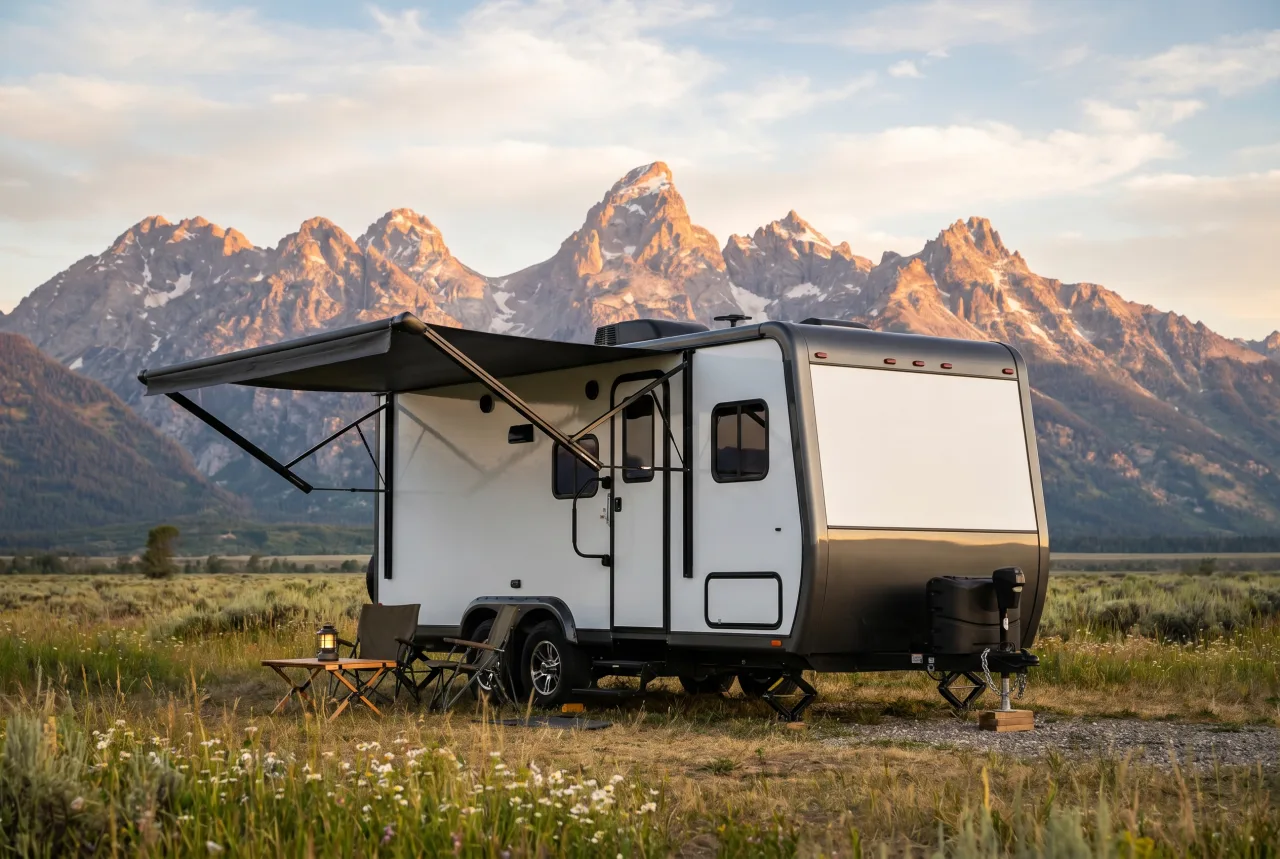
The photograph and drawing above show the Travel trailer format that the Airstream Flying Cloud belongs to — not the Airstream Flying Cloud itself, and not a rig you can book here. Layout, length and what is actually inside change with model year, floorplan and the individual rig, so check the photos on the listing you are booking.
Who the Flying Cloud suits
Almost anyone who wants the Airstream experience with room to live: couples on long tours, families with kids in the bunk-equipped floorplans, remote workers who need a table that stays a table. Because the line spans compact to family-size, the real question is which Flying Cloud suits you — a couple booking a bunk floorplan pays for space they will not use, and a family in a compact layout will feel it by day three. It rewards renters who read floorplans carefully. If you want maximum simplicity and the smallest possible tow, look at the Bambi instead.
What you get inside
The constants across the line: riveted aluminum shell, panoramic windows, a proper galley, a real bathroom with shower, and climate systems that handle summer heat and shoulder-season cold. The variables are everything else — bed configuration, bunks or no bunks, dinette style, and tank capacities all shift by floorplan and model year. Interior finish is a clear step above conventional trailers, which is part of what you are paying for. Read the specific listing's floorplan, sleeping arrangement, and amenity list as the only spec sheet that matters; general Airstream lore will not tell you whether your kids get bunks.
Towing and parking
Airstreams tow well for their size: the low, rounded profile resists crosswinds and sway better than boxy trailers, and the ride behind a properly matched truck is calm. Larger Flying Cloud floorplans are still substantial trailers requiring a properly rated tow vehicle, weight-distribution hitch, and honest self-assessment — first-time towers should start with a parking-lot practice session or choose host delivery. Campground fit is rarely a problem, though the longest floorplans rule out some older state-park sites. Ask the host for the trailer's length and loaded weight in writing and match it to your vehicle's ratings before booking, not after.
What it costs to rent
Flying Cloud pricing spreads wide because the line itself spreads wide: a compact couple's floorplan and a family bunkhouse layout are different products at different rates, even before season and market enter the equation. The Airstream brand premium applies across the board. Delivery-and-setup service, where offered, adds a fee that is often worth it for towing-shy renters. As with every rig on the platform, the honest budgeting method is to compare live listings for your actual dates and route, and to read the fee breakdown carefully — our RV cost guide explains every line item you will encounter at checkout.
Pickup checklist
For towed pickups: verify the hitch and weight-distribution setup with the host, test every trailer light, check tires including the spare, and get loaded-weight guidance in writing. Photograph the aluminum shell methodically — panel dents and rock chips are the standard dispute on Airstreams. Inside, run the water system, water heater, fridge, furnace, and air conditioner; have the host demonstrate tank monitors and dumping. Confirm awning operation and any bunk weight limits. For delivered trailers, agree on setup and takedown times, who dumps the tanks, and what happens if you need to extend a night.
Every format, side by side
The shape you rent decides where you can park, what you sleep in and whether you tow. Here is the whole family, with the Travel trailer marked.
A-frame folding camper
You tow it behind your own vehicle
Class B camper van
You drive it
Class B camper van with a pop-top roof
You drive it
Travel trailer — this one
You tow it behind your own vehicle
Compact coach-built motorhome
You drive it
Class C motorhome
You drive it
Fifth-wheel trailer
You tow it with a pickup
Class A motorhome
You drive it
Common questions
Do all Airstream Flying Cloud trailers sleep the same number of people?
No — the line spans compact couple-oriented layouts to family floorplans with bunks, and capacity varies by floorplan and model year. Always check the sleeping arrangement on the specific listing.
What truck do I need to tow a Flying Cloud?
It depends on the floorplan's loaded weight — smaller layouts suit properly equipped mid-size trucks and SUVs, while larger ones call for full-size trucks. Confirm your vehicle's tow rating against the specific trailer with your host.
Can the host deliver a Flying Cloud to my campsite?
Many hosts offer delivery and setup for a fee, which removes towing entirely. Check the listing's delivery option or message the host with your campground before booking.
Ready to look at real travel trailers?
Every rig on PickRV is listed by the person who owns it, so what you can book comes down to your dates and how close you are to a host — not to a depot with a fleet. If the Airstream Flying Cloud is the shape you want, start with the format and widen from there.
Renting a Airstream Flying Cloud? Tell us the nights.
Local owners list their own rigs here. Pick your nights and you get one email when one like this is listed for them.