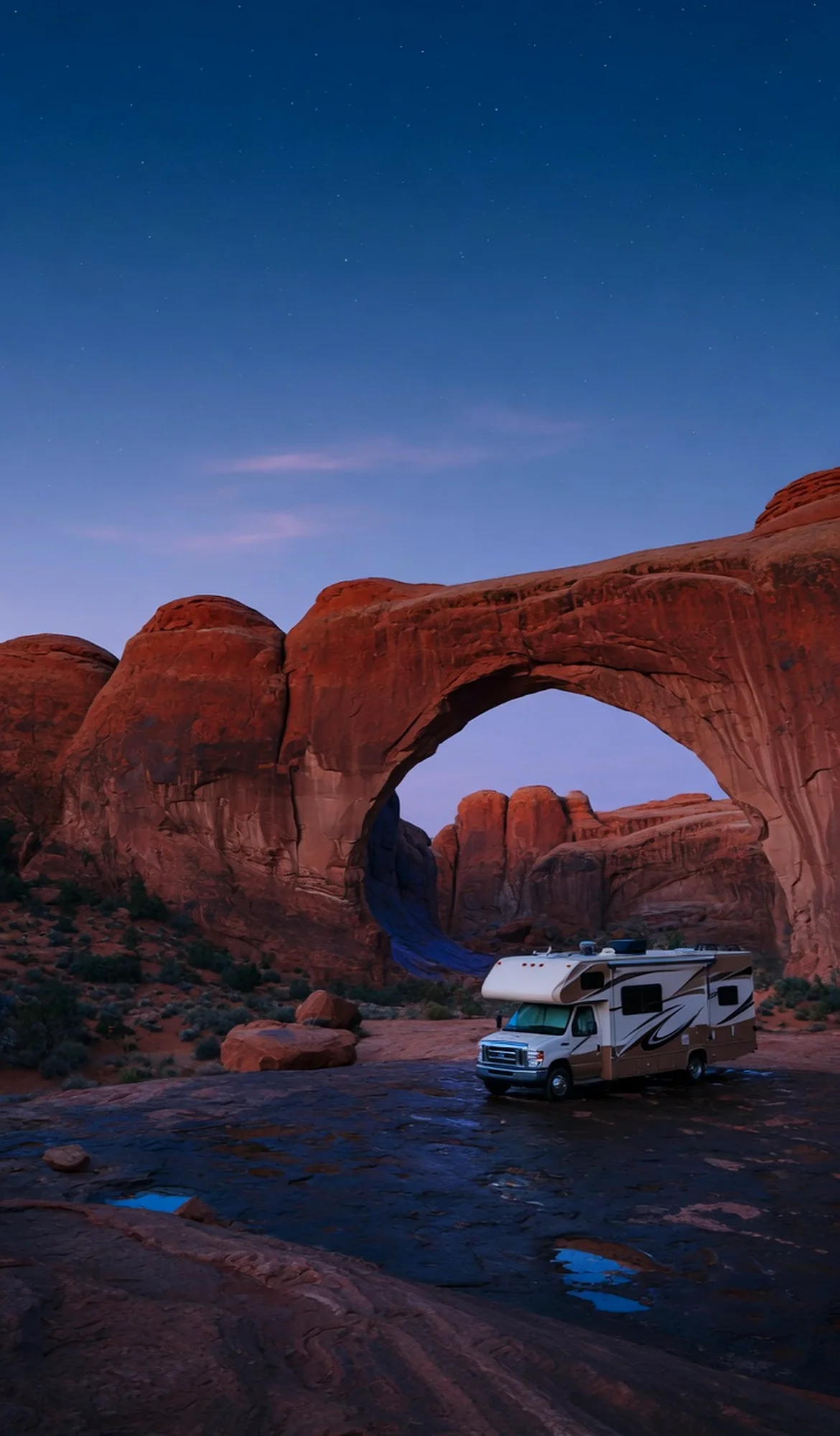
Frisco is a notorious silver-mining ghost town in Utah's remote West Desert, about 15 miles west of Milford in Beaver County, on public land administered by the Bureau of Land Management. At its peak the town held some 6,000 people and 23 saloons, fueled by the Horn Silver Mine — until a catastrophic mine collapse in 1885 broke the boom. Its most striking survivors are five beehive-shaped charcoal kilns, now listed on the National Register of Historic Places.
Field brief
Get your bearings
A quick, sourced snapshot before you plan the drive.
Can you visit the Frisco ghost town and charcoal kilns in Utah?
Yes. Frisco sits about 15 miles west of Milford, Utah, in the West Desert of Beaver County, on public land administered by the Bureau of Land Management. Visitors can see the five beehive charcoal kilns — listed on the National Register of Historic Places — along with a cemetery and scattered ruins. Some structures and mine shafts are marked off-limits for safety.
- On BLM-administered public land in Beaver County, Utah
- Peaked at about 6,000 people and 23 saloons; mine collapsed in 1885
- Five beehive charcoal kilns listed on the National Register of Historic Places
Managing context
Public land administered by the Bureau of Land Management (Cedar City Field Office), Beaver County, Utah
Location
About 15 miles west of Milford, in Utah's West Desert
Peak population
About 6,000 people, with 23 saloons
Decline
A major mine collapse in 1885 ended the boom
Signature landmark
Five beehive-shaped charcoal kilns, on the National Register of Historic Places
Also remains
A cemetery and scattered building ruins
Trip timing
When to point the RV at Frisco Ghost Town & Charcoal Kilns
Spring and fall are ideal for the exposed West Desert, with mild days and cool nights. Summer is very hot and water sources are nonexistent, so carry your own. Roads can be rough; check conditions, and avoid the area during heavy rain.
The story
The story of Frisco Ghost Town & Charcoal Kilns
Frisco earned a reputation as one of the wildest towns on the western frontier. After silver was found in the nearby San Francisco Mine, the camp exploded into a town of roughly 6,000 people served by some 23 saloons. Its prosperity rested largely on a single mine — and when a major mine collapse struck in 1885, the boom unraveled and the town began its slide into a ghost town in Utah's empty West Desert.
The town's most iconic remnants are five stone beehive-shaped charcoal kilns, which crews used to convert wood into the charcoal that fueled the smelters refining the silver ore. The kilns are the most notable landmark at Frisco and are listed on the National Register of Historic Places. Nearby you'll also find a cemetery and the scattered, weathered ruins of the old town.
Frisco lies about 15 miles west of Milford on public land administered by the Bureau of Land Management's Cedar City Field Office, which manages public land across Beaver County. The kilns and many ruins are accessible to visitors, but some buildings and mine shafts are explicitly posted as off-limits for safety. For RV travelers crossing Utah's remote western basins, it's an evocative, wide-open stop with little but desert and history for miles.
Official sources
- Visit Utah (state tourism) — Frisco, West Desert Ghost Town Government source
- BLM — Cedar City Field Office (manages public land in Beaver County) Bureau of Land Management
Nearby & related
Keep planning Utah
Sourced costs, campground directories, and the places worth a detour — the next layer of Utah trip planning.
- Utah RV rental costFuel · camping · tax, sourced
- Utah RV-friendly campgroundsHookups, rig limits, booking tips
- Campervan & van rentals in UtahVan-life routes, rules & rigs
- Utah Mighty 5PickRV Wiki · 15 min read
- RV rentals in UtahPickRV Wiki · 6 min read
- Historic sitesHistory worth the detour
- Wild & scenic riversFree-flowing river trips
- BattlefieldsHallowed-ground history stops
Planning an RV trip near Frisco Ghost Town & Charcoal Kilns?
Was this guide helpful?