RV + the flyways
Bird migration along the flyways
Twice a year, millions of birds funnel down four great flyways across the country — sandhill cranes on the Platte, snow geese over Bosque del Apache, hawks streaming past Cape May. Most of the best vantage points are National Wildlife Refuges you can reach and often camp near in an RV. Here's where to point the rig by flyway, with each spot's window, flagship species, and an honest note on access. Migration timing shifts year to year with the weather.
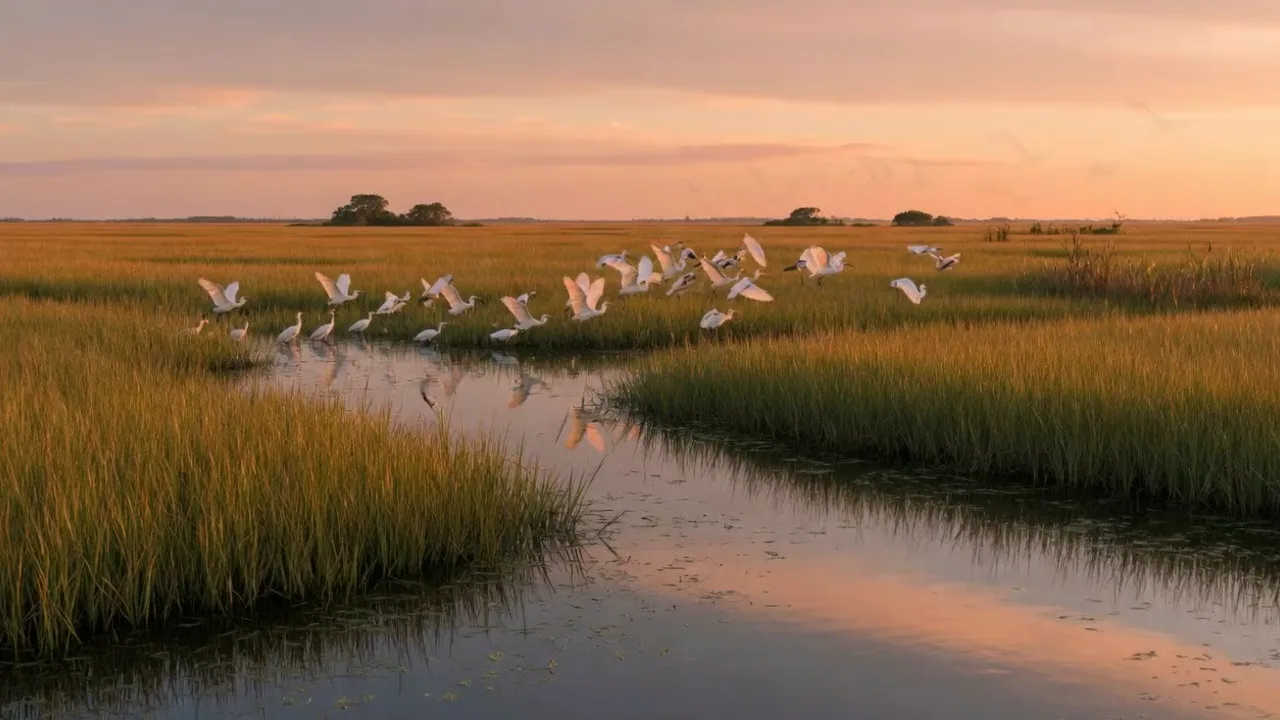
Feel the flyway
Spring and fall are the windows — base near the refuge and check the agency's current count.
Bosque del Apache National Wildlife Refuge
Greatest numbers of birds early November to late January (wintering cranes and geese)
Sandhill cranes · Snow geese
Central Platte River Valley (Sandhill Crane Staging)
Spring staging: cranes build through February, typically peak mid-to-late March (USFWS surveys are flown in late March), with large numbers into the first week of April
Mid-Continent sandhill cranes · 1,415,088 spring 2025 estimate
Bombay Hook National Wildlife Refuge
Spring shorebird peak in May
Snow geese · Shorebirds
Quivira National Wildlife Refuge
Spring shorebirds peaking in May
Shorebirds · Whooping cranes (migration)
Lower Klamath National Wildlife Refuge (Klamath Basin)
Spring and fall waterfowl migration (fall numbers typically build into late autumn)
Waterfowl (ducks, geese, swans) · Bald eagles (winter)
Cape May Point State Park (Cape May Hawkwatch)
Fall migration: hundreds of hawks are counted heading south down the peninsula, with the heaviest flights typically on cold fronts from late September through November
Migrating raptors · Songbirds
Kittatinny Ridge Hawk Watches (incl. Hawk Mountain Sanctuary)
Fall raptor migration roughly mid-August through November
At least 16 raptor species · Broad-winged hawks
Aransas National Wildlife Refuge
Whooping cranes winter at the refuge (generally late fall through early spring)
Whooping cranes (wild flock) · Wintering waterfowl
When it happens
September, October and November fall inside 4 of the 6 refuge windows that name months
| January | 1 |
|---|---|
| February | 2 |
| March | 2 |
| April | 2 |
| May | 3 |
| June | 0 |
| July | 0 |
| August | 1 |
| September | 4 |
| October | 4 |
| November | 4 |
| December | 1 |
Counted from the window each refuge gives on its own page — 6 of 8 name specific months. Lower Klamath National Wildlife Refuge (Klamath Basin), Aransas National Wildlife Refuge describe timing without naming months, so they are not in the count. Timing shifts year to year; confirm with the agency before you book.
Migration is a corridor, not a destination. The refuges here sit on flyways — the broad routes birds have used for far longer than the refuges have existed — so what you are timing is the passage of a wave, and a wave that has moved on does not come back that season.
Birds move on weather, not dates: a cold front pushes a wave south overnight, a warm spell holds it for a week. Most refuges post a weekly count during the season, and that count is worth more than any window on this page — which is exactly why two of these refuges describe timing without naming a month.
Where you would base
States along these flyways
Check before you go
The 8 agencies these pages cite
- U.S. Fish & Wildlife Service — Bosque del Apache NWR, Wildlife Watching
- U.S. Fish & Wildlife Service — Status and Harvests of Sandhill Cranes, 2025 (Mid-Continent Population)
- U.S. Fish & Wildlife Service — Bombay Hook NWR, Species
- U.S. Fish & Wildlife Service — Quivira National Wildlife Refuge
- U.S. Fish & Wildlife Service — Lower Klamath NWR
- NJ Dept. of Environmental Protection — Cape May Point State Park
- Pennsylvania Game Commission — Raptor Migration
- U.S. Fish & Wildlife Service — Aransas National Wildlife Refuge