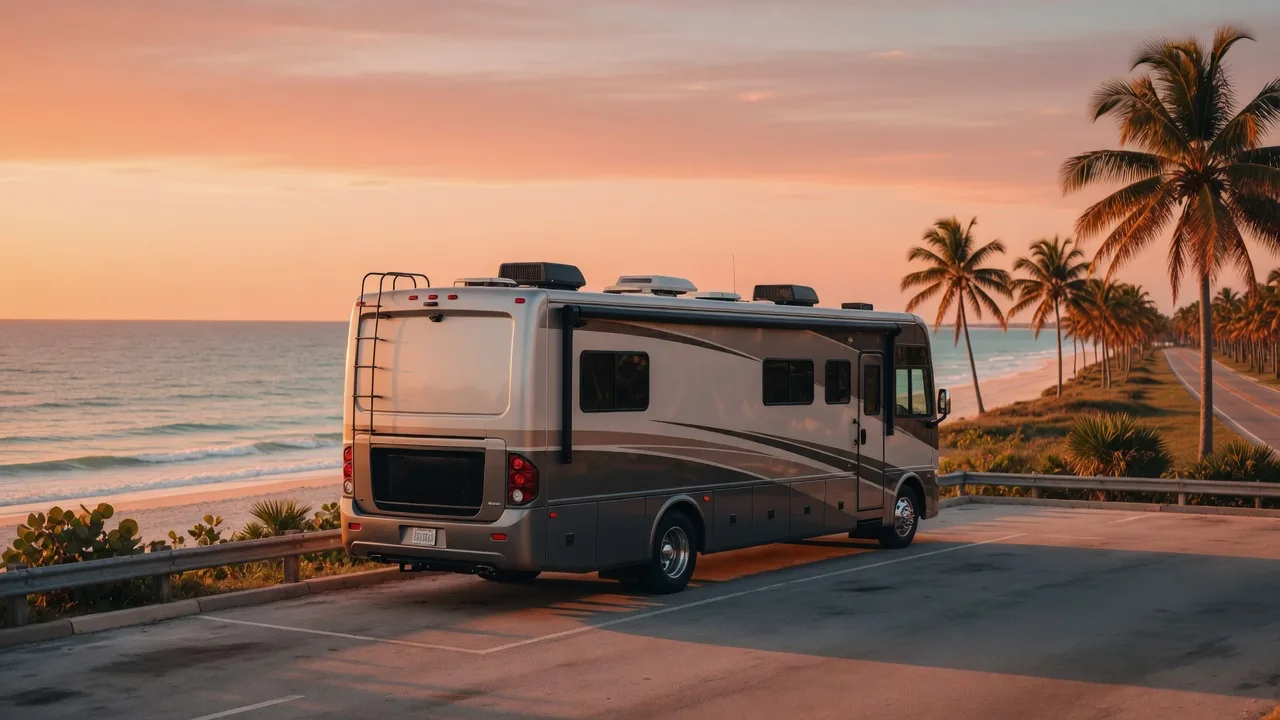
Length, fuel economy, sleeping math, license requirements, parking reality. Pick the right class without buying the wrong rental experience.
The three classes, defined by the RVIA
Per the RV Industry Association (RVIA) classification framework, motorhomes split into three classes based on chassis architecture, NOT length or features.
Class A: built on a heavy-duty commercial truck or bus chassis (Freightliner, Spartan, Ford F-53). Largest motorhomes, typically 26-45 ft. Diesel pushers OR gas-front-engine. Most expensive.
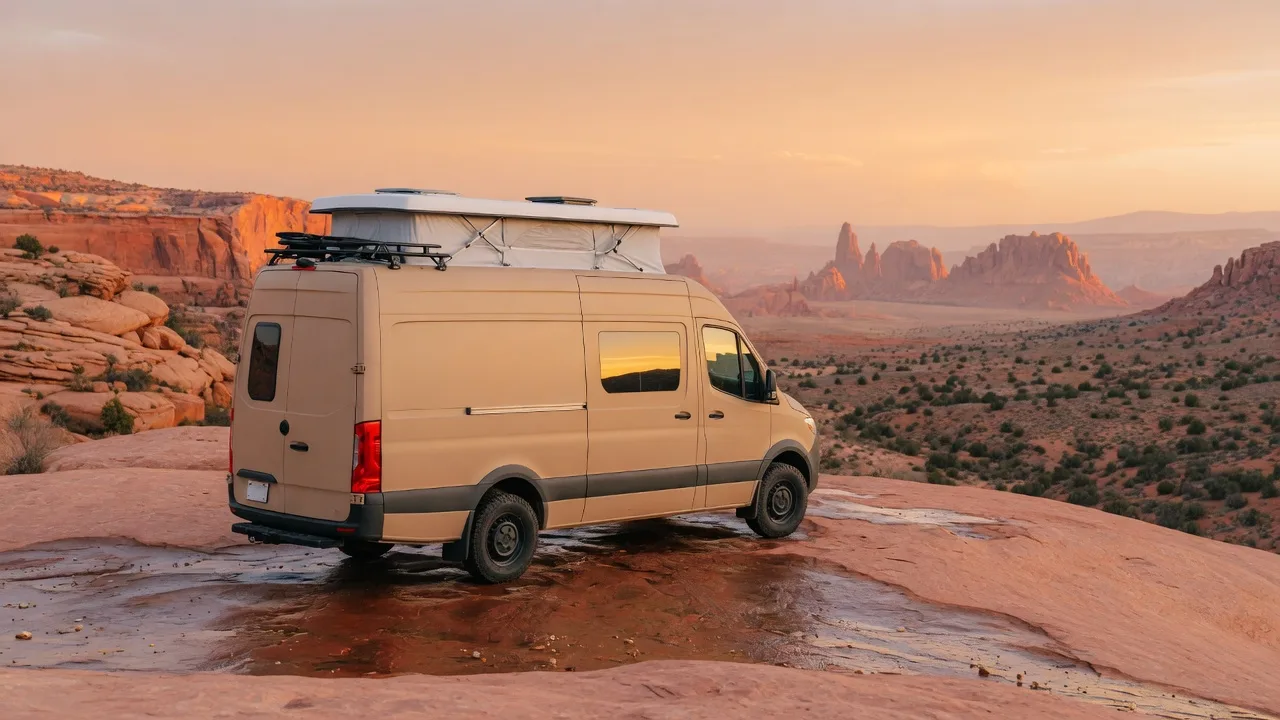
Class B: built on a van chassis (Mercedes Sprinter, Ram ProMaster, Ford Transit). Smallest motorhomes, typically 17-24 ft. Easiest to drive, best fuel economy. Sometimes called 'camper vans'.
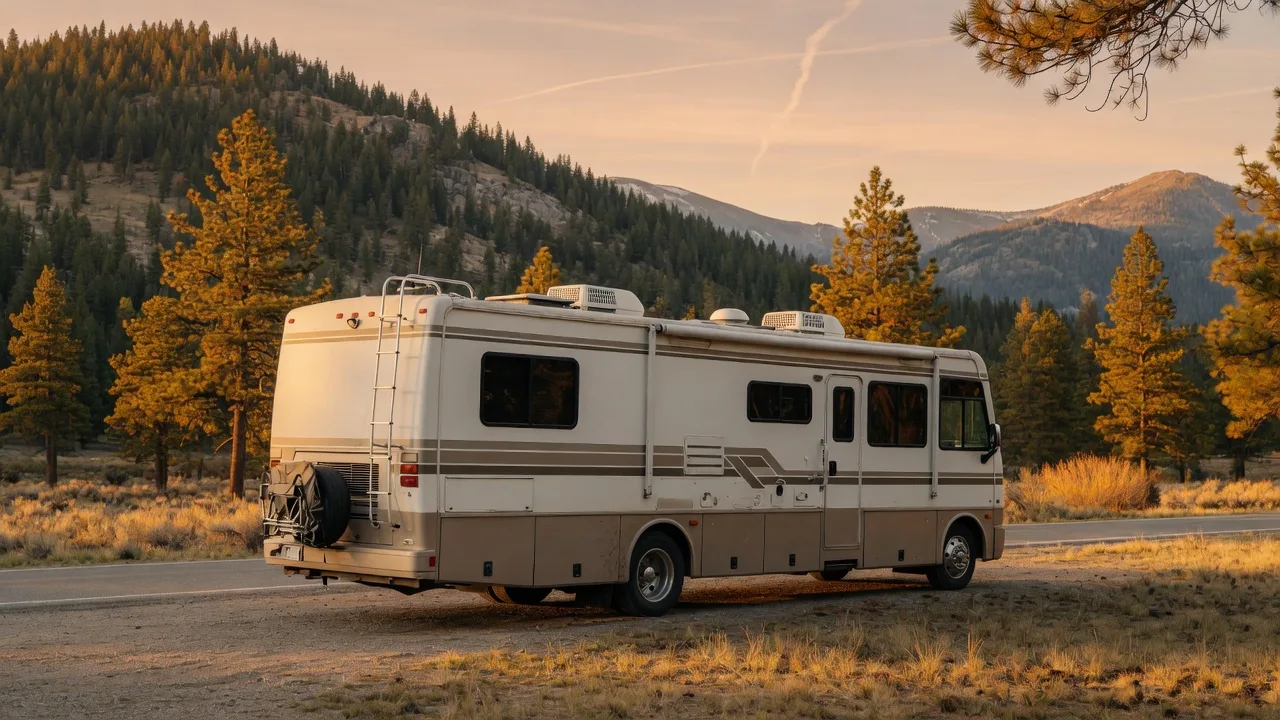
Class C: built on a truck or cutaway chassis (Ford E-450, Chevy 4500) with a 'cabover' bunk above the cab. Mid-size, typically 22-32 ft. The rental-fleet workhorse.
- Class A: bus/truck chassis · 26-45 ft · most expensive · highest payload
- Class B: van chassis · 17-24 ft · cheapest to drive · best MPG
- Class C: truck chassis with cabover · 22-32 ft · rental-fleet workhorse
- Classification is per the RVIA — NOT by length, sleeping capacity, or amenities
Length + driving difficulty
Class A 30 ft: drives like a large bus. Wide turning radius (35-40 ft). Highway lane changes require deliberate planning. Crosswind sensitivity is high — winds 25+ mph make highway driving exhausting.
Class B 22 ft: drives like a large van. Fits in standard parking spaces (most). Crosswind sensitivity is low. First-time renters take 30 min to feel comfortable.
Class C 28 ft: drives like a large truck. Cabover changes the center of mass — feels top-heavy on sharp turns. First-time renters take 1-2 days to feel comfortable.
- Class A 30 ft: turning radius 35-40 ft · highway lane changes need 5+ sec planning
- Class B 22 ft: fits standard parking · low crosswind sensitivity · easiest drive
- Class C 28 ft: drives like a large truck · cabover = top-heavy feel
- All three: backing up requires spotter or backup camera (most rentals have camera)
Fuel economy reality (2026 EIA data)
Per US Energy Information Administration (EIA) data + manufacturer-published economy + RVer field reports, real-world fuel economy:
Class A diesel pusher: 7-9 MPG. Diesel fuel (EIA national avg ~$3.80/gal 2026).
Class A gas: 6-8 MPG. Gas fuel (EIA national avg ~$3.40/gal 2026).
Class B Sprinter diesel: 18-22 MPG. By far most fuel-efficient.
Class C gas: 8-12 MPG. Best at 55 mph (drops 15-25% above 60).
- 1,500-mile trip Class A gas at 7 MPG: $720 fuel cost
- 1,500-mile trip Class C gas at 10 MPG: $510 fuel cost
- 1,500-mile trip Class B Sprinter at 20 MPG: $260 fuel cost
- Differential: Class B is ~3x cheaper to fuel than Class A on the same trip
Real sleeping capacity (vs published 'sleeps X')
Manufacturer 'sleeps X' counts include every horizontal surface that can theoretically support a body. Real comfortable capacity is typically 60-70% of published.
Class A 32 ft 'sleeps 8': real comfortable 4 adults (rear bedroom + convertible dinette). Cabover-sized bunks rare in Class A.
Class B 22 ft 'sleeps 3': real comfortable 1-2 adults. The 'plus 1' is a child or backpacker.
Class C 28 ft 'sleeps 6': real comfortable 2 adults + 2 small kids (rear bedroom + cabover bunk + convertible dinette). Cabover bunks rated for combined occupant weight typically 500-600 lb per manufacturer specs — two large adults exceed.
Sleeping configurations — what 'sleeps 8' actually means
Three sleeping surface types determine real capacity:
(1) Rear walk-around queen/king: comfortable for 2 adults, set up once, never moves.
(2) Cabover bunk (Class C only): designed for kids/teens up to ~600 lb combined; setup once.
(3) Convertible dinette: 2 adults if executed nightly; comfortable but tedious. Most renters skip on multi-day trips.
(4) Slide-out bedroom sofa: variable, often optional configuration.
Cost-to-rent comparison (2026 PickRV averages)
Daily rental rate averages on PickRV (peak season 2026):
Class A diesel pusher 32 ft: $300-450/night.
Class A gas 28 ft: $200-300/night.
Class B Sprinter 22 ft: $175-275/night.
Class C 28 ft: $175-275/night.
- Class A diesel: $300-450/night
- Class A gas: $200-300/night
- Class B Sprinter: $175-275/night
- Class C 28 ft: $175-275/night
- Off-peak (Nov-Mar): subtract 30-40%
Parking + overnight reality (the constraint nobody mentions until day 2)
Per US Forest Service campground spec sheets, recreation.gov reservation filters, and KOA's published site-length inventory, the median improved-campground site length in the US is roughly 32 ft. Sites accommodating rigs over 35 ft drop to under 30% of the national inventory; sites over 40 ft drop to under 10%. This is the silent constraint that shrinks the reachable destination list as your chosen class grows.
Class B 22 ft fits literally any campsite ever built — including walk-in tent sites with a vehicle pad — and parks in a standard 18 ft urban parallel space if you don't mind tucking the rear into a driveway apron. Class C 28 ft fits 90%+ of US campgrounds without trouble. Class A 32 ft pushes you into the upper half of site lengths and requires reservation filtering by length. Class A 38-45 ft eliminates most National Park campgrounds (NPS records site lengths in the campground reservation interface — Yosemite, Yellowstone, Glacier, Rocky Mountain all have median lengths under 30 ft).
Urban overnight parking adds a second filter. Walmart's published corporate policy permits overnight RV parking at most stores at store-manager discretion; Cracker Barrel publishes a similar policy. Both work fine for Class B and most Class C rigs but a 38 ft Class A blocks too many parking spots and gets asked to move. Rest areas have state-specific time limits (commonly 4-12 hours; California 8 hours, Texas 24 hours per state DOT signage).
- Median US improved campsite length: ~32 ft (RVIA + recreation.gov data)
- Sites accommodating 35 ft+: under 30% of national inventory
- Sites accommodating 40 ft+: under 10% of national inventory
- NPS classic campgrounds (Yosemite, Yellowstone, Glacier): median under 30 ft
- Walmart + Cracker Barrel overnight: store-manager discretion · Class A 38ft+ often refused
Real-world MPG decision matrix (1,500-mile trip cost)
Using EIA 2026 national-average fuel prices ($3.40/gal regular, $3.80/gal diesel) and the realistic field-reported MPG ranges from the FuelEconomy.gov user-reported database (cross-referenced with manufacturer brochures), here's the fuel cost for an identical 1,500-mile loop.
The math reveals a counterintuitive truth: the daily rental rate gap between Class A diesel ($350/night) and Class B Sprinter ($225/night) reverses itself if you're driving more than 200 miles per day. The Class B saves enough fuel over 7 days of moderate driving to offset 2-3 nights of higher-class rental rate. But if you're parked at one campground for 5 of 7 nights and only driving 50 mi/day for day trips, the fuel-economy advantage of Class B largely evaporates and the larger rig's livability wins.
- Class A diesel pusher (8 MPG): 1,500 mi ÷ 8 = 187 gal × $3.80 = $711
- Class A gas (7 MPG): 1,500 mi ÷ 7 = 214 gal × $3.40 = $728
- Class C 28 ft gas (10 MPG): 1,500 mi ÷ 10 = 150 gal × $3.40 = $510
- Class B Sprinter diesel (20 MPG): 1,500 mi ÷ 20 = 75 gal × $3.80 = $285
- Class B Sprinter diesel loaded with 4 people (15 MPG): 1,500 mi ÷ 15 = 100 gal × $3.80 = $380
License requirements (state-by-state)
Per FMCSA + state DMV regulations, most motorhomes under 26,001 lbs GVWR drive on a standard Class D license. Above 26,001 lbs, some states require Class B non-commercial.
California (Class B noncomm): required for vehicles 40 ft+ OR 3+ axles. Hawaii: similar. Pennsylvania: required for vehicles over 26,000 lbs OR 26 ft+ length OR with air brakes.
Most rental motorhomes are sized to stay under these thresholds — Class C 28 ft is typically 12,000-14,000 lbs GVWR, well below.
- Under 26,001 lbs GVWR: Class D in most states
- California 40 ft+: Class B noncomm required
- Pennsylvania over 26,000 lbs: Class B required
- Always verify with the host's stated GVWR + your state DMV
What rental marketing doesn't tell you
Under-shared truth #1: 'sleeps 6' is a marketing number, not a comfort number. The cabover bunk in a typical Class C 28 ft has 600 lb combined occupant rating — two 200+ lb adults exceed. Verify the manufacturer-published cabover load rating before booking for 4+ adults.
Under-shared truth #2: Class B fuel economy savings disappear if you carry 4 people. Sprinter chassis at 20 MPG empty drops to 14-16 MPG fully loaded with passengers + gear + water. Still better than Class A but the gap closes.
Under-shared truth #3: Class A 'diesel pusher' (engine in the rear) drives quieter at highway speed and pulls grades better than Class A gas (engine in front), but maintenance + diesel-specific fluid costs are 30-50% higher over time. For 1-week rentals, the diesel-pusher experience advantage isn't worth the rate premium ($75-150/night more) for most renters.
Frequently asked questions
Which RV class is easiest to drive for a first-time renter?›
Class B (camper van on Sprinter/ProMaster/Transit chassis). 17-24 ft, fits in standard parking spaces, drives like a large van. Most first-timers feel comfortable within 30 minutes. Class C is second-easiest.
Do I need a special license to drive a Class A motorhome?›
Under 26,001 lbs GVWR: standard Class D in most states. California 40 ft+ requires Class B non-commercial. Hawaii + Pennsylvania have similar thresholds. Verify with your state DMV + the host's listed GVWR before booking.
What's the real difference between Class B and Class C in 2026 rentals?›
Class B: van chassis, 17-24 ft, 18-22 MPG, sleeps 1-2 adults comfortably, $175-275/night. Class C: truck chassis with cabover bunk, 22-32 ft, 8-12 MPG, sleeps 2 adults + 2 kids comfortably, $175-275/night.
Why does Class A cost so much more per night?›
Larger chassis (commercial truck/bus), more amenities, higher acquisition cost, lower production volume, more expensive maintenance (especially diesel pushers). Daily rental rate $300-450/night vs $175-275 for Class B/C.
Will a Class A fit at most US campgrounds?›
Class A 32 ft: yes, with reservation filtering (about 70% of US sites accept it). Class A 38-45 ft: no — eliminates most NPS campgrounds (Yosemite, Yellowstone, Glacier all median under 30 ft) and limits you to private RV parks designed for larger rigs. Median improved campsite is ~32 ft per RVIA + recreation.gov data.
Does the rental rate or the fuel cost matter more for a 7-day trip?›
Depends on miles driven. At 200+ miles/day, fuel cost dominates and Class B Sprinter wins (saves enough to offset 2-3 nights of higher rental rate). At under 100 miles/day with most time parked at one base camp, rental rate and livability dominate and Class A or larger Class C wins.
Continue your research on PickRV
Sources
- 1.RVIA Industry Statistics + ClassificationRV Industry Associationcompany or industry source
- 2.FuelEconomy.gov user-reported MPG databaseUS DOE / EPAgovernment or university source
- 3.Recreation.gov campsite-length filterUS Federal Landsgovernment or university source
- 4.FMCSA Commercial Motor Vehicle Standards 49 CFR 383FMCSAgovernment or university source
- 5.EIA Weekly Retail Gasoline and Diesel PricesUS EIAgovernment or university source
- 6.California DMV Class B non-commercial requirementsCalifornia DMVgovernment or university source
- 7.NHTSA GVWR + safety standardsNHTSAgovernment or university source
Sources are a mix of government and university publications and the company or industry documentation for the specific equipment, store policy or standard discussed — each row above says which one it is, so you can weigh it yourself. Last verified 2026-05-25. Report broken links to support@pickrv.com.
Ready to roll?
Pick a rig. Write the road.
Complete nightly price on every listing — your exact total itemized before you pay · 48h full rental refund. Every rig near you, one checkout.
Related reads

Plan around this guide · 3
Hub anchors · mega-guides · cost calculator — one click each.
Related on PickRV
Tell us when you want to travel.
Owners list their own rigs on PickRV. Add your dates and we'll email you when one is listed for them — nothing else, no spam.
Was this guide helpful?