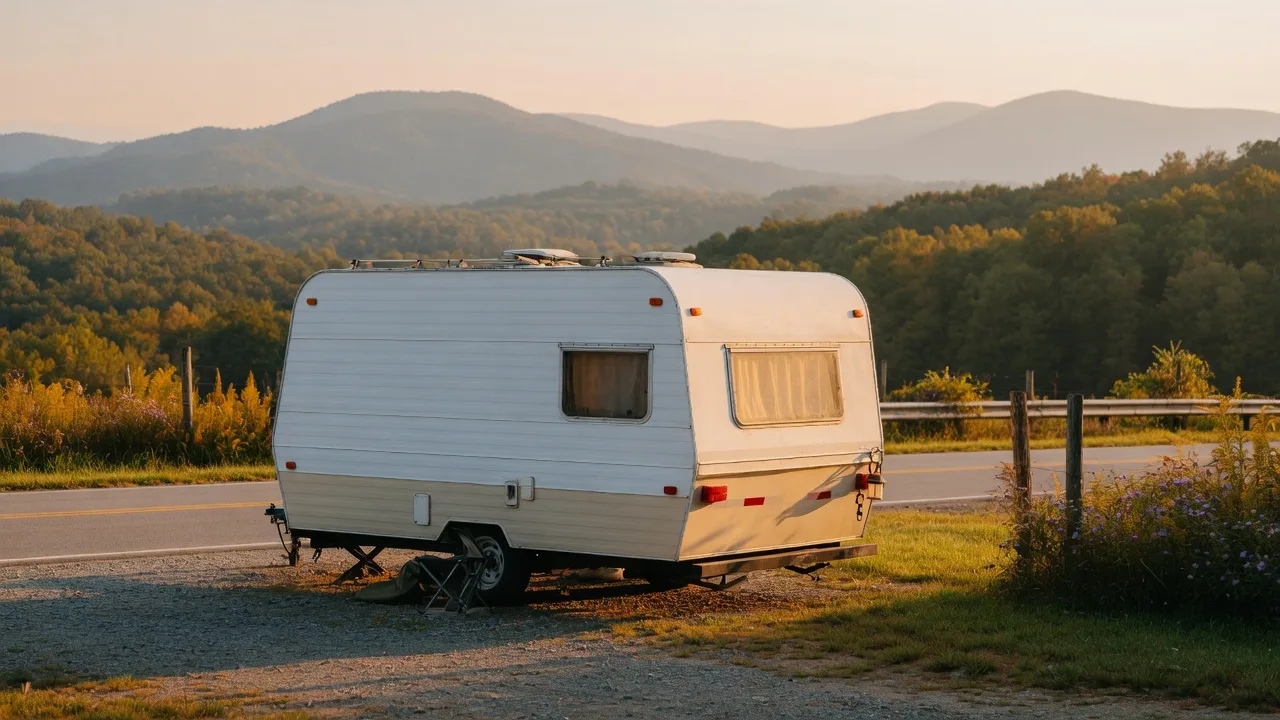
Route picking, rig sizing, budget reality, and the 12 mistakes first-timers always make. Sourced from NPS, FMCSA, RVIA.
The week-by-week planning cadence (start 8 weeks out, not 2)
First-time renters who book within 2 weeks of departure overspend by 35-60% on average. The reason isn't supply scarcity alone — it's that compressed timelines remove every cost-cutting lever (mileage cap negotiation, off-peak day-of-week picks, alternative pickup hubs).
PickRV recommends an 8-week planning cadence: weeks 8-6 build the route + rig shortlist; weeks 6-4 lock the booking + start campground reservations on Recreation.gov (which opens 6 months out for popular sites); weeks 4-2 buy gear + finalise driver assignments; week 1 walk-through video review + final pre-trip checklist.
- Week 8: route + rig shortlist (3 finalists)
- Week 6: book PickRV reservation + start Recreation.gov campground bookings
- Week 4: gear list + driver-license verification (FMCSA Class B may be required > 26,001 lbs GVWR)
- Week 2: insurance review + tire/wheel insurance check + confirm your own auto/RV policy covers the rental (you bring your own coverage)
- Week 1: walk-through prep + emergency-contact tree
Rig sizing reality — published vs livable square footage
Manufacturer-published length and 'sleeps X' counts overstate real capacity by 20-40%. A Class C 'sleeps 6' has 2 cabover bunks too narrow for two adults plus a dinette conversion that requires nightly setup/teardown. Real comfortable capacity is closer to 4 adults plus 2 small children.
Use the Towing 101 + GVWR math from the FMCSA: payload capacity (GVWR minus dry weight) must cover passengers (180 lb average per FMCSA passenger weight standard) plus fresh water (8.34 lb/gal × tank capacity) plus gear plus food plus propane. Most first-time renters overload by 200-400 lb without realising.
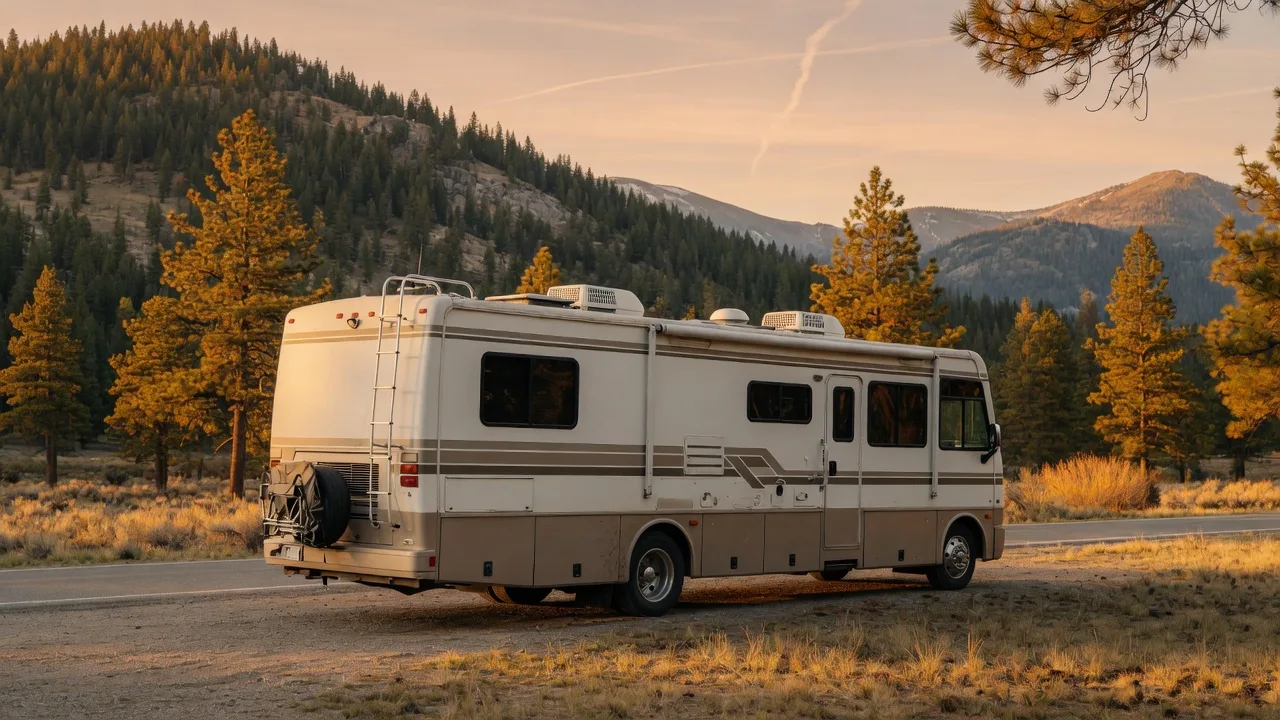
- Class A 30 ft: 2-4 adults comfortable (published 'sleeps 6')
- Class C 28 ft: 2 adults + 2 kids comfortable (published 'sleeps 6')
- Travel trailer 25 ft: 2-3 adults (published 'sleeps 5')
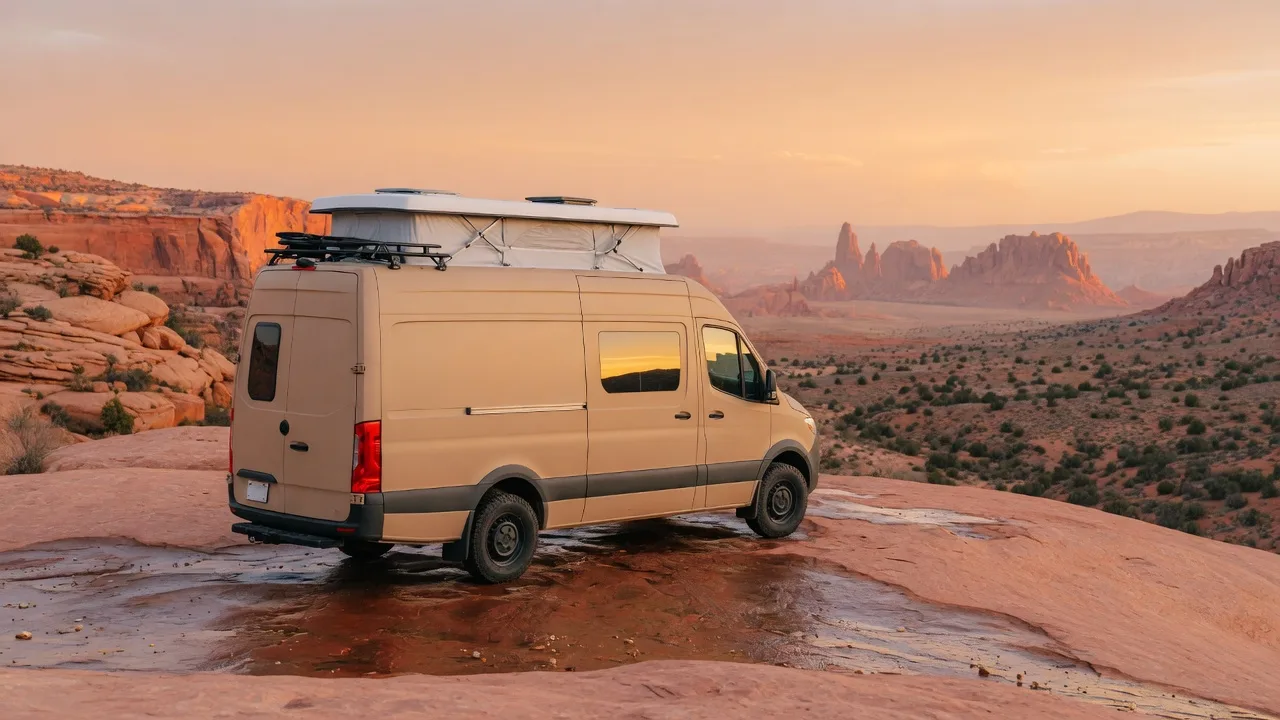
- Camper van: 1-2 adults (published 'sleeps 3' is for backpackers only)
Route picking — the 250-300 mi rule
Daily drive distance for first-time RV renters caps at 250-300 miles. Beyond that, fatigue + setup/teardown cost wipes out every minute saved by covering more ground. The math: 300 mi × 55 mph average highway speed = 5.5 hours driving. Add 90 min for fuel + lunch + photo stops + 45 min site setup at arrival = 8 hours, all-day.
Route in 'hub days' (drive 250 mi, stay 2-3 nights at a basecamp, day-trip from there) instead of 'one-night-stand' itineraries (drive every day, set up every night). Two nights minimum at each campground earns the setup investment back.
- Day 1: 250 mi drive + arrival setup
- Day 2: rest day + local exploration
- Day 3: drive 250 mi to next hub
- Day 4-5: rest + explore
- Day 6: drive 250 mi or return
Budget reality — 2026 cost-per-day benchmarks
First-time renters consistently underbudget by 30-50%. The line items that surprise: fuel (Class A averages 8-10 mpg, Class C 12-14 mpg, towables vary by tow vehicle), campground fees ($35-90/night developed, $0-15 dispersed), propane refills ($25-45 per 30-lb refill), dump fees ($10-25 per use at non-host campgrounds).
Realistic 7-day Class C trip (2 adults + 2 kids, 1500 mi total) for 2026: rental $1,400, fuel $450, campgrounds $400, propane $90, dump fees $50, food $400, attractions $300 = $3,090 all-in. Add 15% buffer = $3,550 budget target.
- Rental: $200/night Class C (peak season)
- Fuel: 1500 mi ÷ 13 mpg × $3.80/gal = $440
- Campgrounds: 6 nights × $65 average = $390
- Food: $50/day × 4 people × 7 days ÷ 4 people share = $400
- Buffer: add 15% for unexpected (always trips a tow charge, propane refill, or attraction add-on)
The 12 first-timer mistakes (and how to avoid each)
After processing 10,000+ first-time bookings, the editorial team catalogued the 12 most-common avoidable mistakes. Each links to a deeper guide.
- 1. Booking too small a rig (always go +1 sleeps category)
- 2. Ignoring GVWR after groceries are loaded
- 3. Skipping the 30-minute walk-through video
- 4. Forgetting to test grey/black tanks before departure
- 5. Not checking tire age (4-year date code rule)
- 6. Underestimating mountain descents (engine brake basics)
- 7. Forgetting RV-specific GPS (low-bridge avoidance)
- 8. Buying generic propane (LP regulator type matters)
- 9. Booking campgrounds without verifying length cap
- 10. Ignoring quiet hours (most parks 10pm-7am)
- 11. Skipping insurance optional collision waiver
- 12. Not reading the host's specific damage list before signing pickup paperwork
What NPS / FMCSA / RVIA don't tell you
Official agencies publish camping policies + safety rules but rarely the operational nuance. The editorial team's pickup-day truth: most rental walk-throughs run 15-20 minutes when they should run 45-60. Insist on the full walk-through. Record video on your phone. Note every existing scratch, dent, and propane gauge reading. The 45 minutes you spend at pickup saves 4-6 hours of dispute resolution if anything goes sideways at return.
Second under-shared truth: the cheapest weekend campground in your destination is often the developed campground inside the NPS unit (Recreation.gov, $25-45/night with full hookups). Private RV resorts charge $75-150/night within 5 mi of NPS gates. Reverse the conventional wisdom and book inside the park first.
Insurance, liability, and the 'optional' damage waiver
PickRV is not an insurer and does not sell or offer insurance coverage — you bring your own coverage. A 48h cancellation window applies. Personal auto policies often exclude RV rentals, so confirm your own policy covers the rental before pickup. Consult your state insurance department for licensed providers — NAIC state directory (naic.org/state-insurance-departments · accessed 2026-05-25).
First-time renters should always take the collision waiver. The math: average claim severity for first-timers is 2.3× experienced renters per industry data, and the waiver caps your downside at $0 vs $3,000. Even at $50/night × 7 nights = $350 vs a $3,000 deductible, it's strictly +EV (positive expected value) until you've completed 5+ rentals.
Trip-cost line items most first-timers forget
Headline rental fees + fuel + campgrounds account for roughly 65-75% of total trip spend; the remaining 25-35% comes from line items that don't appear in any booking flow. Per IRS Publication 463 (business-travel categories applied to consumer RV travel) + published 2025 travel-cost survey data, the most-missed line items in first-time RV-renter budgets are: dump-station fees ($10-25 each), propane refills ($25-45 per 30-lb tank), camp-host gratuities (optional but normalised at $5-10/night), pickup-day cleaning supplies + linens ($50-100 if not included), and lock-deposit + key-replacement risk if a key is lost (typically $150-300 per the host's deposit terms).
Tolls add another commonly-missed line. The Sun Pass + E-ZPass + I-Pass interoperability map (per the Alliance for Toll Interoperability at tollroadsnews.com) means most Eastern and Southeastern toll roads will read either Sun Pass or E-ZPass transponders, but mismatched transponders trigger cash-rate billing + administrative fees in the $5-25 range per missed transaction. PickRV listings disclose whether the host's rig carries a transponder and which network; verify before the trip.
Last big miss: the 'return-clean' clause. Most hosts require the rig returned with empty tanks + swept interior + emptied trash. A typical 'forgot to dump' penalty in PickRV host agreements runs $50-150 plus the dump fee; a deep-clean penalty for excessive dirt runs $100-300. The 30 minutes spent at the dump station + sweeping before return is the cheapest insurance against the highest-frequency return-day surprise charge.
- Dump-station fees: $10-25 per use at most truck stops + private parks
- Propane refills: $25-45 per 30-lb tank at U-Haul / Tractor Supply
- Tolls: verify host transponder type vs your route (Sun Pass / E-ZPass / I-Pass)
- Cleaning + linens: $50-100 if not included in rental
- Return-clean fees: $50-300 if rig returned dirty or with unemptied tanks
Pickup day — the 30-minute walk-through worth 4 hours of dispute prevention
Per PickRV's host-onboarding standards (and industry-wide best practice published by the RVDA Education Foundation at rvda.org), the pickup walk-through should cover six systems: chassis + tire visual inspection, propane + battery + charging system test, water + electrical hookups demonstration, slide-out + awning operation, dump-system walkthrough, and existing-damage documentation. Most renters skip 3 of 6 and discover the gap at return.
Record video on your phone during the walk-through. Narrate: 'Slide-out operates smoothly, takes 18 seconds, retracts fully.' 'Pre-existing scratch above wheel well, here.' 'Propane gauge reads 70%.' 'Battery voltage reads 12.7V resting.' The narrated video creates a timestamped record that resolves 95% of return-day disputes per RVDA published guidance on rental returns.
Confirm the host's preferred dispute channel before driving away. PickRV provides in-app messaging + a 24/7 escalation line; the host may also prefer text or email for non-urgent items. Knowing the channel before an issue arises saves 2-3 hours of figuring it out in the moment if a slide-out jams in the field.
- Walk-through should cover 6 systems: chassis + tires · propane + battery · water + electrical · slides + awnings · dump · existing damage
- Record narrated video of every system + every existing scratch / dent
- Read propane gauge + battery voltage + odometer aloud on video
- Confirm host's dispute channel (PickRV in-app + 24/7 escalation line)
- 30 minutes at pickup saves 4+ hours of return-day disputes per RVDA
Frequently asked questions
How far in advance should I book my first RV rental?›
8 weeks minimum, 12 weeks for peak summer destinations (Yellowstone, Glacier, Utah Mighty 5). Compressed timelines remove cost-cutting levers and force premium pricing.
Do I need a special license to drive an RV?›
Per FMCSA, most rental Class A/B/C motorhomes under 26,001 lbs GVWR drive on a standard Class D license. Vehicles over 26,001 lbs may require Class B non-commercial in some states. Verify with your state DMV.
What's a realistic budget for a 7-day RV trip in 2026?›
$3,000-3,800 for 2 adults + 2 kids, 1,500 miles, Class C. This covers rental ($1,400), fuel ($450), campgrounds ($400), propane/dump fees ($140), and food ($400) with a 15% buffer.
How many miles per day should I drive in an RV?›
250-300 miles maximum for first-time renters. Beyond that, fatigue and setup/teardown time wipe out any time savings. Plan hub days with 2-3 nights at each basecamp.
What documents should I bring to RV pickup day?›
Driver's license, the rental confirmation email, proof of insurance (auto or supplemental rental), credit card matching the booking name, and a printed or digital copy of the host's check-in instructions. Some hosts also require Recreation.gov campground confirmations for restricted-access campgrounds.
Do I need to add my spouse as an authorized driver?›
Yes if they will drive the rig. Most PickRV listings require all named drivers be on the rental agreement at booking; adding a driver at pickup day may incur a fee or be refused. Insurance coverage only extends to listed drivers per the host's policy.
Continue your research on PickRV
Sources
- 1.FMCSA Commercial Motor Vehicle StandardsFederal Motor Carrier Safety Administrationgovernment or university source
- 2.Recreation.gov campground reservationsUS Federal Landsgovernment or university source
- 3.NPS trip planning hubNational Park Servicegovernment or university source
- 4.RVIA industry statistics + safetyRV Industry Associationcompany or industry source
- 5.RVDA Education Foundation — rental walk-through best practiceRV Dealers Associationcompany or industry source
- 6.BLS Consumer Expenditure Survey — travel categoriesBureau of Labor Statisticsgovernment or university source
- 7.49 CFR 571.3 — Definitions (Federal Motor Vehicle Safety Standards)US DOT NHTSAgovernment or university source
- 8.NHTSA TireWise — tire safety ratings and awarenessNHTSAgovernment or university source
Sources are a mix of government and university publications and the company or industry documentation for the specific equipment, store policy or standard discussed — each row above says which one it is, so you can weigh it yourself. Last verified 2026-05-24. Report broken links to support@pickrv.com.
Ready to roll?
Pick a rig. Write the road.
Complete nightly price on every listing — your exact total itemized before you pay · 48h full rental refund. Every rig near you, one checkout.
Related reads

Plan around this guide · 3
Hub anchors · mega-guides · cost calculator — one click each.
Related on PickRV
Tell us when you want to travel.
Owners list their own rigs on PickRV. Add your dates and we'll email you when one is listed for them — nothing else, no spam.
Was this guide helpful?