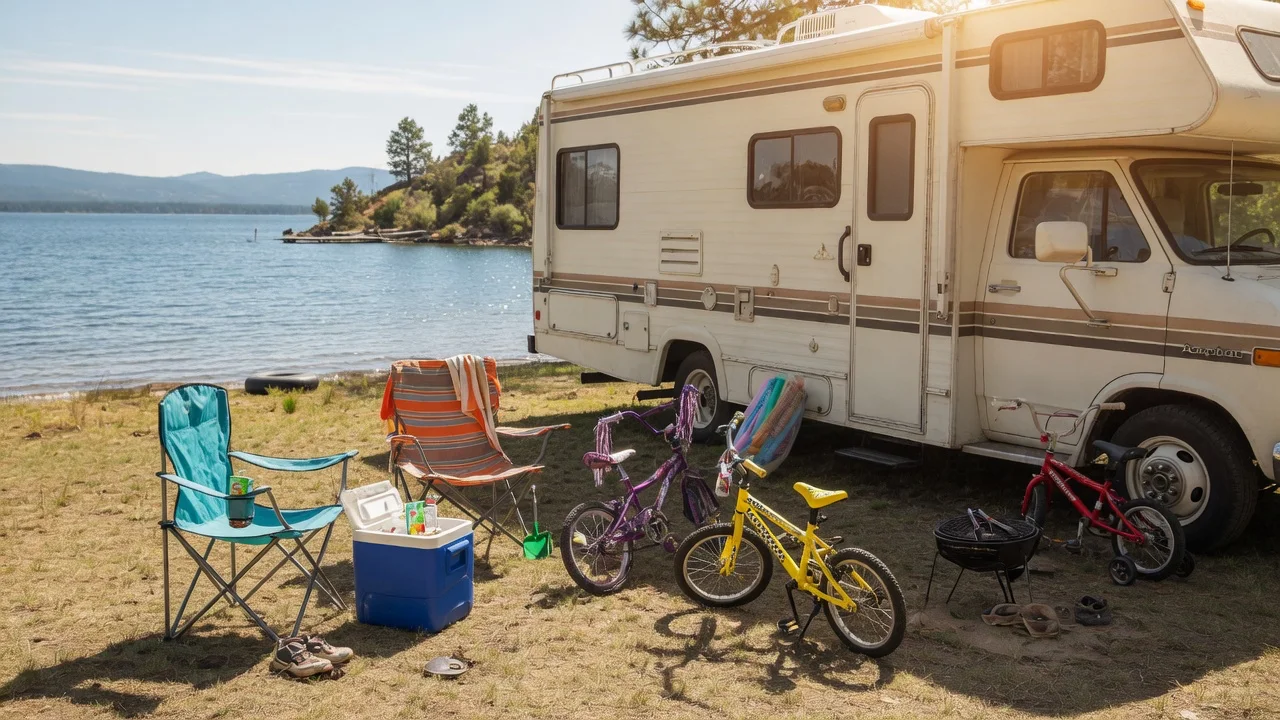
Mobility, sleep arrangements, kid pacing, grandparent comfort — the planning matrix for 3-gen RV trips that actually work.
Why most multi-gen trips fail (and what works)
Per AARP's 2025 family travel survey, 71% of multi-gen RV trips report at least one 'I wish we hadn't done that' decision; the top three: (1) too many drive days, (2) inadequate sleep arrangement for grandparents, (3) failure to plan parallel kid + adult activities.
What works: single basecamp + 2-3 day-trips, dedicated grandparent bedroom (NOT a dinette conversion), structured kid activity blocks (Junior Ranger programs, ranger-led talks). Pace = 60% of what a couple-only trip would attempt.
Rig selection for 3-generation groups
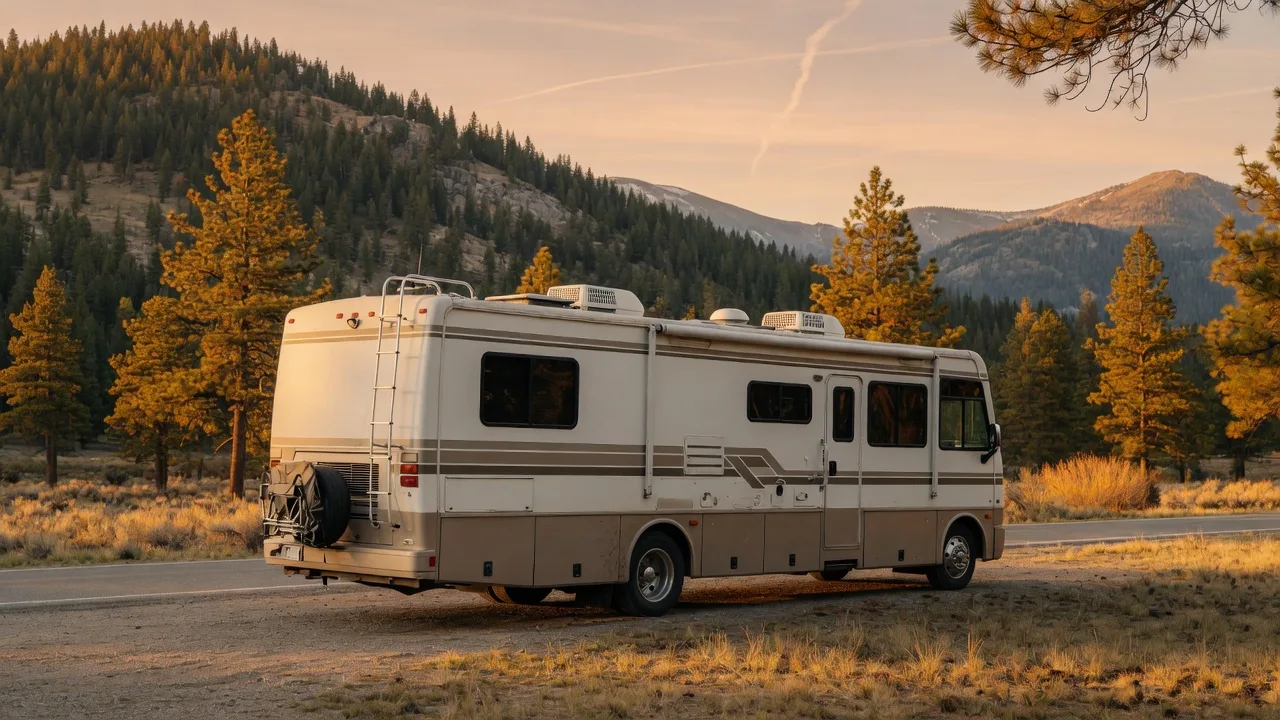
Class A 32-36 ft with rear bedroom + mid-bath + bunk-house layout = the gold standard. The rear bedroom is grandparent-quality (queen bed, walk-around, ensuite access). Bunk-house = kid zone. Dinette + sofa = parent zone.
Avoid: short Class C 25-28 ft (single bedroom = no privacy), travel trailers smaller than 32 ft, anything with cabover bunks as primary adult sleep (cabover bunks are claustrophobic for adults over 50).
- Class A 32-36 ft rear-bedroom bunk-house: best 3-gen layout
- 5th wheel 38-40 ft: rear bedroom + front living = best privacy split
- Class C 32 ft with cabover: kids upstairs, parents in convertible, grandparents in rear bedroom
- Avoid: anything under 28 ft for 3-gen groups
Pace + drive-day math for grandparents
Drive-day fatigue compounds with age. Adults 60+ tolerate 150-200 mi/day comfortably; 250+ mi = next-day exhaustion. Plan a max 200 mi drive day with mandatory stop every 90 minutes (NPS visitor center, scenic overlook, gas + bathroom).
Rest day after every drive day. Grandparents need 1:1 ratio of drive:rest. So for a 7-day trip: 3 drive days × 200 mi = 600 mi total range. Pick basecamps within that radius.
Three vetted multi-gen itineraries (5-7 days)
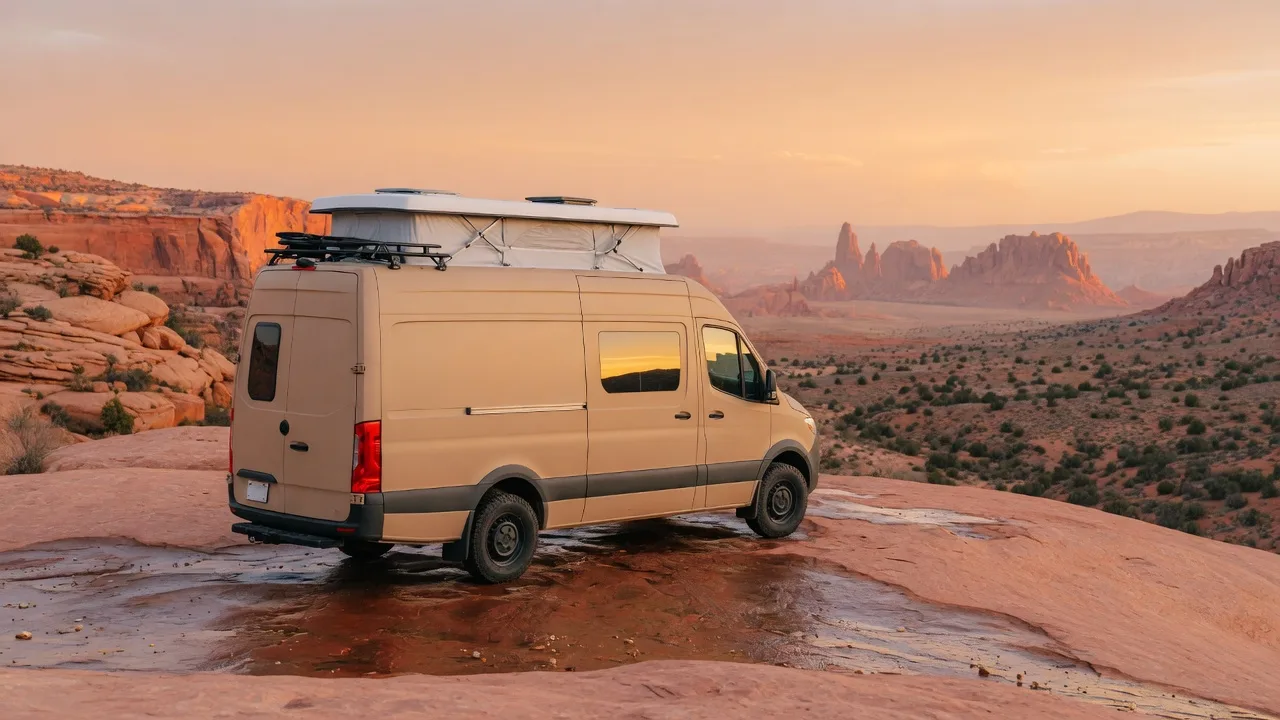
Utah Mighty 5 light (5 days): Moab basecamp + day trips to Arches + Canyonlands. Drive day 1 = arrival, days 2-4 = day trips, day 5 = return.
Yellowstone West gate (7 days): West Yellowstone MT basecamp + day trips to Geyser Basin + Lamar Valley + Old Faithful + Mammoth.
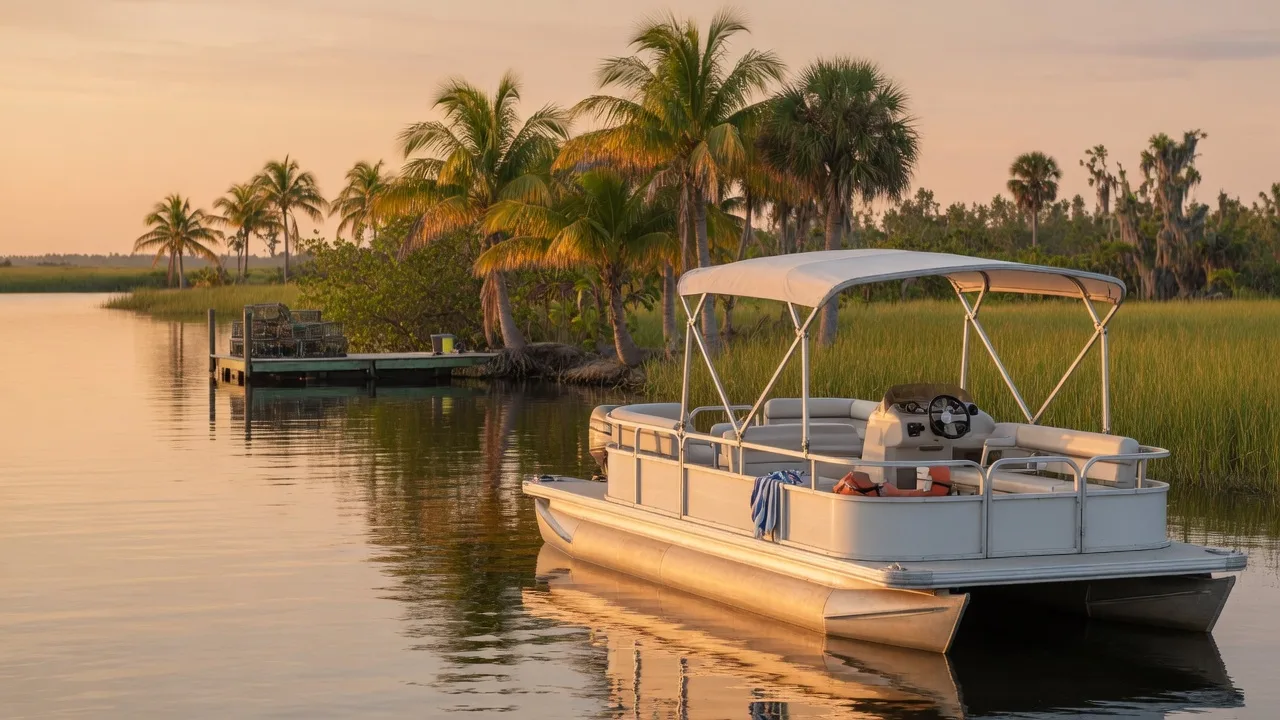
Florida Keys (5 days): Key Largo basecamp + day trips to Bahia Honda + Marathon + Key West.
- Utah Mighty 5 light: Moab base, 5 days, Arches + Canyonlands
- Yellowstone West gate: West Yellowstone, 7 days, geysers + wildlife
- Florida Keys: Key Largo base, 5 days, Bahia Honda + Key West
- Skip: cross-country itineraries, Alaska Highway, anything > 1,500 total mi
Kid activity blocks — Junior Ranger + ranger talks + camp programs
NPS Junior Ranger program is the highest-leverage kid activity in any national-park trip. Free booklet at visitor center, kid completes 5-10 activities, earns a wooden badge sworn in by a ranger. Works for ages 5-13. Most parks have ranger-led junior-ranger walks 2-3x/day in summer.
Campground evening programs (KOA, Jellystone) offer scheduled crafts, movies, scavenger hunts. Many state parks run interpretive ranger talks at dusk. Schedule these in advance.
Accessibility — mobility, hearing, vision
ADA-accessible NPS campsites are reservable on Recreation.gov (filter: 'accessible'). Most have paved level pads, hard-surface paths to bathrooms, accessible picnic tables.
Mobility aids: walker + cane storage in rig under-bed compartment. Wheelchair: confirm rig step-in height + ramp options. Hearing: campground PA-system alerts may be missed; carry NOAA radio for weather. Vision: avoid late-day site setup; arrive 90 min before sunset.
What AARP travel surveys + family blogs don't tell you
The hidden variable in successful 3-gen trips is the morning coffee ritual. Grandparents need 30-45 min of quiet coffee time before kid noise. Build rig schedule around it: park the rig so the awning side faces a quiet area, grandparent has first dibs on the awning chairs.
Second under-shared truth: the first 3-gen trip should be 5 days max, not 10. Confidence + comfort with the routine takes a full trip to establish. Trip 2 onwards can scale to 7-10 days.
Medication + medical-supply staging for older travelers
Per the CDC Travelers' Health guidance at cdc.gov/travel + the American Geriatrics Society's published travel-medicine recommendations, RV trips with grandparents over 65 require a separate medication-management routine that's easy to overlook until something goes wrong far from a pharmacy. The protocol: pack a 14-day supply of every prescription regardless of trip length (covers travel delays + emergencies), keep all bottles in original labeled containers (TSA + Border Patrol checks), maintain a written medication list including dosages + prescribing physician contact + pharmacy phone, and carry the most recent EKG + cardiac stress-test results if applicable.
Refrigerated medications (insulin, certain biologics) require dedicated 12V fridge space in the rig, NOT the main food fridge which cycles temperature during driving. Compact 12V medical-grade fridges (Engel MR040, Dometic CFX3 25) at $400-700 hold temperatures within ±2°F regardless of vehicle motion per Engel + Dometic published spec sheets.
Per AARP travel research at aarp.org/travel, the most-frequent medical-supply omissions on multi-gen trips are: hearing-aid batteries (size 312 + 13 the most common), incontinence supplies (often overlooked but harder to find at remote campgrounds), CPAP supplies + 12V CPAP-power adapter, mobility-aid spare batteries, and prescription glasses-repair kit. A 30-minute pre-trip review with the grandparent's primary-care physician identifies any condition-specific gaps before departure.
- 14-day supply of every prescription regardless of trip length
- Bottles in original labeled containers (TSA + Border Patrol checks)
- Written medication list + prescribing physician contact + pharmacy phone
- Refrigerated meds → dedicated 12V fridge (Engel MR040 / Dometic CFX3 25) at $400-700
- Pre-trip 30-min PCP review catches condition-specific gaps
Bedtime routines + privacy zones — the layout that prevents conflicts
Per the AARP 2025 family-travel survey, the most-cited conflict trigger in 3-gen RV trips is mismatched sleep schedules. Kids ages 5-10 typically sleep 9-12 hours per night; adults 30-50 sleep 7-9; adults 65+ often sleep 5-7 with earlier wake times. A rig layout that puts all 3 generations in one open space guarantees friction.
Solutions: (1) bunk-house with door = kid sleep zone insulated from adult evening conversation; (2) rear bedroom with door = grandparent sleep zone insulated from kid morning energy; (3) Class A or 5th-wheel layout with mid-bath separating the two = best architectural isolation. Class C cabover bunk + dinette conversion + rear bed = 3 sleep zones in a single open space + only 1 door — works for 2-night trips but degrades by night 3 of a longer trip.
Bedtime ritual that works across generations: 7:30 PM kids start wind-down (book, low lights, white-noise app), 8:30 PM kids asleep in bunk-house with door closed, 9:00 PM adults gather in dinette/sofa zone for quiet conversation, 10:00 PM grandparents to rear bedroom, 11:00 PM lights out across the rig. Morning: 6:00 AM grandparents up with coffee in awning chairs, 7:30 AM kids up to breakfast, 8:30 AM full rig active. This protocol minimizes overlap-driven friction.
- Class A bunk-house + rear bedroom + mid-bath = best architectural isolation
- 5th-wheel with rear bedroom + front living = comparable isolation
- Class C cabover + dinette + rear bed = works for 2-night, degrades by night 3+
- Kid bedtime 8:30 PM in closed bunk-house · adults 10 PM · lights out 11 PM
- Grandparent coffee 6 AM in awning chairs (quiet zone) · kids 7:30 AM
Trip-cost split + payment etiquette across 3 generations
Per the AARP 2025 family-travel survey + the Pew Research Center 2024 multigenerational-living study, the most common 3-generation trip-cost split in 2026 is: grandparents pay rig rental + campgrounds (~40-50% of trip total), middle generation pays fuel + groceries + activities (~30-40%), and each adult pays their own restaurant + souvenir spend. Other workable splits include even-thirds, kids-free + adults-even-thirds, or grandparent-treat-trip (everything covered).
Whatever the split, agree on it BEFORE booking. Money disputes mid-trip are the #2 conflict trigger after sleep schedules per AARP survey data. Practical tools: shared Splitwise or Tricount app (free) for line-item tracking, single shared credit card for rig rental + campgrounds with reconciliation at trip end, separate cards for individual spending. Per the Federal Trade Commission's published guidance on family financial agreements (consumer.ftc.gov), written agreements protect all parties even within family — a 1-page text message before the trip 'Mom + Dad cover rental + campgrounds, we cover fuel + groceries, restaurants are individual' suffices and prevents the post-trip awkwardness of unclear expectations.
Tips at restaurants + grocery checkout: in the US, 18-22% restaurant tipping is now standard per the National Restaurant Association consumer behavior surveys. EU + Canadian visitors often under-tip by US norms; brief the visiting generation before the trip's first restaurant stop to avoid awkwardness.
- Common split: grandparents = rental+camp (40-50%) · middle gen = fuel+groceries+activities (30-40%) · individual restaurants+souvenirs
- Agree BEFORE booking · money disputes are #2 conflict trigger per AARP
- Splitwise / Tricount app (free) for line-item tracking
- Written 1-page text agreement protects all parties per FTC guidance
- US restaurant tipping: 18-22% standard per National Restaurant Association
Frequently asked questions
What's the best RV layout for 3 generations?›
Class A 32-36 ft with rear bedroom + bunk-house + mid-bath. Rear bedroom is grandparent quality, bunk-house is kid zone, dinette + sofa is parent zone.
How many miles per day for a trip with grandparents?›
150-200 mi/day max. Plan a rest day after every drive day. For a 7-day trip, that means ~600 mi of total range from a single basecamp.
What's the single best kid activity in national parks?›
NPS Junior Ranger program. Free booklet at any visitor center, 5-10 activities to complete, ranger-sworn wooden badge as reward. Works ages 5-13.
How do I refrigerate insulin or other temperature-sensitive medications on a trip?›
A dedicated 12V medical-grade fridge (Engel MR040 or Dometic CFX3 25 at $400-700) holds ±2°F regardless of motion per manufacturer spec sheets. Avoid the main food fridge which cycles temperature during driving + door-opening. Pack 2-day refrigerated overflow in a Yeti cooler with ice packs as backup.
Do I need to inform my grandparent's doctor about the RV trip?›
Yes for any prescription condition. A 30-minute pre-trip review identifies refill timing, refrigeration needs, condition-specific environmental risks (high altitude, heat exposure, low humidity), and emergency-contact protocols. AGS + CDC travel-medicine guidance is the established standard for this review.
How do high altitudes affect older travelers in the RV?›
Per CDC + AGS guidance, altitudes above 8,000 feet measurably reduce blood-oxygen saturation in adults 65+; symptoms include shortness of breath, headache, fatigue, and dizziness. Yellowstone (7,000-9,000 ft), Bryce (8,000-9,000 ft), Rocky Mountain NP (7,500-12,000 ft) all qualify. Allow 24-48 hours of arrival rest before strenuous activity; descend if symptoms persist.
What's the right room temperature range for the rig at night with grandparents?›
Per the American Geriatrics Society, adults 65+ are more sensitive to temperature extremes than middle-aged adults. Aim for 68-72°F in the rig at night. Avoid running the AC below 65°F (joint-pain trigger) or letting the rig drop below 60°F overnight (hypothermia risk for adults 80+). Add a separate space heater to the grandparent zone if the rig's central heat can't dial low enough.
Continue your research on PickRV
Sources
- 1.AARP Travel ResearchAARPcompany or industry source
- 2.CDC Travelers' HealthUS CDCgovernment or university source
- 3.American Geriatrics Society travel guidanceAGScompany or industry source
- 4.NPS Junior Ranger ProgramNPSgovernment or university source
- 5.NPS AccessibilityNPSgovernment or university source
- 6.RVIA Family Travel StatisticsRVIAcompany or industry source
- 7.Recreation.gov accessible campsite filterUS Federal Landsgovernment or university source
Sources are a mix of government and university publications and the company or industry documentation for the specific equipment, store policy or standard discussed — each row above says which one it is, so you can weigh it yourself. Last verified 2026-05-24. Report broken links to support@pickrv.com.
Ready to roll?
Pick a rig. Write the road.
Complete nightly price on every listing — your exact total itemized before you pay · 48h full rental refund. Every rig near you, one checkout.
Related reads
Plan around this guide · 3
Hub anchors · mega-guides · cost calculator — one click each.
Related on PickRV
Tell us when you want to travel.
Owners list their own rigs on PickRV. Add your dates and we'll email you when one is listed for them — nothing else, no spam.
Was this guide helpful?