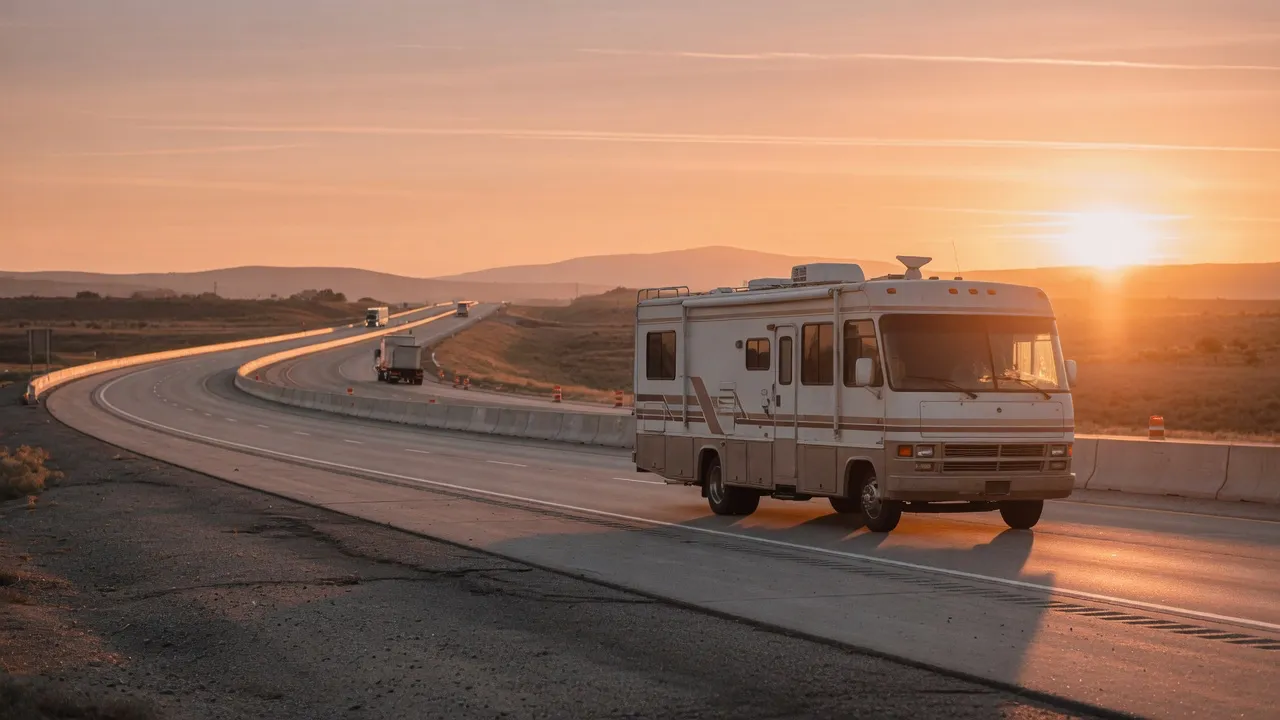
PickRV Mega Guide
What an RV trip actually costs — the PickRV trip-budgeting mega-guide
Daily rate is roughly 40% of the real RV trip cost. Fuel, camp fees, propane, dump fees, insurance, and the hidden lines that surprise…
Rental marketplaces show a daily rate. That rate is roughly 40% of what an RV trip actually costs. The remaining 60% is fuel (15–25%), campground fees (10–15%), insurance + coverage (5–10%), propane and dump fees (3–5%), food premium over home cooking (5–10%), and one-time logistics. This mega-guide walks the entire stack with public-source numbers — U.S. Energy Information Administration weekly fuel prices, National Park Service published campground rates, KOA Holiday published pricing, and state-park reservation fees — so a renter can build a defensible total-cost estimate before booking. The numbers age; the structure does not, and we cite the source so a curious renter can re-run the calculation on the morning of their trip.
PickRV
Published by PickRV
PickRV is a marketplace. Editorial content is informational only — confirm road status, weather, wildlife, and host policies before you travel.
What does the PickRV rv trip budgeting guide cover?
Daily rate is roughly 40% of the real RV trip cost. Fuel, camp fees, propane, dump fees, insurance, and the hidden lines that surprise first-timers — all sourced from public data (EIA Energy Outlook, NPS / KOA / state-park pricing). We walk through it section by section — what to check, what it costs, and the details most listings leave out.
- The 40% rule
- Fuel
- Campground fees
- Insurance + coverage
- Propane, dump, and the small lines that add up
- Trip-budgeting FAQ

Overview · ≈1 min
The 40% rule — why the daily rate is the smallest line
If a Class C rents for $200/night, the total trip cost typically lands between $470 and $560 per night once every line is accounted for. The daily rate is the largest single number a renter sees while shopping, but it's the smallest share of the actual bill. Renters who budget only the daily rate run out of money roughly halfway through the trip — the most common reason marketplaces see early returns and dispute filings.
PickRV editor · what manufacturers + manuals gloss over
What rental marketplaces don't tell you: the per-night sticker price is industry-shaped, not customer-shaped. Hosts price the rig to be competitive on browse pages, knowing the fuel + camps + propane + dump are paid by the renter directly and don't appear in the listing. The renter who treats the daily rate as 'the price' is reading the menu without the prices. Build the full bill before you book; budget the rest of the trip against a defensible number, not a vibe.
- Daily rate ≈ 40% of total trip cost (Class C, paved roads, established campgrounds)
- Fuel + camps + insurance + propane + dump = the remaining 60%
- Boondocking shifts the share — fuel goes UP (longer drives between resupply), camps go to zero, propane / generator costs go UP
- The trip-cost calculator at /tools/total-cost runs the full math
Chapter 2 · Overview · ≈1 min
Fuel — the line that controls trip length

RV fuel economy ranges from 5 to 12 MPG. A Class A diesel pusher returns 7–9 MPG; a Class C gas 8–10 MPG; a Class B (Sprinter chassis) 18–22 MPG; a travel trailer plus tow vehicle gets whatever the tow vehicle gets, minus 25%. The U.S. Energy Information Administration publishes a weekly average retail price for gasoline and diesel by PADD region — that is the only fuel-cost source we cite, because price moves enough between months that anything else ages quickly.
PickRV editor
What fuel-economy stickers don't tell you: rated MPG assumes paved, level highway at 55 mph with no headwind. Real-world Class C MPG drops 15–25% above 60 mph because of aerodynamic drag, and another 10–15% on grade (climbing the Continental Divide or the Cascades is the most expensive hour of any western trip). Plan fuel at the EIA weekly average for your PADD region multiplied by 1.1 to account for highway-exit station premiums. PADD I = East Coast, PADD II = Midwest, PADD III = Gulf, PADD IV = Rockies, PADD V = West Coast — the West Coast is consistently 70–90 cents per gallon above the Gulf, which translates to roughly $200–$300 more per 2,500-mile western trip than the same trip routed in the Midwest.
- Source: eia.gov/petroleum/gasdiesel — weekly retail price by PADD region
- Apply a 1.1 multiplier for highway-exit pricing
- Class C gas: ~10 MPG flat highway, ~7 MPG climbing grades
- Class B (Sprinter): ~20 MPG — by far the most fuel-efficient rental option

Comparison · 5 options · ≈1 min
Campground fees — the gap between $0 and $115 per night
Where you sleep determines whether camps are a budget line or essentially free. The five tiers, in ascending order: dispersed camping on BLM / National Forest land (free, no services), public lands with developed sites ($10–$25/night, sometimes vault toilets and a hand pump), state-park campgrounds ($25–$50/night with full hookups in most states), National Park campgrounds ($25–$60/night, often dry sites with no hookups), KOA Holiday / Jellystone / private resorts ($60–$115/night with cable + Wi-Fi + pool).
Tier comparison (per-night rates from official 2026 sources)
BLM / NF dispersed
$0
no services, 14-day stay limit, no reservations
Forest Service developed
$10–$25
vault toilet, hand pump, sometimes fire ring (FS.usda.gov)
State park
$25–$50
full hookups in most states, reserveamerica.com or state portal
National Park
$25–$60
frequently dry, recreation.gov, books up 6 months ahead
KOA / private resort
$60–$115
full hookups + Wi-Fi + amenities, koa.com
| Option | Cost | What it covers |
|---|---|---|
| BLM / NF dispersed | $0 | no services, 14-day stay limit, no reservations |
| Forest Service developed | $10–$25 | vault toilet, hand pump, sometimes fire ring (FS.usda.gov) |
| State park | $25–$50 | full hookups in most states, reserveamerica.com or state portal |
| National Park | $25–$60 | frequently dry, recreation.gov, books up 6 months ahead |
| KOA / private resort | $60–$115 | full hookups + Wi-Fi + amenities, koa.com |
PickRV editor
What guide books don't tell you: the most over-budgeted line in any first-time trip is campground fees, because the first-timer assumes private RV parks and books KOAs by reflex. State park infrastructure across most of the US is on par with mid-tier private parks at half the price; the booking system (state portal, ReserveAmerica) is just less discoverable. Mix 60% state park, 30% private, and 10% dispersed and the camp-fee line drops by roughly 40% with no quality loss.
Second: National Park campgrounds inside the gate cost more in opportunity than dollars — the desirable ones book six months out at 8:01 AM Eastern on recreation.gov; alternates outside the gate (private RV parks within 10–15 miles) almost always have same-week availability at a higher nightly rate but lower total stress.
- BLM dispersed camping: free, 14-day stay limit (43 CFR §8365.1-2)
- Public-land sources: fs.usda.gov, blm.gov/visit, recreation.gov, state-park portals
- Mix tiers to drop camp-fee line ~40%
Chapter 4 · Overview · ≈1 min
Insurance + coverage — the line that's easy to under-buy
The host carries a commercial RV insurance policy as a condition of listing. That policy covers the vehicle. It does not always cover the renter's actions, the renter's belongings, or off-road / non-paved use. PickRV is not an insurer and does not sell or offer coverage — renters bring their own liability + collision coverage. Personal auto policies often exclude RV rental over a length threshold; verify your policy's 'permissible uses' clause before assuming a rental falls under existing coverage.
PickRV editor
What policy-summary pages don't tell you: the most common claim filed against renters isn't a collision — it's interior damage and consumables (broken awning, ripped screen door, lost leveling block, propane regulator dropped on gravel). Interior damage is often excluded from standard coverage and CDW, and the host charges retail replacement against the security deposit. Photograph every panel + every interior surface at pickup AND return, store the timestamps, and you cap the dispute risk at what's actually documented.
Second: 'roadside assistance' included with a policy is often a third-party network with 60-to-120-minute response times in remote areas — Alaska, the Rockies, the Sierras — and a tow distance cap of 100 miles. An independent RV-specific roadside membership is a worth-it overlay for any trip outside the I-95 / I-5 corridor.
- Host's commercial policy covers the vehicle; renters bring their own coverage (PickRV does not sell insurance)
- Personal auto often excludes rentals — read 'permissible uses'
- Photograph every panel at pickup AND return — caps dispute risk to what's documented
- An independent RV roadside membership is worth it for any trip outside dense Interstate corridors

Overview · ≈1 min
Propane, dump, and the small lines that add up
A typical trip will burn 1 propane refill ($25–$40 for a 30-lb tank, 2026 retail), 2–4 dump fees ($10–$25 each at private stations, $0–$15 at sani-dumps inside public campgrounds), $40–$80 of consumables (RV-safe toilet paper, holding-tank deodorant, dishwashing supplies, single-use water filter cartridges), and roughly $25 in stocking-up logistics (groceries premium on Day 1, ice, propane lighters, sewer hose attachments not provided).
PickRV editor
What the rental agreement doesn't tell you: 'fill the propane' on return is a common contract clause, and the host charges a fill fee that's typically 50% above retail. Save $20 by stopping at a U-Haul or Tractor Supply on the way back — they refill rather than swap, so you only pay for what you used.
Second: Walmart and Flying J often have free dump stations as a customer courtesy; the apps Sanidumps and AllStays list them by GPS. Routing a dump-station stop through a normal grocery run is the cheapest way to keep tanks empty.
- Refilling propane (U-Haul, Tractor Supply) costs less than swapping (gas stations)
- Free dump stations: sanidumps.com + allstays.com data sets
- Day-1 stocking-up premium adds ~$25 — bring spices + olive oil from home
Chapter 6 · FAQ · 5 questions · ≈1 min
Trip-budgeting FAQ
The top five questions PickRV editors get on trip budgeting.
Is an RV trip cheaper than a hotel + rental car?
Sometimes. For a couple covering ≤500 miles per day, hotel + car typically wins on cost. For a family of 4+ covering 200–400 miles per day with kids who otherwise need their own room, an RV trip lands within 10–20% of hotel cost and lets you control the schedule. The break-even is roughly 4 people, 7+ nights, and a destination where hotels are over $150/night.
How do I get a defensible total-cost number?
Use PickRV's trip-cost calculator at /tools/total-cost. Plug in days, route miles, expected rig MPG, rough camp-tier mix, and the EIA weekly fuel price for your destination's PADD region. The calculator shows the line-by-line bill and a +/- 10% confidence band.
Where can I find current campground prices?
National parks: recreation.gov. State parks: each state's parks portal (Florida State Parks, California State Parks, etc.). Forest Service: fs.usda.gov. BLM: blm.gov/visit. Private: koa.com, jellystoneparks.com, goodsam.com.
How do shoulder-season rentals affect the math?
Shoulder-season (Sep 8 – Oct 31, mid-Apr – mid-May) drops daily rates 20–35% in most markets but leaves fuel + camp + propane unchanged. The total-trip-cost reduction is closer to 12–18%. Use code SHOULDER20 at checkout when applicable.
What's the single biggest budget mistake first-timers make?
Booking the most rig they can afford and then running out of money for fuel + camps. Class A diesel pusher Class B-sized trip ≈ 1.4× a Class C–sized trip's fuel cost alone. Pick the rig class that fits the trip mileage and free up budget for the experiential lines (entrance fees, guided tours, eat-out one night per week).
Continue reading
More trips like this · 6
Similar terrain, seasons, and rigs from across PickRV.
Was this guide helpful?