The three tanks, in plain terms
Almost every RV has three water tanks. The fresh tank holds your clean water — for the sink, shower, and toilet flush. The grey tank catches the used water that drains from the sinks and shower. The black tank holds toilet waste. Knowing which is which is most of the battle, because the whole water system is just: fill fresh, use it, and the used water splits into grey (sink/shower) and black (toilet).
You either run off the fresh tank with the onboard water pump (boondocking, no hookup) or connect a drinking-water-safe hose to a campground spigot for 'city water' that bypasses the pump. Use a hose rated for potable water for the fresh side — and keep that hose separate from any hose you use to rinse tanks.
- Fresh = clean water in. Grey = sink/shower water out. Black = toilet waste out.
- Off-grid: the water pump pulls from the fresh tank. At a hookup: 'city water' feeds the rig directly.
- Use a potable-rated hose for fresh water; never use it to rinse the black tank.
Dumping: the sequence that keeps your hose clean
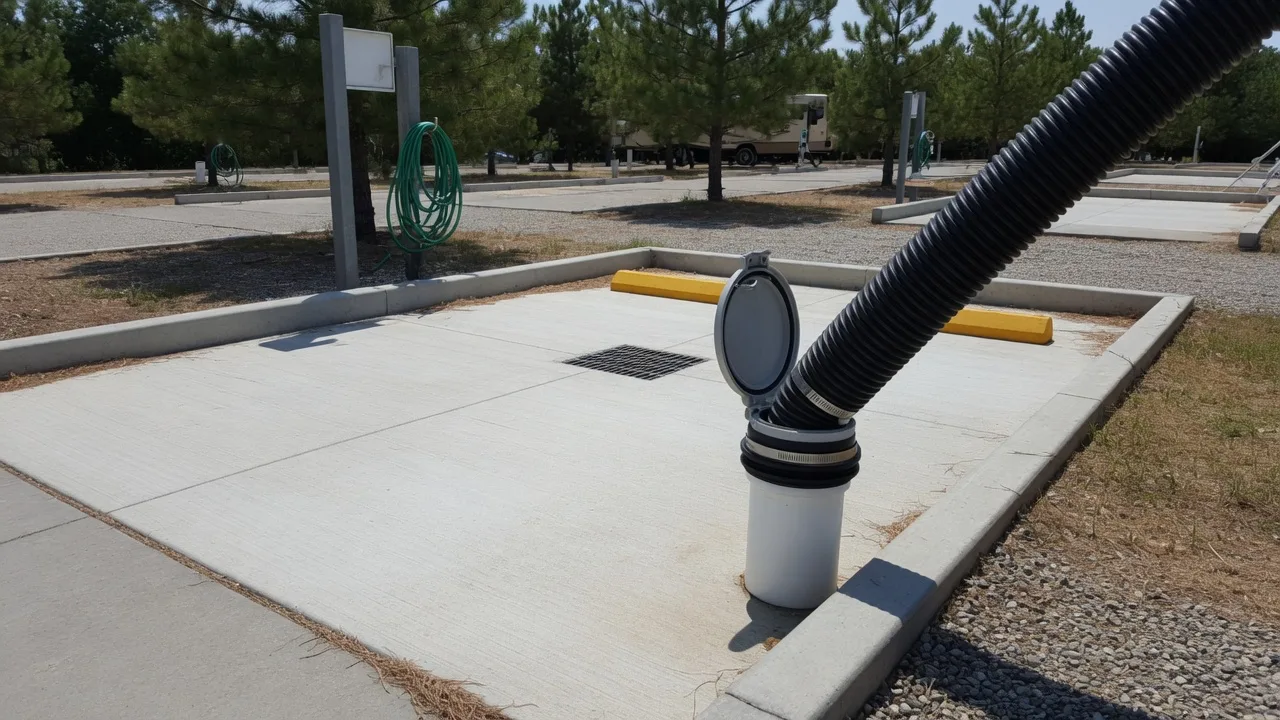
When you empty the tanks at a dump station or sewer hookup, the order matters. Connect the sewer hose securely, then dump the BLACK tank first — it drains under more pressure and clears solids. Then dump the GREY tank second, because the relatively cleaner grey water rinses the hose on its way out. Do it in the other order and you finish with a hose full of black-tank residue.
Keep the black tank valve CLOSED until you're ready to dump — leaving it open at a hookup lets the liquid drain off and the solids pile up, which is the classic recipe for a clog and a smell. Wear gloves, keep a dedicated rinse hose for the dirty side, and rinse the black tank if your rig has a built-in flush port.
- Dump BLACK first (clears solids), then GREY second (rinses the hose).
- Keep the black valve CLOSED between dumps — don't leave it open at a hookup.
- Use gloves and a dedicated, clearly separate rinse hose for the dirty side.
Verify locally: Always dump at an approved dump station or sewer hookup — never on the ground. Dumping any tank on the ground is illegal in most places and is an environmental and public-health violation.
Keeping the smell away and the gauges honest
Two simple habits prevent most odor problems. First, keep some water and a tank treatment in the black tank — a dry tank lets solids stick and smell, while liquid keeps things moving. Second, use plenty of water with every flush; under-flushing is the most common cause of clogs and bad sensor readings.
Speaking of sensors: RV tank gauges are notoriously unreliable because residue coats the internal probes and makes them read wrong. Don't panic at a stuck 'full' reading on an empty tank — it usually just needs a good flush. Treat the gauges as a rough guide, not gospel.