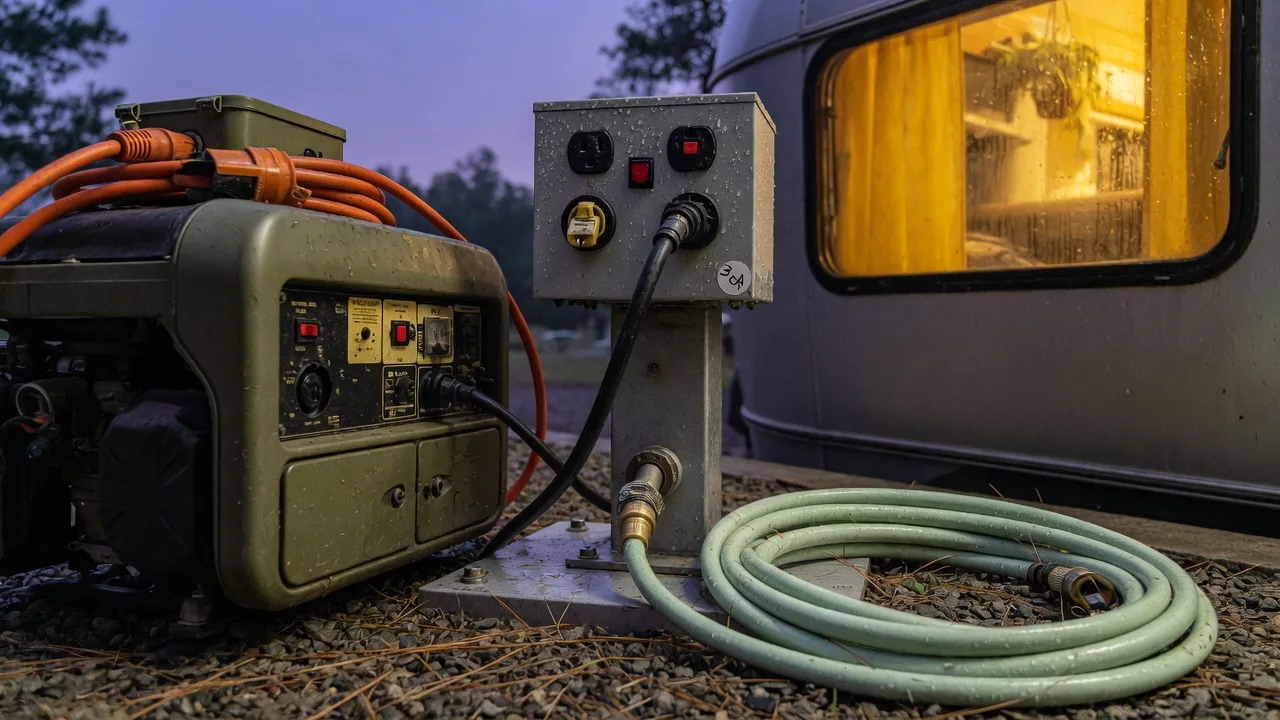
Carbon monoxide is the part that actually hurts people
An RV generator burns fuel, and burning fuel produces carbon monoxide (CO) — a colorless, odorless gas that the CDC and CPSC both flag as a leading cause of non-fire poisoning deaths in the US. You cannot smell it, and at high concentrations it can incapacitate a person before they realize anything is wrong. This is the single most important thing to understand before you ever start a generator.
The rule that prevents nearly every incident: never run a generator inside the RV, in an enclosed compartment, under the rig, or near an open window, door, or roof vent. Built-in (onboard) generators exhaust to the outside by design, but a damaged or rust-holed exhaust can leak under the coach — which is exactly why every RV should have a working CO alarm, and why you should test it before the trip, not after.
- Test the CO alarm before departure — press the button, confirm it sounds, check the battery.
- Point a portable generator's exhaust AWAY from the rig, tents, and neighbors — and downwind.
- Keep doors, windows, and roof vents on the exhaust side closed while it runs.
- If anyone feels headache, dizziness, or nausea, get everyone into fresh air first and ask questions later.
Verify locally: A CO alarm is not optional camping gear — it is the device that gives you the warning your nose never will. Replace alarms per the manufacturer's stated lifespan (most are 5-7 years).
Generator (quiet) hours are real and they vary by campground
Most developed campgrounds — national park, state park, and private — set generator hours, commonly something like mid-morning to early evening with a midday and overnight quiet window. The exact hours are NOT universal: they are set by each park or campground and are frequently posted at the entrance, on the reservation page, or in the campground rules sheet. Some boondocking and dispersed areas have no posted hours at all; some popular sites ban generators entirely.
Because the rule varies, do not assume — read the posted hours for the specific site you are in, and when in doubt, ask the camp host or check the managing agency's page. Running a generator during posted quiet hours is the fastest way to get a complaint, and in some parks a citation.
Verify locally: Generator hours are set per-campground and per-agency and change — confirm the posted hours with the campground or managing land agency for your specific site before you rely on them.
Fuel, oil, and load — the operating basics
Let the generator cool before refueling a portable unit — fuel on a hot engine or exhaust is a fire risk, and the National Park Service and fire agencies say the same about any small engine. Store gasoline only in an approved, labeled container, never inside the living space.
Check the oil before first use, especially on a rental. A generator that the previous renter ran hard may be low or overdue for an oil change; a dipstick check takes thirty seconds and prevents a seized engine. Match the load to the unit — a small inverter generator runs a few essentials, while running a roof air conditioner draws far more; overloading trips the breaker or stresses the engine.
Inverter-style generators produce cleaner power that is gentler on sensitive electronics (TVs, laptops, residential-style fridges). If you are renting and unsure what your rig has, ask the host — it is exactly the kind of question a good host answers in writing before pickup.
- Cool down before refueling a portable unit; never refuel a running or hot engine.
- Check the oil/dipstick before first use — non-negotiable on a rental.
- Don't overload — know roughly what your generator can run at once.
- Run a portable dry before long storage, or it can varnish the carburetor.
Go deeper on the hardware
Generators are one of the eight core RV systems, and onboard-vs-portable, fuel type, and run-hour gotchas deserve their own deep dive. Our RV systems mega-guide breaks down the generator section — including the real-world failure modes manuals skip — so you know what to inspect on a rental before you commit.