Grill outside, never inside — and never under the awning
Propane and charcoal grills are for open air only. Both produce carbon monoxide, and the CDC and fire agencies are consistent: never use a grill, camp stove, or charcoal inside an RV, tent, or enclosed space, and not in a partly enclosed area either. The same CO risk that applies to generators applies to anything you burn fuel in.
Keep a burning or hot grill well clear of the rig, the awning, camp chairs, and dry brush. An awning is fabric over your head — a grill flare-up under it is exactly the fire you don't want. Set the grill on a stable, level surface downwind of where people are sitting.
- Grill in open air only — never inside the RV, a tent, the awning, or any enclosed space.
- Keep clearance from the rig, awning fabric, chairs, and dry vegetation.
- Never leave a lit grill unattended, and keep kids and pets back.
- Have a way to put out a fire nearby — water or an extinguisher.
Propane: check connections and watch for leaks
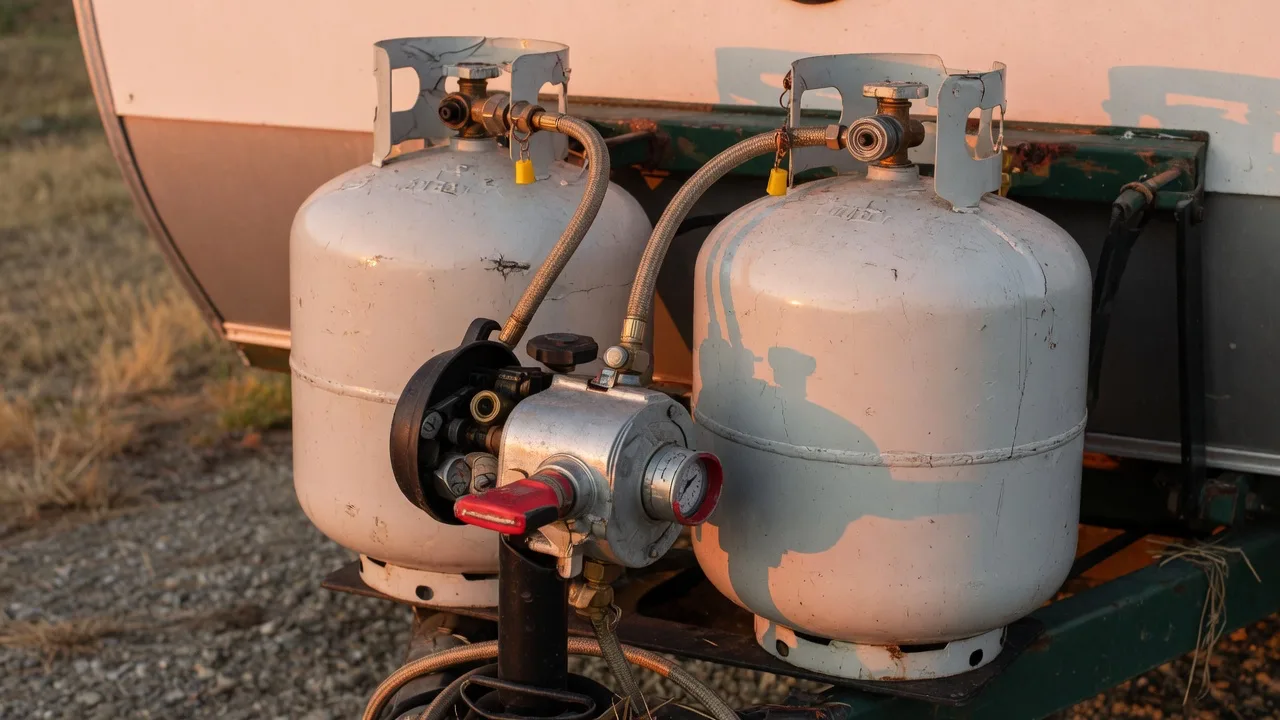
Before you light a propane grill or stove, make sure the connection is tight and the hose isn't cracked. The classic field test for a suspected leak is the soapy-water test: brush soapy water on the connection with the gas on but unlit — growing bubbles mean a leak. If you smell gas (propane is odorized so you can), shut off the valve and don't light anything until it clears.
Turn the propane off at the cylinder when you're done cooking and before you drive — many states and tunnels restrict traveling with propane appliances running, and rules vary, so confirm locally. Store cylinders upright and outside the living space, never in a hot sealed compartment.
Verify locally: Rules on traveling with propane on (tunnels, bridges, ferries, some states) vary by jurisdiction — turn it off when you're done and confirm local restrictions before you drive.
Leave no trace: the part that keeps these places open
Outdoor cooking is where leave-no-trace habits matter most. Pack out all trash, leftover food, grease, and foil — food scraps habituate wildlife and grease soaks into the ground and draws animals into camp. Use established fire rings where required, and never dump cooking grease or gray water on the ground.
Fire rules vary constantly: many areas have seasonal fire bans or restrict open flame entirely during dry conditions, and those bans can change week to week. Check the current fire restrictions with the managing land agency (national forest, BLM, state park) before you cook over open flame, and obey posted bans — a single ignored ban can start a wildfire.
Verify locally: Fire bans and outdoor-cooking restrictions change frequently with conditions — check the current rules with the managing land agency (USFS, BLM, NPS, or state park) for your site before you light anything.