The default rule: a regular license covers most motorhomes
The commercial driver's license (CDL) is a federal framework administered by the Federal Motor Carrier Safety Administration (FMCSA) and issued by states. It exists to regulate commercial driving — for-hire freight and passengers. The FMCSA's regulations include a recreational-vehicle exemption: vehicles used exclusively to transport personal possessions or family members for non-business purposes are not 'commercial motor vehicles' for CDL purposes. That is why a renter driving a motorhome on vacation is, in most cases, not required to hold a CDL.
So for the overwhelming majority of renters in the overwhelming majority of states, the rule is simply: hold a valid regular driver's license, and you may drive the motorhome. The nuance is at the state level, where some states layer a non-commercial special endorsement on top of the regular license once a vehicle gets very large or heavy.
Class C motorhomes — the easiest case
Class C motorhomes are built on a van or truck cutaway chassis (the cab-over-bed profile is the giveaway). They typically run roughly 20–33 feet and well under the heavy-vehicle thresholds. In every US state, a regular driver's license is sufficient to drive a standard Class C motorhome for personal use. This is the most common first-time rental class precisely because it drives much like an oversized van and carries no special-license question in practice.
Verify locally: Very large 'Super C' coaches built on medium-duty truck chassis can approach the weight thresholds that trigger a special license in a few states. If a Class C lists a GVWR near or above 26,001 lb, treat it like a heavy coach and verify your state DMV's rule.
Class B campervans — also straightforward
Class B campervans (camper vans) are the smallest motorized RVs — a van shell with the camper build inside. They are well under every weight threshold and drive like a tall van. A regular driver's license is sufficient in all states for a Class B. (Don't confuse the RV 'Class B' marketing label with a commercial 'Class B CDL' — they are unrelated things that share a letter.)
Class A motorhomes — where the real exceptions live
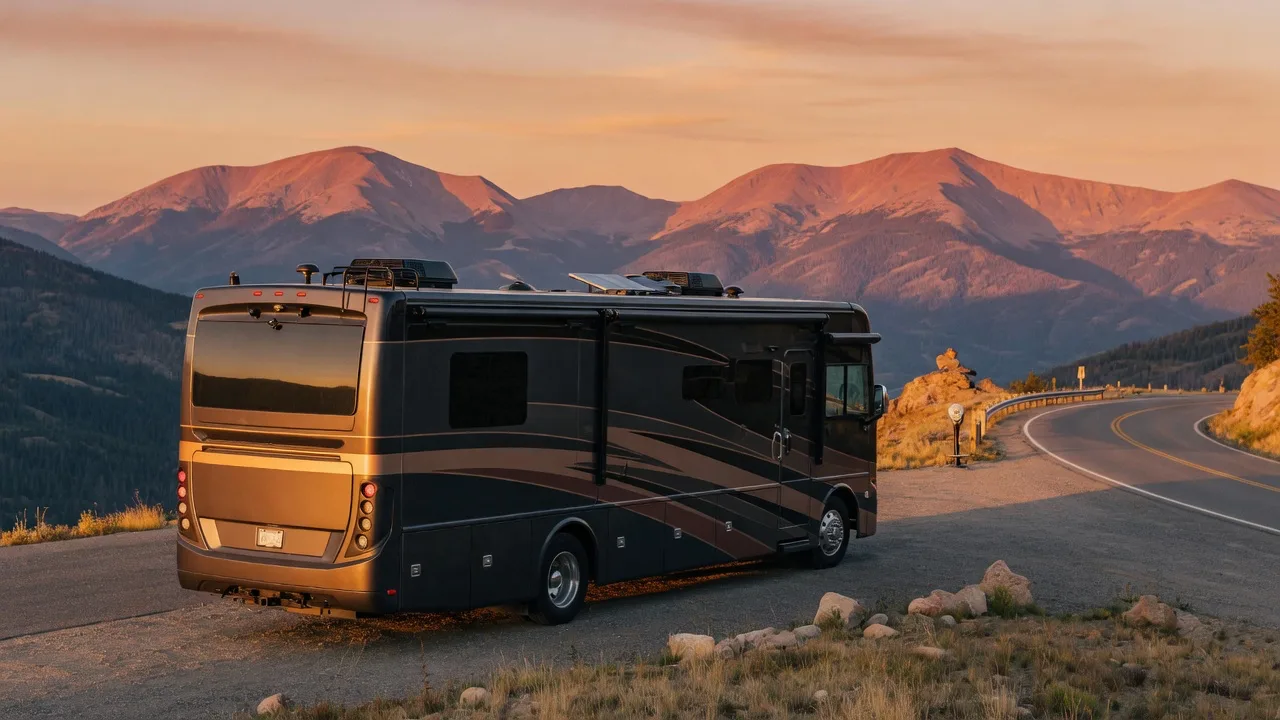
Class A motorhomes are the big bus-style coaches. Smaller gas Class A coaches are often under 26,001 lb GVWR; larger diesel pushers frequently exceed it. The 26,001-pound figure matters because it is the established federal CDL weight threshold (Gross Vehicle Weight Rating, or Gross Combination Weight Rating for combinations) — and several states tie their non-commercial special-license requirement to that same number or a similar one.
Most renters never approach this, because most rental Class A coaches and essentially all Class B/C rigs are under the threshold or fall under the personal-use exemption. But this is the honest exception: in some states, driving a very heavy Class A motorhome for personal use requires a non-commercial Class A or non-commercial Class B license — a state credential you get from your DMV (usually a knowledge test and sometimes a road test), not a full commercial CDL. Other states require nothing beyond a regular license regardless of the coach's weight.
- 26,001 lb GVWR/GCWR — the established federal CDL threshold many state non-commercial rules mirror.
- Non-commercial Class A / Class B — a state special license (not a CDL) that a few states require for heavy personal-use motorhomes.
- The requirement is set by your state of license, so two renters in the same RV can have different obligations depending on where each is licensed.
Verify locally: Which states require a non-commercial special license — and at exactly what weight or length — changes by legislative session and is the single most state-variable part of RV licensing. Do not rely on a memorized list. Confirm the current rule with your state DMV before booking a heavy Class A.
What about air brakes and length limits?
Two related questions come up. First, air brakes: some large diesel coaches have air brakes, and a few states attach an air-brake notation to the non-commercial special license in the cases where one is required. Second, length: a small number of states reference vehicle length (not just weight) in their licensing or operating rules. Both are state-specific and both point to the same action — check your DMV.
Verify locally: Air-brake and length rules vary by state and can interact with the special-license question. If your rental coach has air brakes or is unusually long, verify both the licensing and operating rules with your state DMV.