 PickRV
Why Rent an RV?
RV travel combines the freedom of the open road with the comfort of home. You carry your kitchen, bedroom, and bathroom wherever you go, eliminating the need to find hotels, pack and unpack at every stop, or eat every meal at restaurants.
The cost savings are real. A family of four spending $250 per night on hotel rooms and $150 per day on dining out can rent a Class C motorhome for $175-200 per night and cook most meals onboard. Over a week-long trip, that translates to $1,000-1,500 in savings compared to traditional travel. The bigger your group, the more you save — split an RV rental three ways and each couple pays less than a single hotel room.
The freedom is unmatched. There are no check-in times. No check-out times. No packing and repacking suitcases at every stop. No hunting for restaurants when everyone is hungry. No juggling multiple hotel reservations. You wake up when you want, drive when you want, stop when you want, and if you discover a beautiful spot along the way, you can simply stay.
The experience is transformative. Ask anyone who has taken an RV trip and they will tell you it changed how they travel. Kids who grow up camping in RVs develop a connection to nature and a sense of adventure that hotel vacations cannot provide. Couples who take their first RV trip together often say it was the best vacation they have ever had.
Over 11 million American households now own an RV, and the rental market has made RV travel accessible to anyone. You do not need to buy a $100,000 vehicle to experience it. Rent for a weekend, fall in love with the lifestyle, and decide from there.
Choosing the Right RV
The biggest decision is choosing between a drivable RV (motorhome) and a towable RV (trailer). Here is a simple breakdown:
Drivable (Motorhomes) — You drive the RV:
- Class A (25-45 feet): The luxury option. Full-size everything — kitchen, bathroom, bedroom, living room. Best for large families and extended trips. Hardest to drive. Most expensive. Rental: $200-450 per night.
- Class B Campervans (17-23 feet): The nimble option. Drives like a large van. Easy to park. Perfect for couples. Limited space. Rental: $100-300 per night.
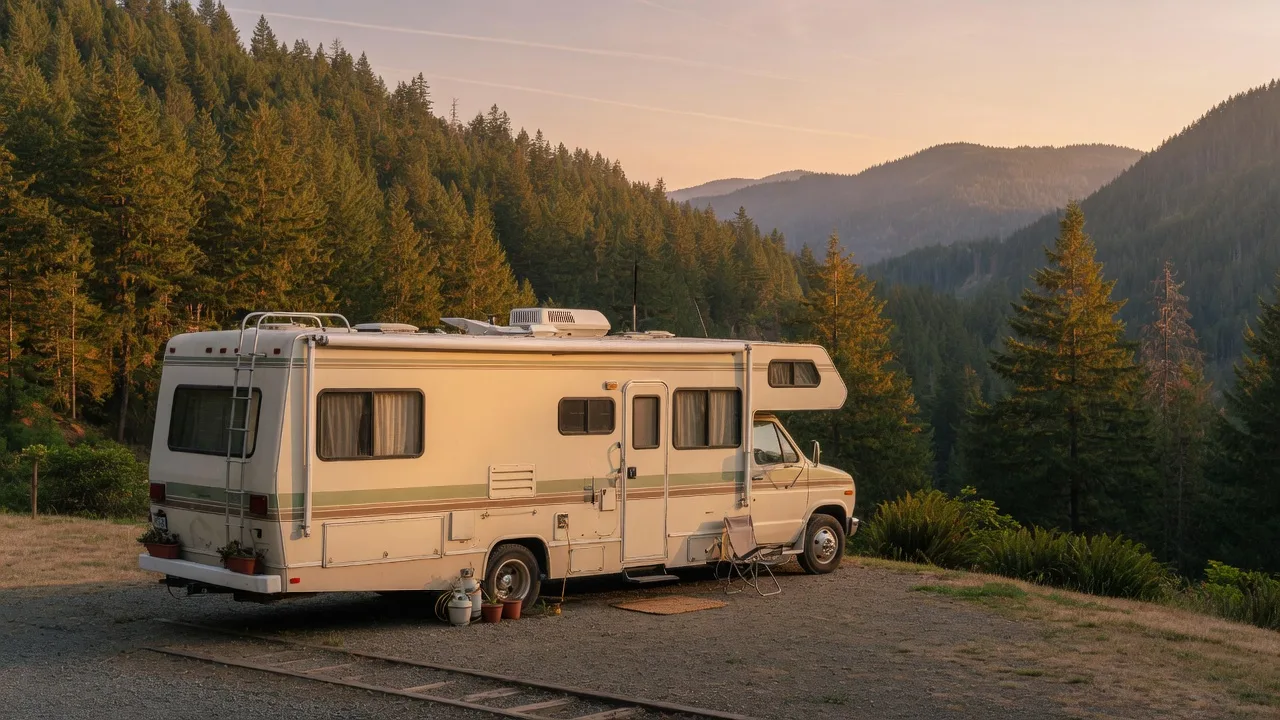
- Class C (20-35 feet): The sweet spot. Over-cab sleeping area (kids love it). Easier to drive than Class A. More space than Class B. Our top recommendation for first-timers. Rental: $150-350 per night.
Towable — You pull the RV behind your car or truck:
- Travel Trailer (12-35 feet): Most affordable option. Unhook at camp and use your car. Requires a compatible tow vehicle. Rental: $75-225 per night.
- Fifth Wheel (22-42 feet): Most spacious towable. Requires a pickup truck with a fifth-wheel hitch. Rental: $100-275 per night.
Our first-timer recommendation: Start with a Class C motorhome, 25-28 feet long. It is the most forgiving RV for new drivers — the cab gives you car-like visibility, the over-cab bed adds sleeping space without adding length, and you do not need to worry about towing. Class C motorhomes are also the most widely available rental on PickRV, giving you the most options for location, dates, and price.
If you are nervous about driving a motorhome, consider a travel trailer with delivery and setup. Many PickRV hosts will deliver the trailer to your campsite, set it up, and pick it up when you are done. You never have to drive or tow anything.
How to Book Your Rental
The booking process on PickRV is straightforward, but these tips will help you get the best RV at the best price.
When to book:
- Peak season (June through August): Book 2-3 months ahead. Popular RVs sell out fast.
- Shoulder season (April-May, September-October): Book 1 month ahead. Better prices, more availability.
- Off-season (November through March): Book 2-3 weeks ahead. Best prices but limited selection.
- Holidays (Memorial Day, July 4th, Labor Day): Book 3-4 months ahead. These weekends sell out earliest.
What to check before booking:
- Mileage limits: Most rentals include 100-150 free miles per day. Extra miles cost $0.25-0.50 each. Calculate your total planned mileage and compare it to the included allowance.
- Generator hours: Typically 3-4 hours per day included. Extra hours cost $3-5 each.
- Cleaning fee: A one-time fee of $75-200. Some hosts waive it if you return the RV clean.
- Pet policy: Not all hosts allow pets. If yours does, expect a $50-100 pet fee.
- Add-ons: Some hosts offer bedding, kitchen kits, camp chairs, and other extras for an additional fee. This can save you from packing bulky items.
Questions to ask your host before booking:
- What is the RV's actual fuel economy? (Listed specs are often optimistic)
- Are there any quirks I should know about? (Every RV has them)
- What is included — bedding, kitchen supplies, chairs?
- What is the best way to level the rig?
- Is there a walkthrough video I can watch before pickup?
Insurance Explained Simply
RV rental insurance can feel confusing, but it boils down to this: you are financially responsible for any damage to the RV during your rental, and insurance protects you from potentially catastrophic costs.
How coverage works on PickRV today:
PickRV is not an insurer and does not currently sell or offer a coverage product at checkout. You bring your own coverage for the trip — your personal auto/RV policy may extend to a rental (confirm with your agent), or you arrange a standalone rental policy. Some hosts also carry their own commercial policy. Always confirm rental use with your insurer before the trip.
Before buying platform insurance, check your existing coverage:
- Your auto insurance may extend to rental RVs — call your agent and ask specifically about recreational vehicles, not just "rental cars."
- Premium credit cards (Chase Sapphire Reserve, Amex Platinum) sometimes cover rental vehicles, but many exclude RVs over a certain size. Read the fine print carefully.
- Your homeowner's or renter's insurance may cover personal belongings inside the RV.
Our honest advice: Unless you have confirmed RV coverage in writing from your auto insurer or credit card, purchase at least the Standard tier. A $25 per day insurance cost is trivial compared to a $5,000-50,000 repair bill if something goes wrong.
Pre-Trip Preparation
Start preparing at least one week before your trip:
Route planning:
- Map your route and identify campgrounds along the way. Book reservations for popular campgrounds — national parks and state parks fill months ahead.
- Identify fuel stops along your route. Not all gas stations can accommodate RVs. Truck stops (Love's, Pilot Flying J) are your safest bet.
- Download offline maps. Cell service is spotty or nonexistent in many camping areas. Google Maps and Apple Maps both support offline map downloads.
- Check your route for low bridges, narrow roads, and weight-restricted roads. RV-specific navigation apps like RV Trip Wizard and CoPilot RV account for your vehicle's height and weight.
- Plan driving segments of 200-300 miles per day maximum. You will be driving slower than in a car, and frequent stops (fuel, bathroom, scenic pull-offs) add time.
Campground reservations:
- Full-hookup sites (water, electric, sewer) are the most convenient for first-timers. You will have unlimited water, shore power, and sewer drainage.
- Call campgrounds to confirm your RV will fit. Tell them your exact length and ask about site dimensions, turns, and pull-through availability.
- Arrive before 3 PM if possible. Setting up an unfamiliar RV in the dark is stressful.
What to Bring
Many first-time renters overpack some things and forget essentials. Here is what you actually need:
Must-have items (many rentals do NOT include these):
Nice-to-have items:
Do NOT bring:
- Excessive clothing — you have limited closet space. Pack for a few days and plan to do laundry.
- Glass containers — they break when things shift during driving.
- Strong-scented products — in bear country, scented items attract wildlife.
Picking Up Your RV
The pickup walkthrough is the most important 30-60 minutes of your entire trip. Do not rush it.
Your host should show you:
- How to start and operate the engine, dashboard controls, mirrors
- How to extend and retract slides, awning, and steps
- How to hook up water, electric (30-amp vs 50-amp), and sewer at a campground
- How to operate the water heater, furnace, and air conditioning
- How to use the stove, oven, microwave, and refrigerator
- How to flush and dump the black and gray water tanks
- How to operate the generator
- Where all the fuses, breakers, and shut-off valves are located
- Any quirks specific to the RV
During the walkthrough:
- Take a video of the entire walkthrough on your phone. You will forget half of what they show you.
- Take photos of any pre-existing damage. Document scratches, dents, stains, and anything that is already broken. Send these to your host immediately as a record.
- Ask every question you can think of. No question is too basic. Your host wants you to have a good experience.
- Practice extending and retracting the slides while the host watches.
- Confirm the fuel type (gas or diesel) and where the fuel filler is located.
- Write down the RV's exact height (usually posted on a sticker inside the cab or on the visor).
Driving Your RV
Driving an RV is not difficult, but it is different from driving a car. These habits will keep you safe:
Before every drive (the walk-around):
- Walk completely around the RV. Look for obstructions, loose items, and things that should not be there.
- Verify all slides are retracted and locked. Driving with a slide out will destroy it.
- Verify the awning is retracted and secured. Wind will shred an extended awning.
- Retract the entry steps. Driving with steps down can rip them off.
- Close all windows and roof vents. Rain at highway speed comes in sideways.
- Secure everything inside. Close all cabinet doors (use child locks if needed). Make sure the fridge is latched. Move anything on counters to the sink or floor.
On the road:
- Speed: Drive 5-10 mph under the posted limit. Many states have separate, lower speed limits for RVs and vehicles over 10,000 lbs. On two-lane roads, pull over at turnouts to let faster traffic pass.
- Following distance: Maintain 4-5 seconds of following distance minimum. A loaded RV takes 2-3 times longer to stop than a car.
- Turns: Take every turn wider than you think necessary. The rear wheels track inside the front wheels, which means your back end will cut the corner. Watch your mirrors.
- Lane changes: Signal 5-7 seconds early. Check mirrors AND blind spots. Move over gradually. Never make sudden lane changes.
- Height clearance: Know your RV's height and watch for bridges, overpasses, gas station canopies, drive-throughs, and tree branches. Getting stuck under a bridge ruins your entire trip.
- Wind: Crosswinds are the biggest challenge for new RV drivers. Grip the wheel at 9 and 3, reduce speed, and do not overcorrect. If winds exceed 30 mph, consider stopping.
Fuel stops:
- Use truck stops (Love's, Pilot Flying J) — they have RV-height clearances and wide pump lanes.
- Always fuel from the driver's side when possible.
- Fill up at half tank. In the western US, gas stations can be 100+ miles apart.
- Know your fuel type (gas or diesel) and double-check before pumping.
Setting Up at Camp
Arriving at your campsite for the first time can feel overwhelming. Follow this order:
- 1Level the RV. Park on the most level spot available. Use leveling blocks under the low-side wheels. A bubble level (or smartphone level app) helps. The fridge will not work properly if the RV is not reasonably level.
- 2Extend slides. Make sure nothing is blocking the slide area outside the RV. Extend slides one at a time and listen for any unusual sounds.
- 3Connect electric. Plug in your shore power cord. Match the amp rating — use a 30-amp cord for a 30-amp site, or use an adapter. Never plug a 50-amp RV into a 30-amp outlet without a proper adapter.
- 4Connect water. Attach your white drinking water hose to the campground spigot. Use a water pressure regulator — campground water pressure can spike and damage your RV's plumbing.
- 5Connect sewer. If you have a full-hookup site, connect your sewer hose to the campground drain. Keep the gray valve closed until the tank is nearly full (the rush of gray water helps flush the hose). Keep the black valve closed until you are ready to dump.
- 6Deploy awning. Extend your awning for shade. If rain or wind is expected, retract it — awnings are not designed for weather.
- 7Set up outside. Put out your camp chairs, mat, and any outdoor gear.
Campground types for first-timers:
- Full hookup (water + electric + sewer): The easiest option. Everything is connected. You have unlimited water and shore power. Recommended for your first trip.
- Partial hookup (water + electric): You will need to drive to a dump station to empty your tanks.
- Dry camping (no hookups): Rely on your fresh water tank, generator or solar, and holding tanks. Not recommended for first-timers unless you are adventurous.
RV Systems 101
Every RV has four essential systems. Understanding them prevents 90% of common problems:
1. Fresh water system: Your fresh water tank (30-80 gallons depending on RV size) supplies the kitchen sink, bathroom sink, shower, and toilet. When connected to city water at a campground, water comes directly from the spigot and your tank is bypassed. Use RV-safe toilet paper — it dissolves quickly and prevents clogs.
2. Waste water system: Two holding tanks collect waste. The gray tank holds water from sinks and shower. The black tank holds toilet waste. Never leave the black valve open when connected to sewer — solids need water to break down. Dump the black tank first, then the gray tank (the soapy gray water flushes the hose clean).
3. Electrical system: RVs have two electrical systems. 12-volt DC runs off the battery and powers lights, water pump, fans, and the refrigerator control board. 120-volt AC comes from shore power (campground hookup) or the generator and powers the air conditioner, microwave, TV, and outlets. When not plugged in and the generator is off, you only have 12-volt power.
4. Propane system: Propane fuels the stove, oven, water heater, furnace, and sometimes the refrigerator. Most RVs have two propane tanks. Turn off propane at gas stations (required by law) and when driving through tunnels. Propane runs out — check levels before a cold night when you will need the furnace.
10 Common First-Timer Mistakes
- 1Driving with the slides out. This will destroy the slides and damage anything they hit. Always retract slides before driving. Put a sticky note on the dashboard as a reminder.
- 2Leaving the black tank valve open. If you leave it open, liquids drain out and solids build up into a "poop pyramid" that is incredibly difficult to remove. Keep it closed until the tank is two-thirds full, then dump.
- 3Not knowing the RV's height. The number one cause of serious RV damage is hitting a bridge or overhang. Write your height on a sticky note on the dashboard.
- 4Overpacking. RVs have weight limits. Overpacking reduces fuel economy and can cause tire blowouts. Pack light. You can always buy things you need on the road.
- 5Arriving at camp after dark. Setting up an unfamiliar RV in the dark is stressful and error-prone. Plan to arrive by 3-4 PM.
- 6Not making campground reservations. "We will just find something" is a recipe for sleeping in a Walmart parking lot. Book ahead, especially for national parks and popular campgrounds.
- 7Ignoring the water pressure regulator. Campground water pressure can spike to 100+ PSI. Your RV plumbing is rated for 40-60 PSI. Without a regulator, you risk burst pipes and water damage.
- 8Backing up without a spotter. Backing a motorhome or trailer without someone outside guiding you often results in hitting something. Always use a spotter.
- 9Over-planning the itinerary. New RVers pack too many stops into a trip. Allow for slow driving days, late starts, and spontaneous discoveries. Two or three stops in a week is plenty.
- 10Not doing a practice drive. Before hitting the highway, drive around the neighborhood or an empty parking lot for 15-20 minutes. Practice turns, braking, and using the mirrors. It makes a huge difference.
Returning Your RV
Most hosts require the following before return:
- Full fuel tank. Fill up at the last truck stop before returning. Record the mileage.
- Empty holding tanks. Dump both black and gray tanks at a dump station. Most campgrounds have one, and many truck stops do too.
- Basic cleaning. Sweep the floors, wipe down counters, clean out the fridge, empty all trash. You do not need to deep clean, but leaving it reasonably tidy avoids cleaning fees.
- On-time return. Late fees are typically $50-100 per hour. Plan to return 30 minutes early.
- Document the RV's condition. Take photos showing the RV's condition at return. Compare to the pickup photos. Point out any issues to the host immediately.
Pro tip: Dump tanks and fill fuel the evening before your return date. Trying to do both on a rushed morning is stressful and often results in late return fees.
Pro Tips from Experienced RVers
- 1Start with a 2-3 night trip. Your first RV trip should be a short one. Choose a campground within 2 hours of home. You will make mistakes — better to make them on a weekend trip than on day 1 of a 2-week adventure.
- 2Arrive at campgrounds by 3 PM. This gives you daylight hours to set up, explore the campground, and troubleshoot any issues. Setting up in the dark is the number one source of first-timer stress.
- 3Take the host's walkthrough video seriously. Re-watch the video (or your own recording) the night before your trip and again at your first campground. By the third viewing, the systems will feel familiar.
- 4Cook simple meals. Your RV kitchen is capable but compact. Plan one-pot meals, grilled proteins, and simple breakfasts. Save the elaborate cooking for when you are more comfortable with the space.
- 5Keep a camping journal. Write down what worked, what to pack next time, your favorite campgrounds, and lessons learned. This becomes invaluable if you take more RV trips.
- 6Join the community. Reddit's r/GoRVing, iRV2 forums, and RV-focused Facebook groups are treasure troves of real-world advice. Post your itinerary and ask for campground recommendations — the community is incredibly helpful.
- 7Check your campsite water with a TDS meter. Campground water quality varies dramatically. A $10 TDS meter tells you if the water is safe to drink. If readings are high, use bottled water for drinking and cooking.
- 8Leave buffer days in your itinerary. The beauty of RV travel is flexibility. If you find a campground you love, stay an extra night. If the weather turns bad, wait it out. Over-planned itineraries kill the spontaneity that makes RV travel special.
- 9Do not be afraid to ask for help. Other campers are the friendliest people you will meet. If you are struggling to back in, connect utilities, or figure out a system, ask a neighbor. Most experienced RVers love helping newcomers.
- 10Book through PickRV. Pricing is transparent and all-in: a 10% renter service fee and any tax are itemized at checkout, and listings carry detailed specs and host-provided photos so you know what you're booking before you pay.