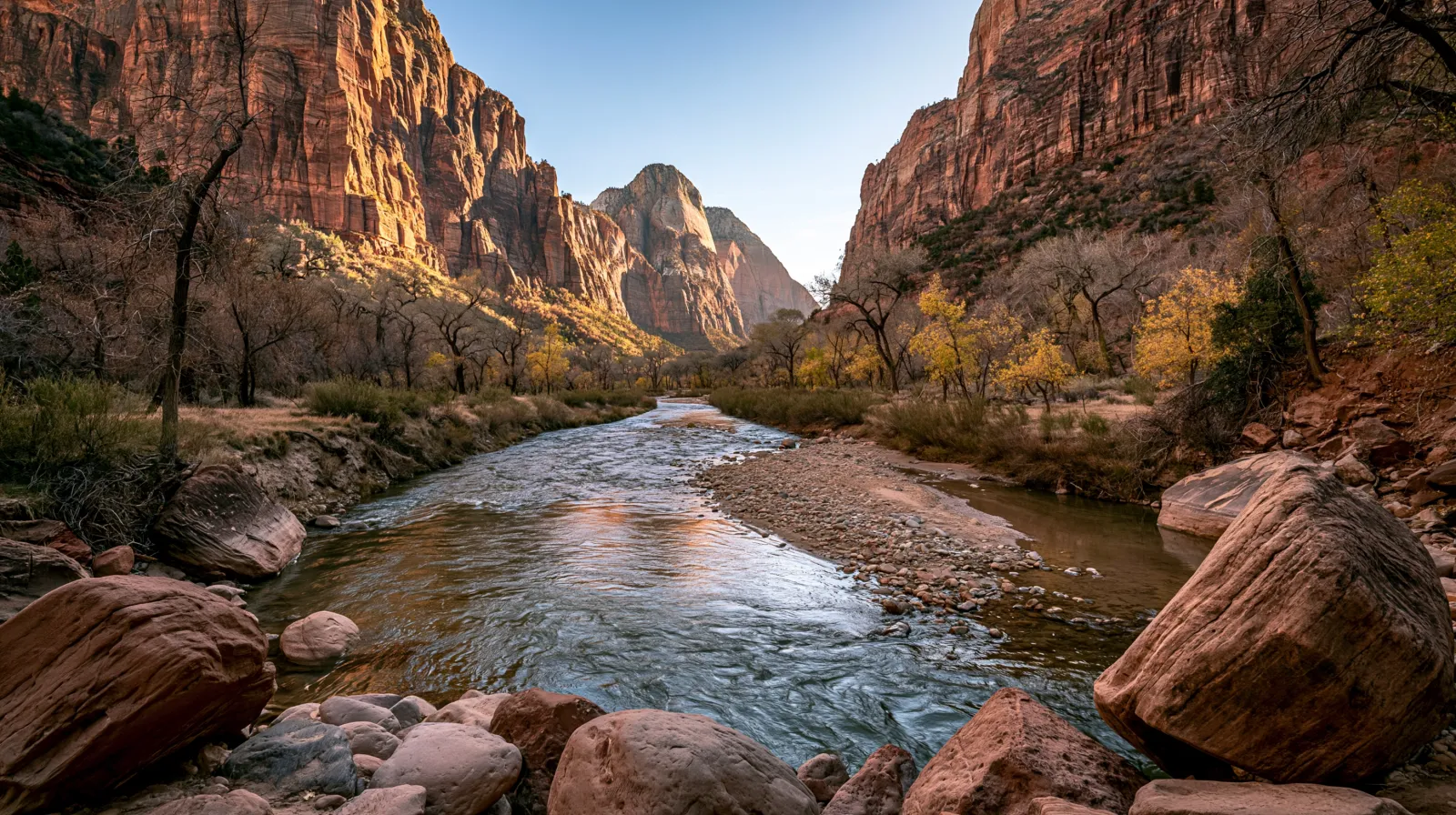
Zion Canyon is the centerpiece of Zion National Park in southwestern Utah, a spectacular gorge carved by the Virgin River over millions of years. Its sheer red and tan sandstone cliffs tower up to 2,000 feet, creating a dramatic landscape of vertical walls, hanging gardens, and serene river walks. Visitors come for the world-famous hikes, the viewpoints, and The Narrows, a slot canyon where the river itself becomes the trail. Flat river walks and exposed climbs share one gorge, and that range is what draws both nature lovers and photographers.
Best season — Spring (March to May) and fall (September to November) offer pleasant temperatures and reduced crowds compared to summer. Summer is extremely hot and crowded, while winter can be cold with occasional snow but offers solitude.
Do I need a reservation to enter Zion Canyon?
During peak months, Zion Canyon is accessible only by park shuttle, which does not require a reservation, but private vehicles are restricted. However, permits are needed for specific hikes like Angels Landing, and campgrounds require reservations. Check the official NPS site for the most current rules on access and permits.
- Shuttles run frequently and are free with park entry.
- Angels Landing chain section requires a seasonal permit lottery.
- The scenic drive closes to private vehicles from March through late November.
At a glance
The facts worth checking before you roll out
Conservative, source-minded facts for planning your visit — always worth confirming against current conditions before you travel.
Location
Southwest Utah, within Zion National Park
Depth
Up to about 2,000 feet (600 m) from rim to river
Key feature
Sheer sandstone cliffs in shades of red, cream, and pink
Managing agency
National Park Service
On the ground
Zion Canyon, located in southwestern Utah within Zion National Park, is a dramatic gorge formed by the Virgin River over millennia. Its significance lies in its sheer sandstone cliffs reaching up to 2,000 feet, creating a landscape of vertical walls and river features. This area attracts visitors seeking both accessible views and challenging hikes, making it a prominent destination for nature enthusiasts.
RV travelers within Zion Canyon primarily experience the park via the Zion Canyon Scenic Drive, which becomes shuttle-only during peak months. Activities include enjoying viewpoints, walking along the Virgin River, and hiking trails ranging in difficulty. Specific hikes may require permits; planning ahead is essential to access desired routes within this popular natural area.
The optimal times to visit Zion Canyon are spring (March to May) and fall (September to November). These seasons offer comfortable temperatures and fewer crowds than summer. Summer brings intense heat and high visitor volume, while winter can be cold with possible snowfall, providing a more solitary experience for those prepared for the conditions.
Consider establishing a basecamp outside the immediate canyon area to facilitate exploration of Zion. From there, utilize the park shuttle system when available to access trailheads and viewpoints along the scenic drive. This approach allows flexibility in daily itineraries while respecting park regulations regarding vehicle access within Zion Canyon.
Official sources
- National Park Service — Zion Canyon National Park Service
Nearby & related
Keep planning Utah
Sourced costs, campground directories, and the places worth a detour — the next layer of Utah trip planning.
- Utah RV rental costFuel · camping · tax, sourced
- Utah RV-friendly campgroundsHookups, rig limits, booking tips
- Campervan & van rentals in UtahVan-life routes, rules & rigs
- Utah Mighty 5PickRV Wiki · 15 min read
- RV rentals in UtahPickRV Wiki · 6 min read
- Wildlife refugesWildlife-watching stops
- National seashoresCoastal RV escapes
- National recreation areasBig-water recreation guides
Planning an RV trip near Zion Canyon: An RV Traveler's Guide?
Was this guide helpful?