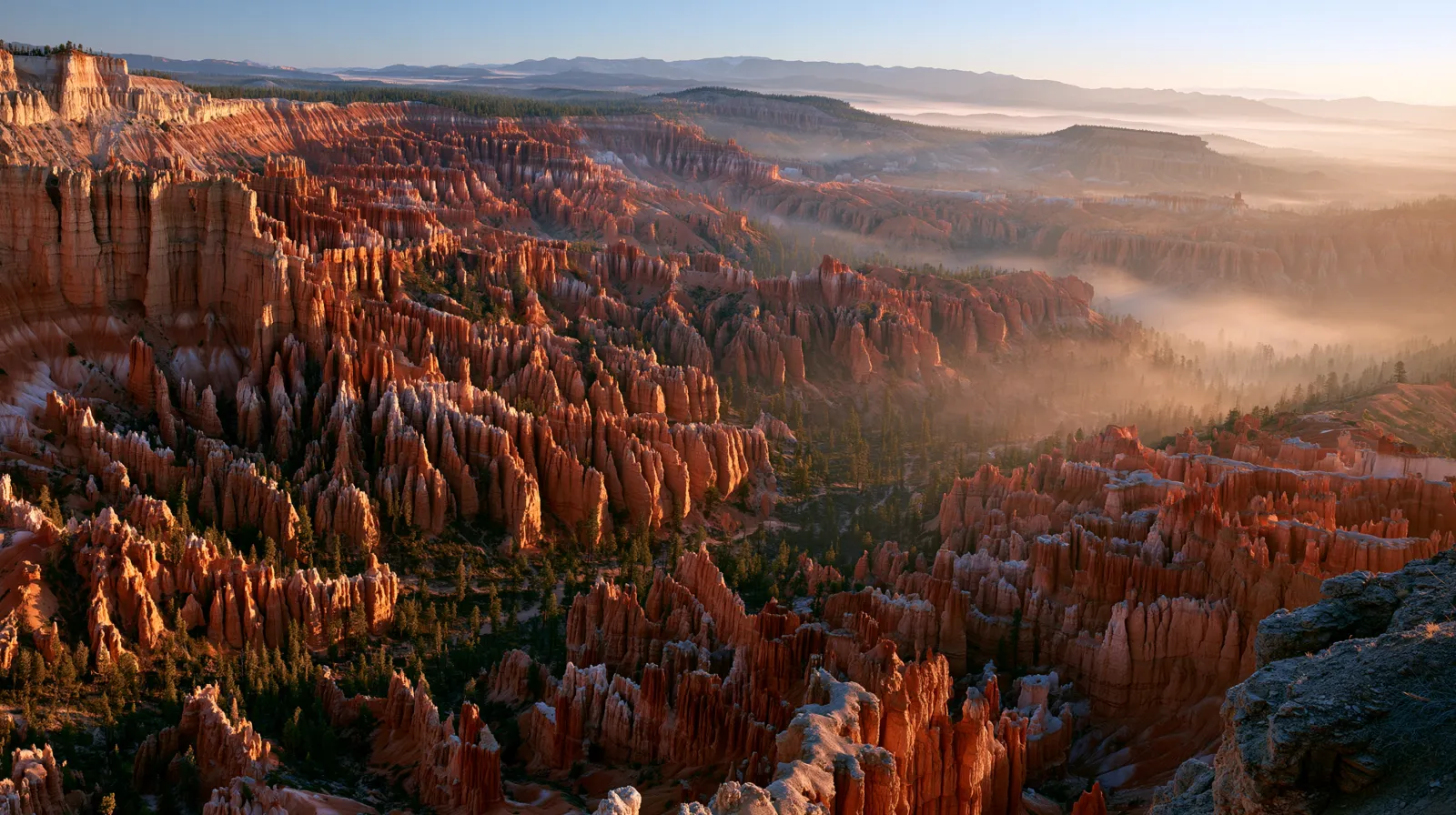
Bryce Canyon National Park, located in southern Utah, is famed for the largest collection of hoodoos—irregular rock spires—found anywhere on Earth. Carved by frost wedging and rainwater erosion, the park’s series of natural amphitheaters glow in vivid oranges, pinks, and reds, especially at sunrise and sunset. Visitors come for the views from the rim, hiking trails that wind among the hoodoos, and exceptionally dark night skies. Despite its name, Bryce is not a canyon but a horseshoe-shaped amphitheater rimmed by these fantastical formations, making it a unique geological wonder.
Why are the hoodoos at Bryce Canyon so colorful?
The hoodoos’ vibrant hues come from different minerals in the rock layers—iron oxides produce reds, oranges, and yellows, while manganese oxides create the pink and purple tones. Erosion by frost wedging and rainwater constantly sculpts the soft limestone, exposing fresh surfaces and intensifying the colors. The high elevation and clear air further enhance the visual brilliance.
- The red, orange, and yellow colors come from iron oxide minerals in the rock.
- Pink and purple hues are caused by manganese oxides.
- Frost wedging and rainwater erosion constantly reveal fresh, brightly colored rock surfaces.
At a glance
The facts worth checking before you roll out
Conservative, source-minded facts for planning your visit — always worth confirming against current conditions before you travel.
State
Utah
Managed by
National Park Service
Primary natural feature
Hoodoos (tall, thin rock spires) in natural amphitheaters
Elevation range
approx 6,600 to 9,100 feet
On the ground
Bryce Canyon National Park in southern Utah is recognized for its unique geological formations—hoodoos. These irregular rock spires, sculpted by frost and rain, create a series of natural amphitheaters displaying vivid oranges, pinks, and reds. Seen from the rim, it is a landscape unlike anything else on Earth.
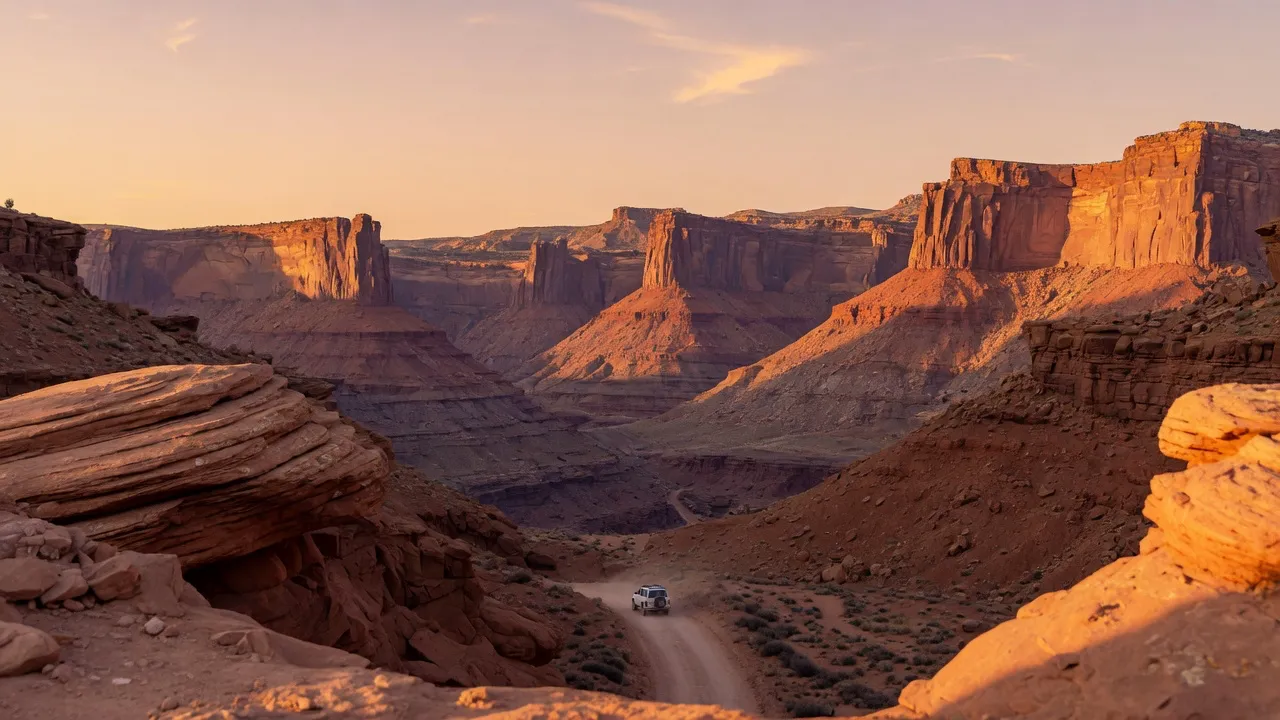
RV travelers explore Bryce Canyon through scenic drives along the rim, stopping at overlooks for panoramic views. Hiking trails wind among the hoodoos, providing closer encounters with these formations. Its remote location and high elevation also contribute to exceptionally dark night skies, making it an ideal location for stargazing.
The best time to visit Bryce Canyon is between May and September. The park experiences cool summers and snowy winters due to its elevation range of approximately 6,600 to 9,100 feet. Be prepared for potential temperature fluctuations as the day progresses at this altitude, regardless of season.
Consider establishing a basecamp in the surrounding area to explore Bryce Canyon and other nearby attractions. This allows flexibility for day trips into the park, offering opportunities to witness sunrise or sunset over the hoodoos and enjoy the tranquility of the Paunsaugunt Plateau without relocating your RV each night.
Official sources
- National Park Service — Bryce Canyon National Park Service
Nearby & related
Keep planning Utah
Sourced costs, campground directories, and the places worth a detour — the next layer of Utah trip planning.
- Utah RV rental costFuel · camping · tax, sourced
- Utah RV-friendly campgroundsHookups, rig limits, booking tips
- Campervan & van rentals in UtahVan-life routes, rules & rigs
- RV rentals in UtahPickRV Wiki · 6 min read
- Utah Mighty 5PickRV Wiki · 15 min read
- BattlefieldsHallowed-ground history stops
- National memorialsMonumental road stops
- National preservesBackcountry-scale wilds
Planning an RV trip near Bryce Canyon: An RV Traveler's Guide?
Was this guide helpful?