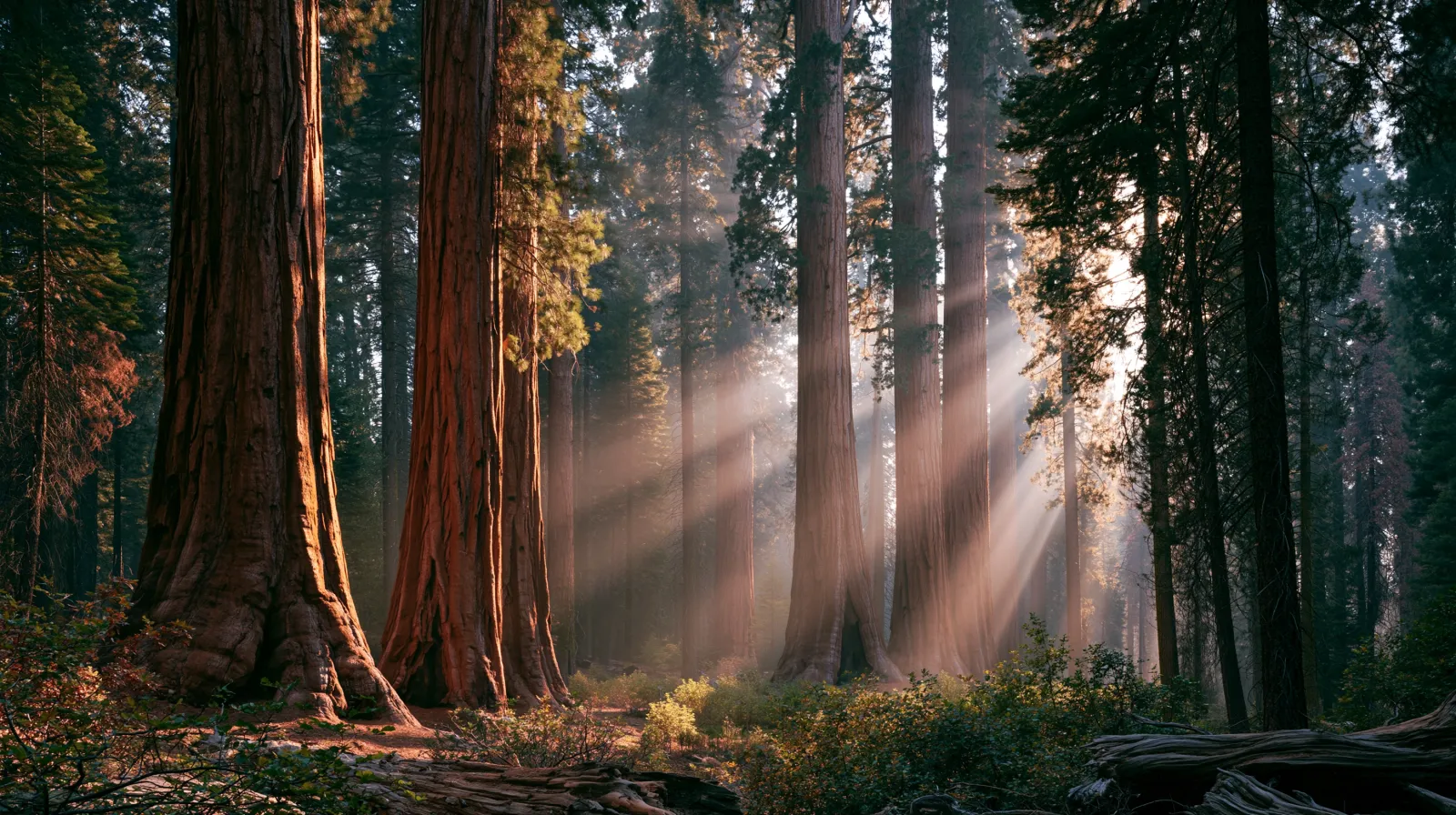
The General Sherman Tree, located in California's Sequoia National Park, is the world's largest tree by volume. This giant sequoia (Sequoiadendron giganteum) stands roughly 275 feet tall, with a base diameter exceeding 36 feet, and an estimated age between 2,200 and 2,700 years. Its immense trunk and towering canopy have drawn visitors for generations, offering a humbling encounter with one of Earth's most massive living organisms. The tree is the centerpiece of the Giant Forest, a grove that contains several other record-holding sequoias. Seeing General Sherman in person provides a profound sense of scale and the timeless beauty of an ancient forest.
Best season — Late spring through early fall (typically May to October) offers the most reliable access, as park roads and trails are generally clear of snow. Winter visits are possible but may require snowshoes or cross-country skis; check the official site for seasonal updates.
How big is the General Sherman Tree?
The General Sherman Tree’s immense size is measured by volume, estimated at over 52,500 cubic feet, making it the largest single-stem tree on Earth. It stands around 275 feet tall with a base circumference of about 103 feet. Exact dimensions can vary slightly due to growth and measurement methods. For current access and trail conditions, consult the official Sequoia and Kings Canyon National Parks website.
- Height: roughly 275 feet (84 meters)
- Base diameter: more than 36 feet (11 meters)
- Estimated volume: over 52,500 cubic feet (1,487 cubic meters)
At a glance
The facts worth checking before you roll out
Conservative, source-minded facts for planning your visit — always worth confirming against current conditions before you travel.
State
California
Tree species
Giant sequoia (Sequoiadendron giganteum)
Feature
World's largest tree by volume
Management
National Park Service (Sequoia & Kings Canyon National Parks)
On the ground
The General Sherman Tree is the world’s largest tree by volume, a giant sequoia estimated to be between 2,200 and 2,700 years old. Standing roughly 275 feet tall with a base exceeding 36 feet in diameter, it represents an extraordinary example of ancient life. Its immense size—over 52,500 cubic feet—draws visitors seeking to appreciate Earth’s largest living organisms.
RV travelers typically access the General Sherman Tree via parking areas and a short trail. Rangers are often available to offer information about this remarkable tree and the surrounding Giant Forest. Visitors can walk among other large sequoias, exploring paved and unpaved paths that showcase the area's unique natural features. The experience centers on observing scale.
Late spring through early fall generally provides the most accessible conditions for RV travel within Sequoia National Park. During this time, roads and trails are typically clear of snow. Winter visits are possible; however, travelers should be prepared for potential snow and check official sources for current conditions regarding access and required equipment.
Consider establishing a basecamp outside the immediate area to explore beyond the Giant Forest. This allows flexibility in visiting other park features alongside the General Sherman Tree. Focus on utilizing resources available from the managing agency to plan routes and understand any seasonal restrictions impacting RV travel within this Sierra Nevada landscape.
Official sources
- National Park Service — General Sherman Tree (Sequoia) National Park Service
Nearby & related
Keep planning California
Sourced costs, campground directories, and the places worth a detour — the next layer of California trip planning.
- California RV rental costFuel · camping · tax, sourced
- California RV-friendly campgroundsHookups, rig limits, booking tips
- RV rental companies in CaliforniaLocal hosts & outfitters, verified
- Campervan & van rentals in CaliforniaVan-life routes, rules & rigs
- California Pacific Coast Highway 1 RVPickRV Wiki · 12 min read
- RV rentals in CaliforniaPickRV Wiki · 6 min read
- BattlefieldsHallowed-ground history stops
- National memorialsMonumental road stops
Planning an RV trip near General Sherman Tree (Sequoia): An RV Traveler's Guide?
Was this guide helpful?