Trip plan
Solo female van life in Colorado
Sleeping in the rig alone is a separate problem from driving it. Both deserve real answers.
Reading length
9 min
Long read — settle in
Word count
681 words
Sections
5 parts
Story type
Trip plan
Two separate problems, on purpose
Most solo-traveler RV content treats the trip as one experience. It isn't. Driving a Class B alone through Colorado's mountain passes is a logistics problem about altitude, brake fade, and weather windows. Sleeping in the rig alone is a safety problem about parking choice, locking discipline, and trust in your gut. They share a vehicle and almost nothing else. We are writing them as separate sections so the answers don't blur.
This piece is illustrative — composite, not testimonial. A real PickRV traveler who has done a solo Colorado trip and wants to publish their experience under their own name should write to support@pickrv.com.
Driving solo at altitude
Colorado has six paved mountain passes above 10,000 feet, and the engine in your Sprinter or Promaster will lose roughly 25% of its rated power between Denver and the top of Independence Pass. This is normal turbocharger behavior and not a sign of a failing engine. The visible symptom is reduced acceleration on grades; the invisible symptom is slower brake recovery on the way down, because the engine cannot hold back the rig the way it does at sea level. The rule: use lower gears on descent, not the brake pedal. A Class B will not have a manual gear selector on the column, but every modern automatic has a low-gear mode accessible through the shifter or a paddle.
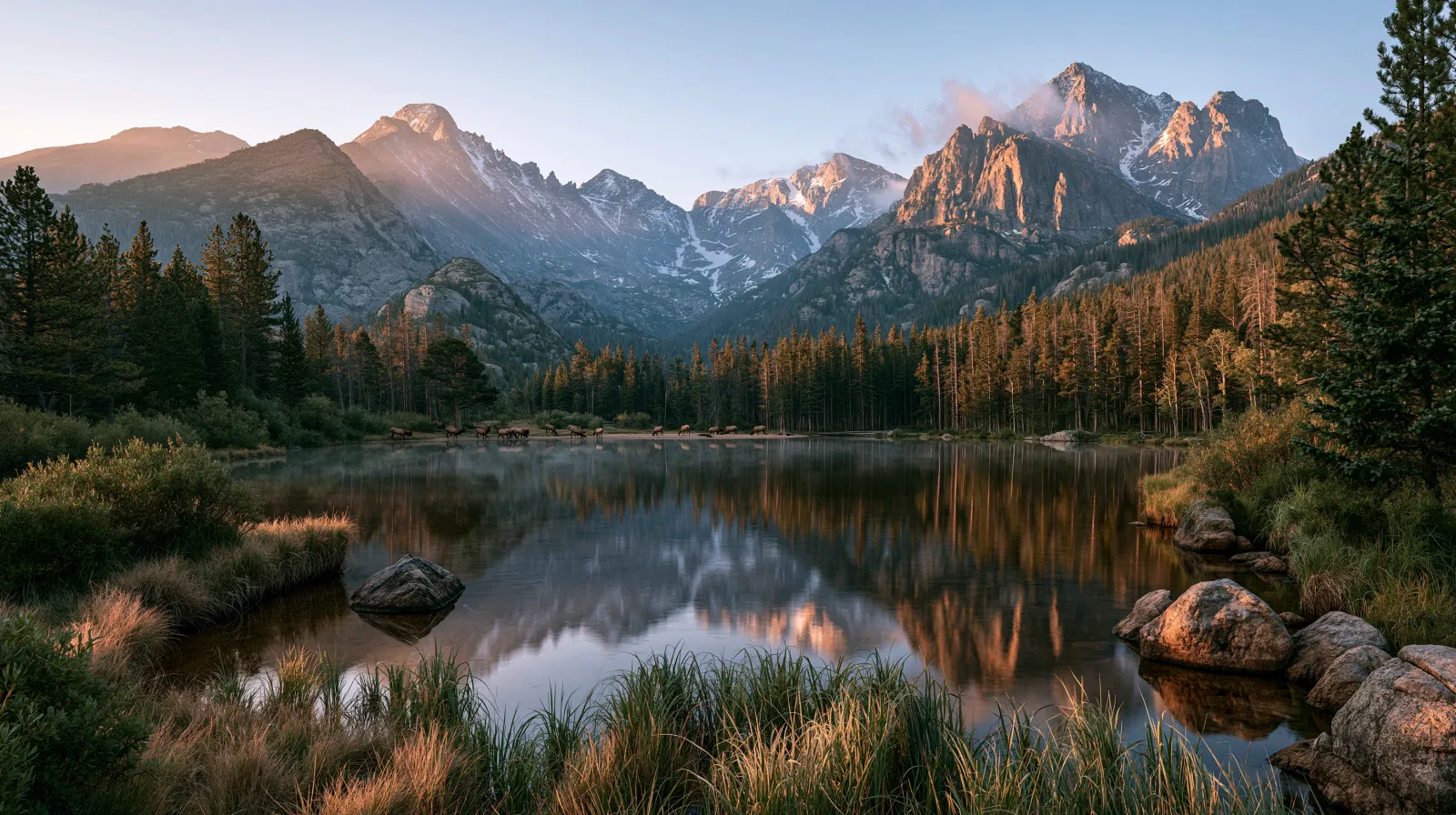
Altitude also affects you. The summit of Loveland Pass is 11,990 feet — above the altitude at which most adults experience some symptom of acute mountain sickness within four hours. Solo travelers cannot rely on a passenger to notice the early signs (headache, fatigue, mild confusion). Drink twice the water you think you need, and do not sleep at altitude on the first night. The lower campgrounds at Rocky Mountain National Park (Moraine Park, 8,160 feet) are a kinder first night than anything inside the high-altitude park interior.
- Use engine braking on every descent over 6% grade.
- Hydrate at 1.5x your sea-level baseline; the rig's 21-gallon tank covers four days.
- Sleep below 9,000 feet on night one.
- Carry a paper map of US-6, US-285, and I-70; cell service is spotty.
Sleeping solo at night
Where you park overnight is the only safety decision that actually matters. Stealth camping (parking on a residential street and sleeping) is legal in most Colorado municipalities but socially and physically riskier than the alternatives. The realistic options for solo female travelers, ranked from safest to least safe: (1) reserved campground with hosts and other RVers, (2) US Forest Service developed campground, (3) Cracker Barrel / Walmart with manager permission, (4) BLM dispersed camping with another RV within sight, (5) rest area, (6) stealth camping. We list this honestly because the marketplaces that don't will eventually be sued.
Locking discipline matters more than alarms. Every Class B has a sliding side door that locks separately from the cab doors; a non-trivial number of break-ins happen because the side door was left unlocked while the renter was in a coffee shop. Lock everything every time, including at the trailhead. Carry a doorstop wedge for the inside of the slider as a tertiary lock for the sleeping hours.
Where you park overnight is the only safety decision that actually matters.
Trail towns that are good first stops
Boulder, Estes Park, Salida, and Buena Vista are all towns where a solo Class B is unremarkable on the street and a woman walking back to her rig at 9pm is not unusual. Telluride and Aspen are walkable but expensive overnight; Crested Butte is friendly and quiet. Avoid the I-70 ski-corridor towns (Vail, Frisco, Silverthorne) for overnight parking — they are heavily patrolled, expensive, and not actually safer.
On the trail itself: Colorado's most popular trailheads (Lake Haiyaha, Sky Pond, the Maroon Bells) require a timed-entry reservation in summer, which means a fixed start time. Solo travelers benefit from the structure; if you can't move your start time, you have a reason to be there at the listed hour, and other hikers are visible.
What we are not going to write
We are not going to write a section on "self-defense for solo female travelers." The internet has thousands of those pieces, most of which sell a product. The honest version is: locking discipline, parking choice, and trip-share notification to two people are the controls that matter, and none of them are products.
We are not going to write a section that romanticizes the lifestyle. Van life is a logistics commitment, not an aesthetic. The aesthetic exists; the commitment is harder.
What you won't find elsewhere
Most solo-female RV pieces conflate driving and sleeping. This one separates them and refuses to sell a safety product.
Topics
Make it a trip
Rent an RV in Colorado
The rigs here are owned by local hosts. Browse what fits the trip in this story, or reach Colorado owners directly.
Browse Colorado rigsWhat fits this trip
Nearby & related
Keep planning Colorado
Sourced costs, campground directories, and the places worth a detour — the next layer of Colorado trip planning.
- Colorado RV rental costFuel · camping · tax, sourced
- Colorado RV-friendly campgroundsHookups, rig limits, booking tips
- Campervan & van rentals in ColoradoVan-life routes, rules & rigs
- RV rentals in ColoradoPickRV Wiki · 6 min read
- Caves & cavernsShow-cave trip guides
- National monumentsProtected-land guides
- Scenic landmarksBucket-list overlooks
- RV renter basicsFirst-rental fundamentals
More from PickRV
- Trip plan
Three weeks on the Pacific Coast Highway with an Italian family
Slow travel from Big Sur to the Olympic Peninsula in a Class C, with a refusal to make every day a photograph.
- Cultural heritage
A Civil Rights heritage trail RV journey
Memphis, Selma, Montgomery, Birmingham, Atlanta — the route that costs more than gas to drive honestly.
- Cultural heritage
An indigenous-heritage road trip that does not pretend to be one
Across the Navajo Nation, the Hopi Reservation, and Bears Ears, with the geography acknowledged and the etiquette named.