Host + vendor insurance
Seasonal Use Insurance — Lay-Up Endorsements, Storage Coverage, and the 30-50% Premium Reduction
Educational only · not insurance advice. PickRV is not an insurance broker, agent, producer, or carrier. Coverage varies by carrier and policy. Verify any decision with a licensed insurance professional in your state.
TL;DR
RVs operated only seasonally can qualify for a 'lay-up' endorsement that strips driving coverage during the dormant months and retains comprehensive-only (theft, fire, hail, falling-object). The structure mirrors ISO Personal Auto Policy form PP 03 23 patterns used industry-wide. Typical savings: 30-50% on annual premium for hosts with a clear 5-7 month off-season. Critical fine print: the rig must be physically immobilized (battery disconnected, fuel stabilized, on stands or properly stored) per most carrier guidelines that track NFPA 1192 (Standard on RV) and RVDA storage best-practices. Driving during lay-up — even to a fuel station or a repair shop — typically voids all coverage in force at the moment of operation.

The boundary
Where this coverage stops

Covered
5- Full liability + collision + comprehensive during the operating season (typically May 1 – October 1 in northern climates).
- Comprehensive-only (theft, fire, hail, vandalism, falling-object, animal damage) during the lay-up season.
- Reactivation back to full coverage at season start — usually free, usually same-day via carrier portal.
- ISO Personal Auto Policy form PP 03 23 (Lay-Up Endorsement) — the standard reference language most U.S. RV carriers track.
- Optional add-ons: mileage-band discounts, garage-kept discount, anti-theft device credit (per NHTSA Part 543).
Not covered
5- Operating the rig during the lay-up period — liability + collision are off, so any incident is uninsured.
- Mechanical failure during lay-up (no mechanical-breakdown coverage in standard comprehensive).
- Damage from rodents, mice nests, or wiring chewed during dormancy (most carriers exclude as 'maintenance').
- Frozen-pipe damage if the carrier requires winterization documentation that was not completed.
- Theft or fire if the rig was not stored per the lay-up immobilization requirements.
In practice
Real-world examples

Anonymized composite scenarios illustrating typical outcomes.
Pacific Northwest host saved $2,550/year across a 3-rig fleet with lay-up endorsements
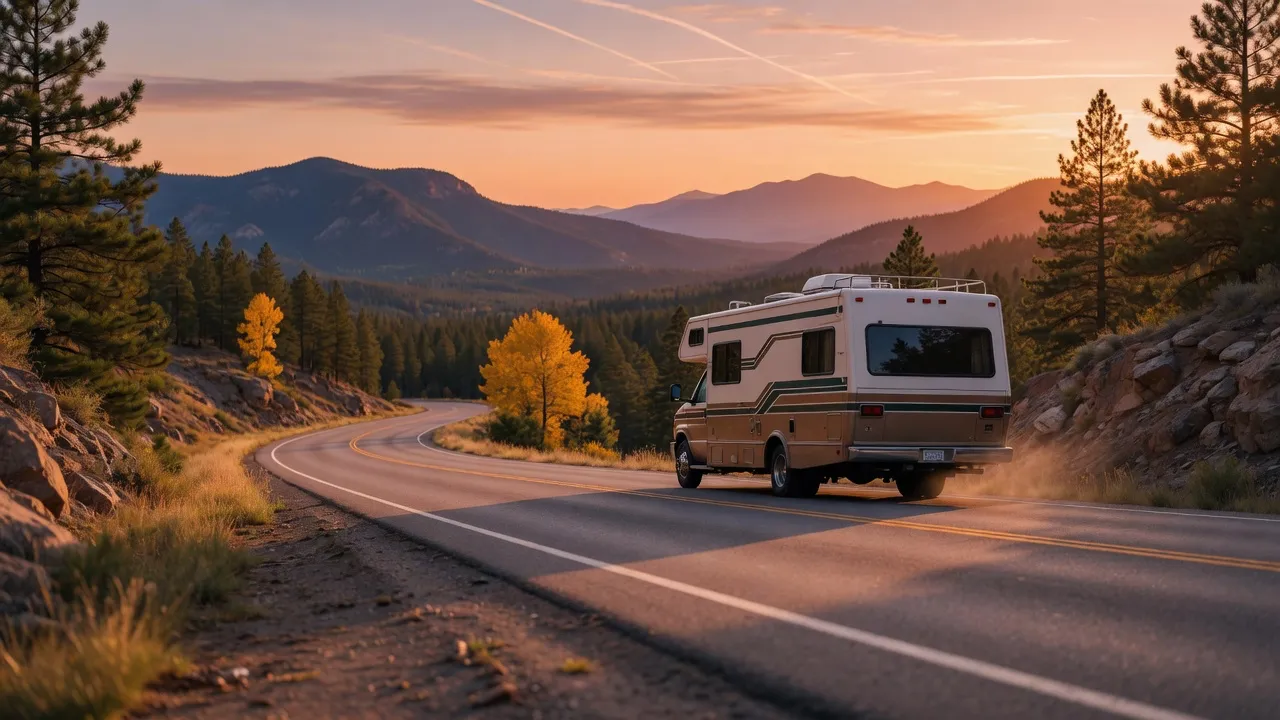
A host operating three Class C motorhomes in Olympia, WA, runs trips May 1 – September 30 (5 months) and stores October 1 – April 30 (7 months) in a covered, fenced storage yard with the batteries disconnected and the rigs on plastic tire cradles per NFPA 1192 guidance. Annual full-coverage premium per rig: $2,200. After binding a lay-up endorsement for the 7-month dormant period (comprehensive-only retained, liability + collision suspended), per-rig annual premium dropped to $1,350 — an $850 per-rig reduction. Across the three-rig fleet: $2,550 annual savings.
Outcome: Net annual savings: $2,550. Reactivation cost each spring: $0 (carrier portal reactivates same-day). Lesson: a predictable seasonal pattern + verifiable immobilization unlocks meaningful premium reduction with no coverage loss during operating months.
Mid-lay-up shop trip voided $42K theft coverage
A host in central Pennsylvania drove a lay-up-endorsed Class A motorhome to a local mechanic in February for an unrelated repair. The rig was stolen from the mechanic's lot the same night. The carrier denied the theft claim because the lay-up endorsement required the rig to be continuously immobilized at the declared storage address, and operating the vehicle outside that address violated the endorsement's stationing condition. The host's argument that it was 'just a quick service trip' did not prevail.
Outcome: Theft loss: $42,000 uncovered. Lesson: any driving during lay-up, even to a service shop, requires reactivating coverage first. Reactivation is almost always free and same-day; the call takes less time than the drive.
The money
Cost ranges

Industry-typical pricing from published carrier and industry sources. Actual quotes vary by state, vehicle, and driver history.
Comprehensive-only retained during lay-up. Range varies by territory and rig value. Source: III commercial-auto seasonal endorsement patterns.
Almost always free; processed via carrier portal or 5-minute phone call. Some specialty carriers charge a $25 endorsement fee.
Optional bare-bones coverage if you drop the carrier policy entirely during lay-up. Cheaper but loses the policy continuity discount at reactivation.
DC battery disconnect switch (~$25-$60) + Sta-Bil or Pri-G fuel stabilizer (~$20-$40) + tire cradles or jack stands (~$0-$80).
Fine print
What insurance companies don't say

Industry insider knowledge surfaced for educational transparency.
ISO form PP 03 23 is the language pattern every U.S. RV carrier tracks
The Insurance Services Office (ISO) writes the model policy forms that ~95% of U.S. personal-lines auto policies adapt. PP 03 23 (the Lay-Up Endorsement to the Personal Auto Policy form PP 00 01) is the canonical seasonal-suspension language. Specialty RV carriers write their own forms that broadly track PP 03 23 — read your endorsement carefully because the wording defines whether 'immobilized' means 'parked in a driveway' or 'on stands with battery disconnected.'
NFPA 1192 sets the ignition-source rules carriers expect during storage
National Fire Protection Association Standard 1192 (Standard on Recreational Vehicles) is the U.S. consensus document for RV fire safety, including dormant-storage best practices: propane shutoff at the tank, battery disconnect, no LP appliances operating, no charging electronics, ventilation. Many carriers do not cite NFPA 1192 in the policy but they apply it as the de facto standard when adjudicating fire-during-lay-up claims. Compliance documentation (photo of disconnected battery, closed propane valve) saves claims.
Operating-season schedule must be predictable to bind the endorsement
Carriers underwrite lay-up endorsements based on a stated seasonal pattern (e.g. May 1 – October 1). Hosts with irregular off-season trips face two options: (1) buy a 'pay-per-day' or 'pay-per-mile' commercial RV product (several mainline and specialty insurers publish these), or (2) reactivate full coverage briefly when off-season trips happen. Erratic patterns can trigger underwriting non-renewal at the next term.
Watch the ACV vs RCV distinction during dormancy
Most lay-up endorsements retain comprehensive at actual cash value (ACV) — depreciated value, not replacement cost (RCV). For older rigs the ACV during a 7-month lay-up may differ materially from the RCV during the operating season because depreciation continues regardless of garaging. A 2018 Class A worth $90K at season open may be valued at $86K-$88K at lay-up theft-loss settlement. Confirm the valuation basis at endorsement binding, not at claim time.
By state
State variations

MNMinnesota
Minnesota requires continuous proof of liability insurance for registered vehicles (Minn. Stat. §169.797). A lay-up endorsement that fully suspends liability triggers a registration-suspension event unless the vehicle is also taken off the road via a non-operation declaration at the DVS.
WIWisconsin
Wisconsin Stat. §344.62 requires mandatory liability for vehicles operated on public roads but allows lay-up periods with comprehensive-only retained for vehicles stored off public roads — no registration-suspension consequence if storage is verified.
FAQ

How do I qualify for lay-up?
Demonstrate a predictable seasonal use pattern (typically 4+ months dormant) and agree to physical immobilization at a declared storage address. Most carriers accept a written attestation; some require a photo of the rig in its storage configuration. Bind the endorsement at renewal or mid-term.
Can I drive the rig once during lay-up for maintenance?
Most carriers do not — even a quick service trip can void the endorsement and any incident-during-trip coverage. The exceptions are carriers that explicitly include 'limited service-trip permission' in the endorsement. Call before any drive; reactivation is almost always free and same-day.
What if I rent the rig once during lay-up?
Almost universally voids coverage. The rental would be uninsured. Reactivate full coverage before the rental and re-lay-up afterwards. Erratic patterns of partial reactivation can trigger underwriting attention.
Do all carriers offer lay-up?
Most commercial-RV-focused insurers do (the ones built around the ISO PP 03 23 pattern). General-auto carriers writing RVs as an add-on vary; some support a simpler 'storage period' suspension instead of a formal lay-up endorsement. Ask your agent whether the form is filed in your state — California, for instance, requires every endorsement to be filed with CDI.
Is lay-up worth it for my operation?
Run the math: monthly full-coverage premium × dormant months × 0.30-0.50 typical reduction vs the operational inconvenience of reactivating + immobilization. For 5+ month lay-ups the math almost always favors the endorsement. For 3-4 month lay-ups it is closer; pay-per-mile commercial products are often cleaner.
What happens to my CLUE report during lay-up?
Nothing — lay-up does not create a CLUE event. Claims during the lay-up period (theft, fire, hail) do create CLUE entries with a not-at-fault marker; carriers vary in how those entries affect renewal rates. The lay-up endorsement itself is invisible to the CLUE database.
When to consult a broker

Talk to a licensed insurance professional and a commercial-use specialist before you operate seasonally for 4+ months per year. Commercial-use insurance for vehicles listed on peer-to-peer marketplaces is its own underwriting category, and many personal-policy gaps surface only at claim time. Specifically ask: (1) which ISO form does the endorsement track, (2) is the valuation basis ACV or RCV during lay-up, (3) what does the immobilization requirement actually require, (4) is reactivation free and instant, and (5) is the form filed in my state. A 15-minute call before binding saves five-figure surprises later.
Sources
- [1]III — Recreational Vehicles Facts + Statistics — RV industry stats including seasonal-use share
- [2]III — Collision and Comprehensive Coverage — Coverage components retained or suspended in lay-up
- [3]NAIC — Consumer Insurance Search — Consumer regulator + complaint portal directory
- [4]NFPA 1192 — Standard on Recreational Vehicles — RV fire-safety + storage ignition-source standard
- [5]RVDA — Recreational Vehicle Dealers Association — RV dealer-association storage + winterization best-practices
- [6]RVIA — Recreational Vehicle Industry Association — RV industry trade-association safety + use standards
- [7]Minnesota Statutes §169.797 — Required Insurance — State requirement for continuous liability proof
- [8]U.S. Small Business Administration — Business Insurance — Commercial-use insurance basics

Nearby & related
Planning a Minnesota trip?
Sourced costs, campground directories, and the places worth a detour — the next layer of Minnesota trip planning.
- RV rentals in MinnesotaLocal rigs, owner-set prices
- Minnesota RV rental costFuel · camping · tax, sourced
- Minnesota RV-friendly campgroundsHookups, rig limits, booking tips
- Campervan & van rentals in MinnesotaVan-life routes, rules & rigs
- Wild-horse rangesMustang-range guides
- BLM landsDispersed-camping country
- Historic sitesHistory worth the detour
- RV lifehacksCamp-smarter field tricks
Your next step
Now the thing you were going to insure
Coverage only makes sense against a specific rig and a specific week — the deductible on a 30-foot Class C is not the deductible on a towable. Start from what you would actually drive.
What you'll see there
Nothing in Minnesota is bookable yet — the search page says so in those words. What it shows instead are labelled sample rigs, so you can see what a listing looks like before there is one to book.
What you'd pay
The complete price sits on every listing, and the exact total is itemized before you pay — nothing appears at the last step.
If plans change
Full rental refund 48h+ before pickup on every booking, in every state.
Tell us when you want to drive Minnesota.
Nothing in Minnesota is bookable today. Dated requests are what we take to owners, so give us the window you actually want — you get one email the day a rig covers it, and nothing else.