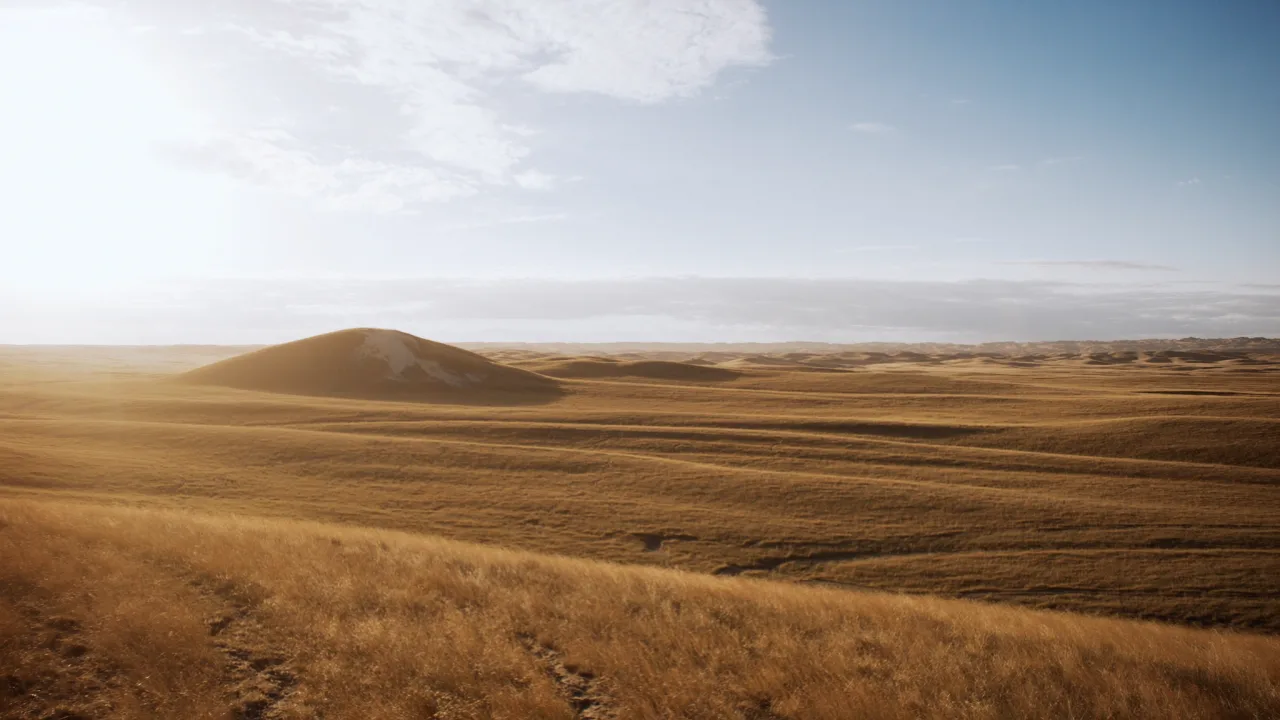
In the far northwest corner of Nebraska, north of Crawford, Oglala National Grassland offers a sweeping expanse of native mixed-grass prairie under big skies. Managed by the US Forest Service as part of the Nebraska National Forests and Grasslands, this remote landscape is dotted with forested streambeds and eroded siltstone and clay formations. Toadstool Geologic Park reveals ancient fossils among eroded rock shapes, while the Hudson-Meng Education and Research Center preserves the largest bison bone bed in North America. Pronghorn and prairie dogs are common sights, and the dark, quiet nights invite stargazing, making it a serene RV camping destination.
Best season — Spring and fall offer mild days, migrating birds, and occasional wildflower blooms; summer brings heat and dramatic thunderstorms, while winter is quiet but can be cold and windy.
What makes Oglala National Grassland worth visiting by RV?
It combines striking geology, prehistoric significance, and true prairie solitude. At Toadstool Geologic Park, you can walk among ancient fossils and eroded rock formations. The Hudson-Meng Center houses the largest bison bone bed in North America. After exploring, settle into a campsite beneath exceptionally dark, star-filled skies.
- Roam mixed-grass prairie with eroded siltstone and clay badlands.
- Spot pronghorn and prairie dogs across expansive grasslands.
- Visit Toadstool Geologic Park and the largest bison bone bed at Hudson-Meng.
At a glance
The facts worth checking before you roll out
Conservative, source-minded facts for planning your visit — always worth confirming against current conditions before you travel.
Managing agency
US Forest Service — part of the Nebraska National Forests and Grasslands
Location
Northwestern corner of Nebraska, north of Crawford
Landscape
Native mixed-grass prairie with forested streambeds and eroded siltstone/clay formations; known for pronghorn and prairie dog viewing
Notable sites
Includes Toadstool Geologic Park and the Hudson-Meng Education and Research Center (described as the largest bison bone bed in North America)
On the ground
Oglala National Grassland, managed by the US Forest Service, occupies the northwestern corner of Nebraska north of Crawford. This landscape preserves a sweeping expanse of native mixed-grass prairie characterized by forested streambeds and unusual eroded formations. Its significance lies in offering a glimpse into the ancient Great Plains ecosystem and its geologic history, providing unique opportunities for quiet observation.
RV travelers to Oglala National Grassland typically explore the rolling prairies, observing pronghorn and prairie dogs across broad horizons. Many visit Toadstool Geologic Park to examine fossil-rich deposits within the distinctive rock formations. The Hudson-Meng Education and Research Center is a key destination, housing the largest bison bone bed discovered in North America for deeper understanding of prehistoric life.
The best times to experience Oglala National Grassland are spring and fall when mild temperatures coincide with migrating birds and potential wildflower displays. Summer months can bring intense heat alongside dramatic thunderstorms. Winter offers quiet solitude but may be cold and windy, demanding preparation for exposed conditions on the open prairie.
Consider establishing a basecamp in a location near Crawford to frame your exploration of Oglala National Grassland. From there, dedicate days to visiting Toadstool Geologic Park and Hudson-Meng, allowing ample time for slow travel across the grassland itself. This approach balances remote immersion with convenient access to services and amenities.
Official sources
- U.S. Forest Service — Oglala National Grassland USDA Forest Service
Nearby & related
Keep planning Nebraska
Sourced costs, campground directories, and the places worth a detour — the next layer of Nebraska trip planning.
Planning an RV trip near Oglala National Grassland: An RV Traveler's Guide?
Was this guide helpful?