- Recommended minimum age
- 5-6 yr (w/parent)
- Independent sleep age
- 8-12 yr (modified)
- Railing height minimum
- ≥5 in (CPSC)
- Cold-weather floor
- 50°F nightly low
Genuinely magical for kids 7-12 when done right
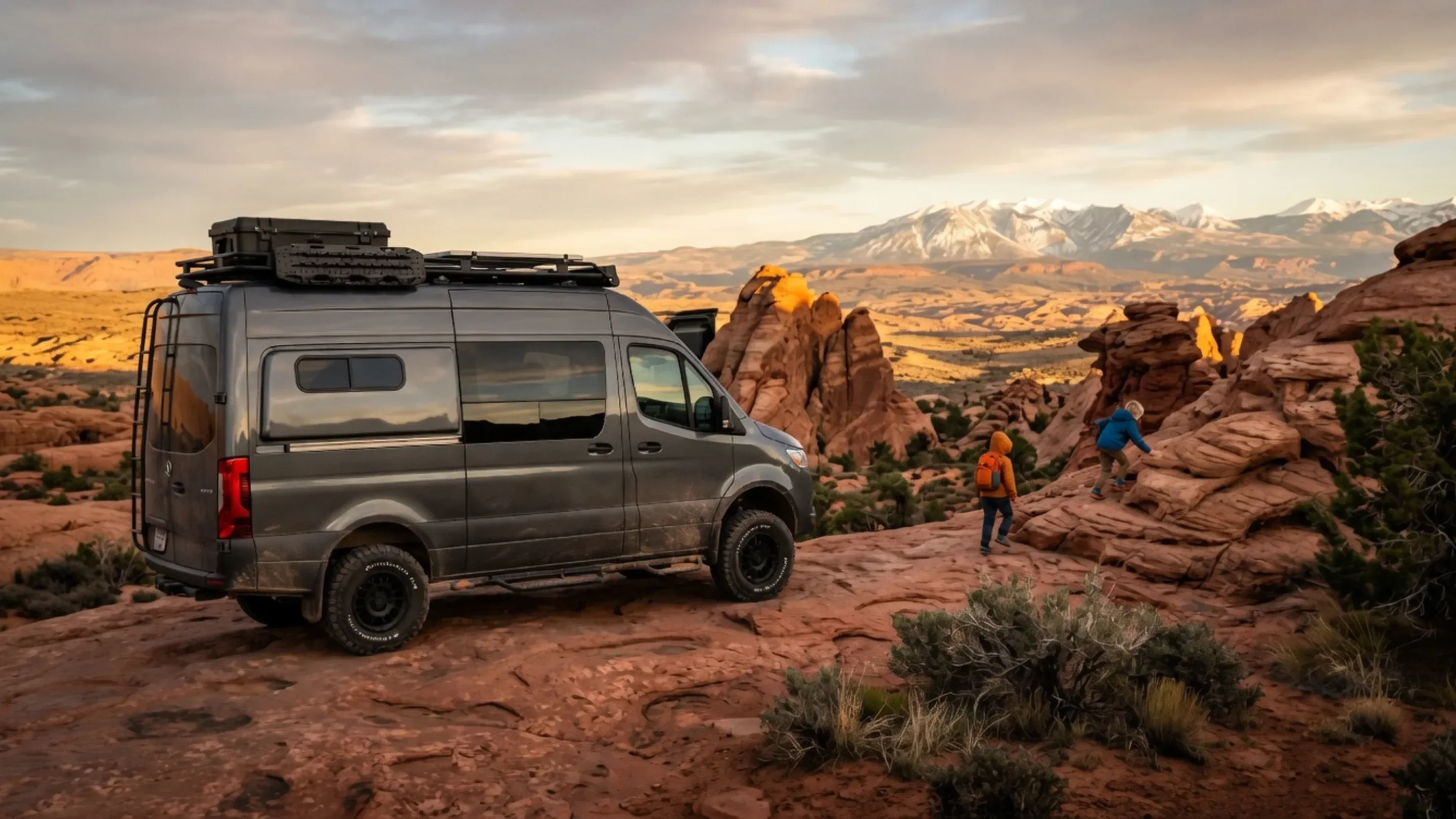
Renting an overlander or roof-tent-equipped rig with kids ages 5-12 is one of the most fun and most under-planned RV configurations on the rental market. The 'sleeping on the roof under stars' framing is genuinely magical for kids in the target age band, and the rig itself opens national-forest dispersed-camping options that a standard Class C bunkhouse cannot access. The planning work happens around safety — ladder modifications, railing height, and the cold-weather floor that decides whether the trip is enjoyable or miserable.
Two age cutoffs — under-5 (parent only), 5-8, 8-12 (independent)
The two age cutoffs that matter. There is no manufacturer-specified minimum age for a child to sleep in a rooftop tent, but the practical safe-age threshold is 5-6 years old based on CPSC data on bunk-bed fall injuries (the closest analog). Children under 5 are at elevated risk of nighttime fall from the ladder, particularly during half-asleep bathroom trips. The Tepui, Yakima Skyrise, and Roofnest manufacturers all publish 'family use' marketing that implicitly assumes a parent ascends and descends with the child during overnight transitions. For ages 5-8, a parent should sleep in the rooftop tent with the child; the parent handles the ladder for any nighttime bathroom trips. For ages 8-12, the child can sleep independently in the rooftop tent with the parent sleeping in the rig below — provided the ladder has the safety modifications described in the next section, and the child has rehearsed the night-time descent in daylight before the first overnight.
Three modifications — ladder, railing, anti-roll bolster
The three modifications that make the setup kid-safe. First, replace the stock telescoping aluminum ladder. The factory ladder on most rooftop tents (Tepui Kukenam, Yakima Skyrise, Roofnest Sparrow) is a 3-section telescoping aluminum ladder with narrow rungs and a slippery aluminum tread. Replace it with a wide-step solid ladder rated for the combined kid + parent weight — the Roofnest Falcon stair-step ladder and the Yakima wide-step accessory ladder are the two most-common upgrades, $200-$400 new. Second, add an interior tent railing. Most rooftop tents ship with a 2-inch nylon railing on the ladder-side edge that meets adult standards but is below the CPSC bunk-bed rail minimum of 5 inches above mattress surface for child safety. After-market 6-inch nylon rail kits ($60-$120) retrofit to all major brands and snap into the tent's existing structural ribs. Third, add a tent-floor anti-roll bolster on the ladder-open side. A 4-inch foam wedge that runs the length of the tent floor prevents a sleeping child from rolling toward the ladder opening; cut-to-length foam from Amazon or Walmart, $30-$50. Total modification cost is $120-$250 on top of the rooftop tent itself.
Rig classes that support rooftop tents (3 work · 2 don't)
The rig classes that support a rooftop tent. Overlander rigs — purpose-built 4x4 conversion vans like EarthRoamer LTi, Sportsmobile Sprinter, and Storyteller Overland Mode 4x4 typically have a hard-shell rooftop tent or a pop-up roof with an integrated bed. These are the gold-standard family overlander rigs and they rent on PickRV's overlander filter. Class B conversion vans with a roof rack — Sprinter, ProMaster, and Transit conversion vans can have a soft-shell rooftop tent added on a Yakima or Thule load bar. Many overland-rental specialists offer this configuration as an upgrade. Truck campers with a rooftop tent on the truck cab — less common but exists for the truck-camper + family hybrid use case. Class A and Class C motorhomes generally do NOT have rooftop tents because the rig roof is already at 11-12 feet of ground clearance and adding a 4-foot tent puts the sleeping surface at 15+ feet which violates most manufacturer specs and creates wind-load issues during transit. If a rental listing claims a rooftop tent on a Class A/C, verify the spec with the host before booking.
Cold + rain reality + 50-50 split cadence
The cold-weather + rain reality. Rooftop tents are not insulated. Night temperatures below 50°F make kids miserable without proper sleeping bag spec. Pack sleeping bags rated to 20°F below the expected nightly low — a 30°F-rated bag for 50°F nights, a 20°F-rated bag for 40°F nights. Rain — rooftop tents are waterproof but the ladder transition in heavy rain is unpleasant and the ladder rungs become slippery. Have a Plan B (the rig's interior bunk or convertible bed) for forecast rain nights. The realistic cadence is a 50-50 split of rooftop nights vs. inside nights for a 7-day trip; this keeps the novelty fresh without forcing kids to deal with cold or wet weather every single night. Kids ages 7-12 universally rank a 50-50 split as the high-water-mark of the trip; kids who do 7 consecutive nights in the rooftop tent typically complain loudly by night 4-5.
Build your family rooftop-tent pack list
Pack-list builder
Pick a trip type, check items off, add your own. Saves to this device.
0 / 10 packed
Frequently asked questions
- What's the minimum age for a child to sleep in a rooftop tent?
- There is no manufacturer-specified minimum age, but the practical safe-age threshold is 5-6 years old based on CPSC data on bunk-bed fall injuries (the closest analog). Children under 5 are at elevated risk of nighttime fall from the ladder, particularly during half-asleep bathroom trips. The Tepui, Yakima Skyrise, and Roofnest manufacturers all publish 'family use' marketing assuming a parent ascends and descends with the child during overnight transitions. For ages 5-8, a parent should sleep in the rooftop tent with the child; for ages 8-12, the child can sleep independently with the parent in the rig below, provided the ladder has the safety modifications described below.
- What ladder and railing modifications make the setup kid-safe?
- Three modifications: (1) Replace the stock telescoping aluminum ladder (slippery rungs, narrow steps) with a wide-step solid ladder rated for the kid + the parent (Roofnest's Falcon stair-step ladder, Yakima's wide-step accessory ladder). (2) Add an interior tent railing on the ladder-side edge — most rooftop tents ship with a 2-inch nylon railing that meets adult standards but is below the CPSC bunk-bed rail minimum of 5 inches above mattress surface for child safety. After-market 6-inch nylon rail kits ($60-$120) retrofit to all major brands. (3) Add a tent-floor anti-roll bolster on the open side — a foam wedge that runs the length of the tent floor and prevents a sleeping child from rolling toward the ladder opening. Total modification cost is $120-$250 on a $1,500-$3,500 rooftop tent.
- Which RV rental classes have rooftop tents as an option?
- Three classes in the US market: (1) Overlander rigs — purpose-built 4x4 conversion vans (EarthRoamer, Sportsmobile, Storyteller Overland) typically have a hard-shell rooftop tent or pop-up roof with bed integrated. (2) Class B vans with a roof rack — Sprinter, ProMaster, and Transit conversion vans can have a soft-shell rooftop tent added on a Yakima or Thule load bar. Many overland-rental specialists offer this configuration. (3) Truck campers with a rooftop tent on the truck cab — less common but exists. Class A and Class C motorhomes generally do NOT have rooftop tents because the roof is already at 11-12 feet of ground clearance and adding a 4-foot tent puts the sleeping surface at 15+ feet which violates most manufacturer specs and creates wind-load issues.
- Is the rooftop tent approach actually fun for kids, or is it gimmick?
- Genuinely fun for kids ages 7-12 when done right. The 'sleeping on the roof under stars' framing connects to the same imagination space as the bunk-bed sleepover, plus the practical reality that the roof tent has a clear sky view that no interior RV bunk offers. The two failure modes that destroy the experience: (1) cold weather — rooftop tents are not insulated and night temperatures below 50°F make kids miserable; pack proper sleeping bags rated to 20°F below expected lows. (2) Rain — rooftop tents are waterproof but the ladder transition in heavy rain is unpleasant; have a Plan B (the rig's interior bunk or bed) for forecast rain nights. Plan a 50-50 split of rooftop nights vs. inside nights for a 7-day trip; this keeps the novelty fresh without forcing kids to deal with weather every night.
Keep exploring
Ready to roll?
Overlander + family ready to browse.
Complete nightly price on every listing — your exact total itemized before you pay · 48h full rental refund. Every rig near you, one checkout.