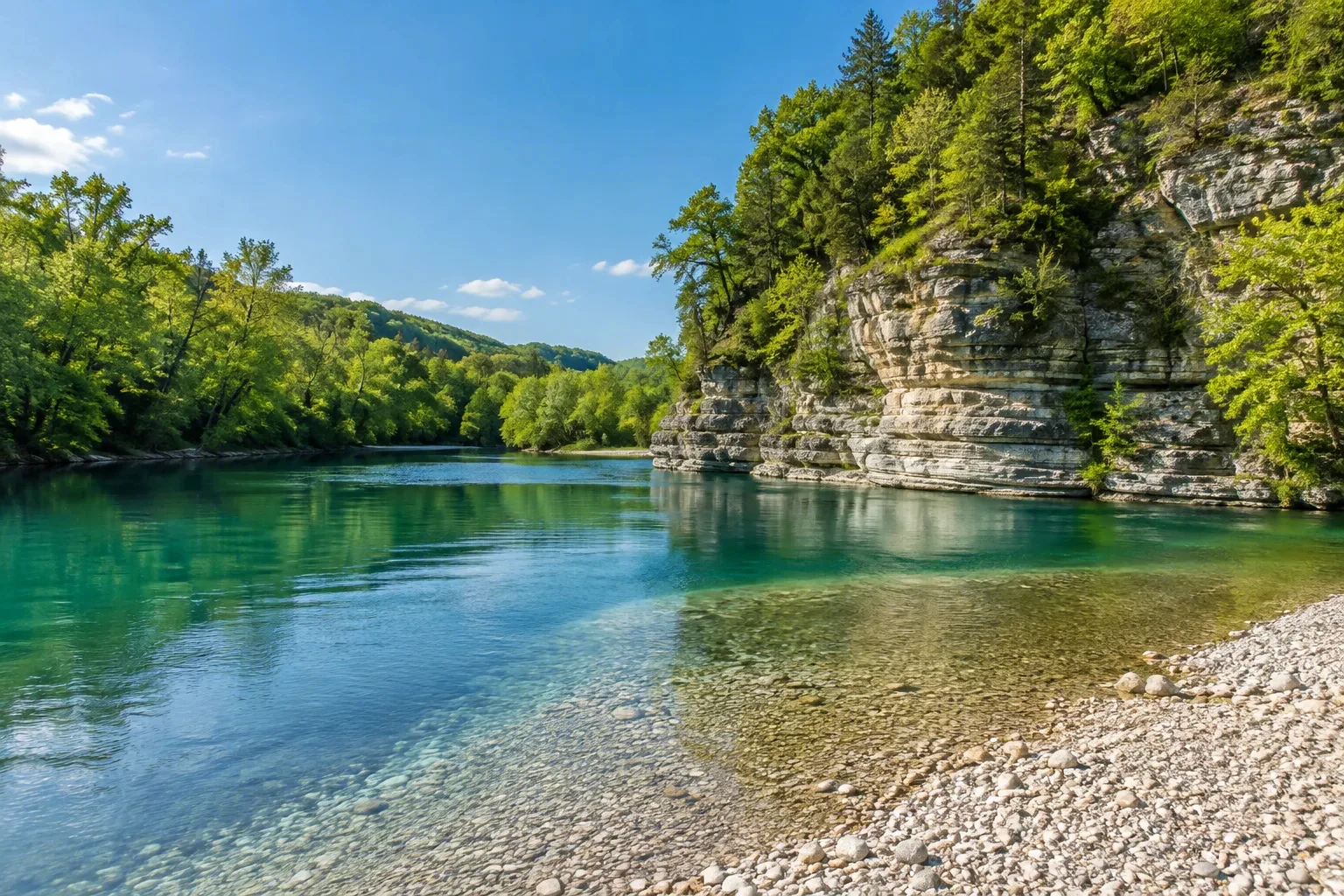
Flowing through Oregon’s rugged landscape, the Rogue River is a celebrated original in the National Wild & Scenic Rivers system. Its 84-mile protected main-stem segment carves a dramatic canyon, offering a mix of secluded wilderness, lively rapids, and deep, clear pools. Adventurers are drawn by thrilling whitewater, superb fishing for salmon and steelhead, and a trail that traces the river’s edge. For RV travelers, riverside campgrounds provide a perfect base for day hikes, waterfall explorations, or quiet moments on gravel bars. Managed by the Bureau of Land Management and Rogue River-Siskiyou National Forest, this stretch invites deep immersion in a river that shaped its region.
Best season — Summer and early fall are prime for rafting, while spring brings wildflowers and high water, and fall hosts salmon runs. Each season reveals a different face of the canyon.
Why is the Rogue River a legendary rafting destination?
The Rogue offers a rare blend of remote wilderness and accessible adventure. Rafters navigate splashy rapids through a deep forested canyon, with campsites on sandy beaches, while hikers trace the river on a riverside trail, all within a protected Wild & Scenic corridor teeming with wildlife.
- Designated on October 2, 1968, as one of the original Wild & Scenic Rivers.
- The protected main-stem segment stretches 84 miles through southwestern Oregon.
- Managed jointly by the BLM Medford District and Rogue River-Siskiyou National Forest.
At a glance
The facts worth checking before you roll out
Conservative, source-minded facts for planning your visit — always worth confirming against current conditions before you travel.
State
Oregon
Managing agencies
Bureau of Land Management (Medford District) and Rogue River-Siskiyou National Forest (U.S. Forest Service)
Designated
October 2, 1968 (one of the original Wild & Scenic Rivers)
Designated length
84 miles main-stem designated segment
On the ground
The Rogue River is a celebrated segment of the National Wild & Scenic Rivers system, extending for 84 miles through Oregon’s landscape. Its protected status preserves both dramatic canyon scenery and vital habitats. Managed jointly by the Bureau of Land Management and Rogue River-Siskiyou National Forest, this river corridor offers opportunities to experience remote wilderness alongside accessible recreation.
RV travelers along the Rogue River can pursue a variety of activities. The area provides access to thrilling whitewater rafting on certain sections, while calmer stretches are ideal for fishing salmon and steelhead. A trail traces the river’s edge for hikers, and jet boat tours offer scenic views of the canyon's beauty. Campgrounds serve as convenient starting points.
The timing of a Rogue River visit impacts available activities. Summer and early fall are favored by rafters, while spring brings wildflowers and higher water levels. Fall is known for salmon runs, offering unique viewing opportunities. Each season presents a different character to the canyon’s wild environment, influencing how visitors experience it.
Consider establishing a basecamp in the vicinity of the river corridor. From this location, RV travelers can easily access day hikes along the riverside trail and explore various points within the managed area. This allows for flexible exploration of the Rogue River's features, balancing adventure with comfortable accommodations.
Official sources
- Bureau of Land Management — Rogue River Bureau of Land Management
Nearby & related
Keep planning Oregon
Sourced costs, campground directories, and the places worth a detour — the next layer of Oregon trip planning.
- Oregon RV rental costFuel · camping · tax, sourced
- Oregon RV-friendly campgroundsHookups, rig limits, booking tips
- Campervan & van rentals in OregonVan-life routes, rules & rigs
- RV rentals in OregonPickRV Wiki · 6 min read
- Sand dunesDune fields worth the climb
- Fossil sitesDeep-time road stops
- Petroglyph sitesAncient rock-art stops
- Deep trip guidesLong-form seasonal playbooks
Planning an RV trip near Rogue River: An RV Traveler's Guide?
Was this guide helpful?