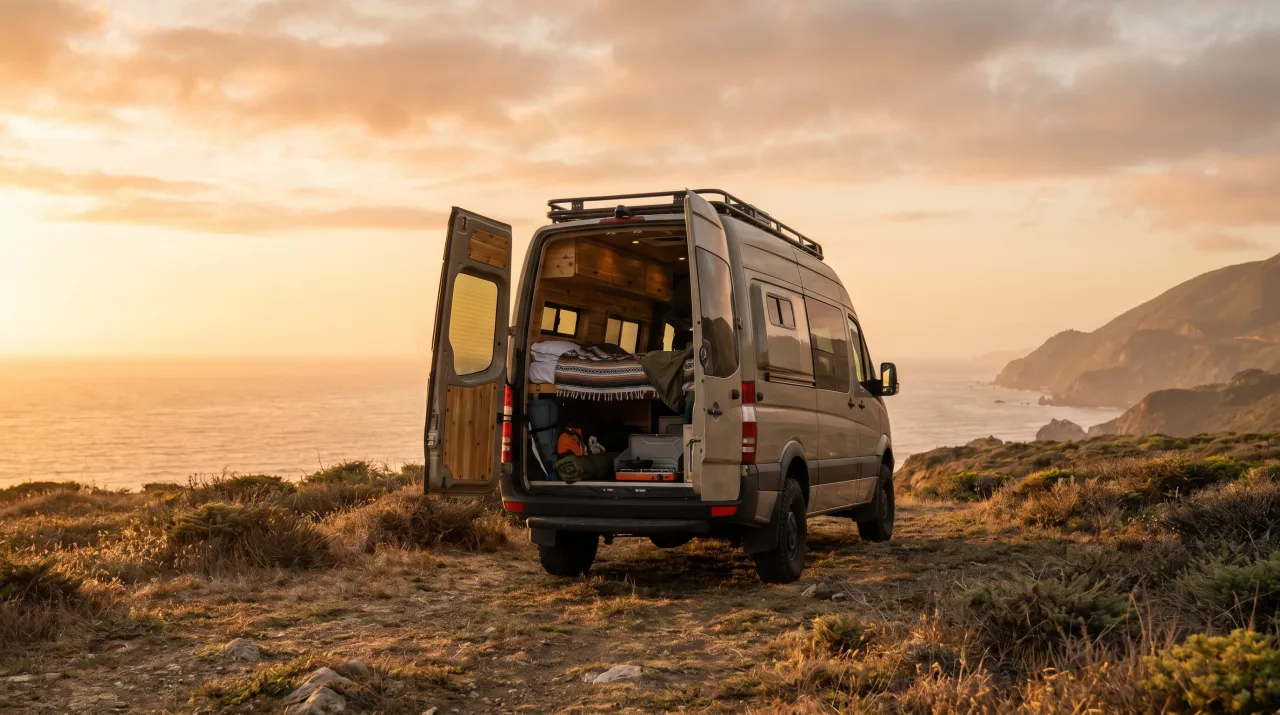
#vanlife class guide · Transit
Ford Transit Conversion Rentals
Workhorse build · gas engine · widest body in the segment
The class
About the Transit

The Ford Transit (post-2014 platform) is the value-equivalent answer to Sprinter — same general size class but with a gasoline V6 (3.5L EcoBoost twin-turbo) and a wider interior. The wider body buys easier furniture layout but costs aerodynamics — fuel economy averages 15-18 mpg, vs. the Sprinter's 18-22.
Living in it
Stand-up height and power

Stand-up context
Medium roof (6'1") or high roof (6'5"). Low roof = no stand-up.
Power system
Same solar/lithium spec range as Sprinter (200-600W solar, 200-400 Ah battery). Gas engine means no AdBlue, more fuel-station options, less cold-start drama.
Honest fit
When the Transit wins — and loses

It wins when
Trips with multiple drivers (Transit cab is friendlier to first-timers). Trips in regions without diesel infrastructure (rural Wyoming, Montana). Family trips (the wider body holds 4 people comfortably). Cold-weather trips where diesel gelling is a concern.
It loses when
Long-distance trips where fuel cost matters (gas costs 20-30% more than diesel per mile). High-altitude trips (V6 EcoBoost loses meaningful power above 8,000 ft).
PickRV first-hand
What official guides don't tell you

Transit AWD (post-2020) is the most common AWD van — more available than Sprinter AWD and cheaper.
Transit gas tanks are larger than Sprinter — 25 gal standard. Range similar despite lower mpg.
Transit cab visibility is better than Sprinter — taller windshield, less hood. First-time van drivers feel safer.
Transit aftermarket support is broad — every truck dealer can service it. Sprinter requires Mercedes-certified shops in many regions.
Transit timing chain can stretch in early high-mileage units — check service records on rentals.
Looking for a rig in your area?
Pick your state and add your email — one email when a rig is listed there, nothing else, no spam.
Primary source citation
PickRV cites .gov / federal / recognized industry sources.