Fuel + logisticsCited official sources
US RV potable water fill strategy
Where to fill freshwater tanks reliably.
RV potable water fill is typically available at: campground spigots, dedicated water-fill stations at some truck stops, NPS + USFS + state-park visitor centers, and some municipal facilities. Carrying an RV-specific drinking water hose (white food-grade hose) is required for safe fill.
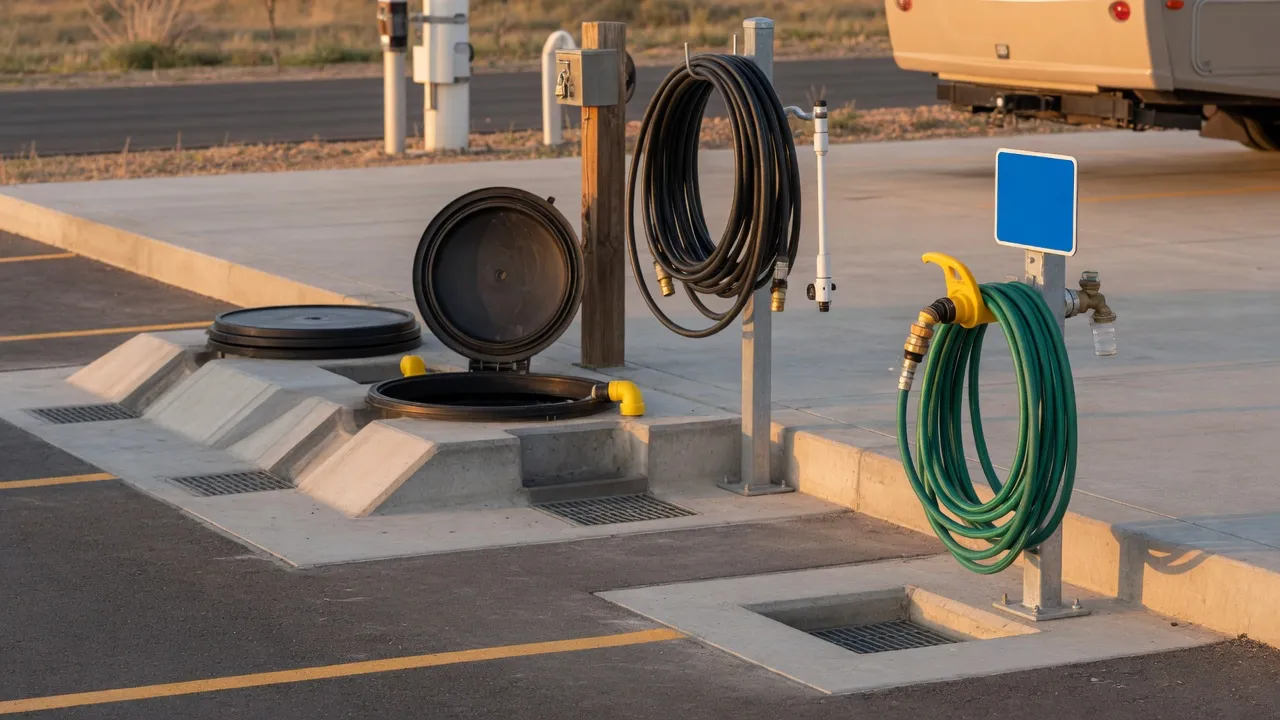
Frame: a general RV subject photograph — not a place on this route.
- Tier
- Fuel + logistics
- Sources
- Cited official (.gov / .org)
Where can I fill my RV's water tank?
Most reliably at any campground spigot — included with most RV camp fees. Travel-day fills available at: many state-park visitor centers, some Pilot Flying J + Love's + TA-Petro locations, some BLM and USFS dispersed-camping kiosks, occasional municipal facilities. Apps: Campendium has water-fill info for many campgrounds. Carry a 25-foot white food-grade RV water hose; non-food-grade hoses leach plastic.
- Campground spigots most common
- State park visitor centers
- Some truck stops
- White food-grade hose only
- Test water quality (some sources have hard water)
Hose discipline
RV water hose should be white food-grade (the standard color coding). Garden hoses are not food-safe — they leach plastic and lead into the water.
Carry an inline filter (Camco or comparable) for potable water fills.
Drain hoses after use to prevent freeze damage in cold-weather travel.
What RV water hose marketing doesn't tell you
Marketing emphasizes durability. The honest functional answer: any food-grade white hose works. Don't use a garden hose.
- Campendium: Campground database with water info.[source]
Frequently asked questions
- Is campground water safe to drink?
- Usually yes if served by municipal supply. Verify if served by private well. Inline filter helps.
Authoritative sources
Verify current conditions with state DOT 511 systems before departure. RV restrictions may change. Weather may close roads.
Planning an RV trip along US RV potable water fill strategy?
Was this guide helpful?