Fuel + logisticsCited official sources
RV solar power for boondocking
Watts, batteries, and the practical reality of off-grid RV power.
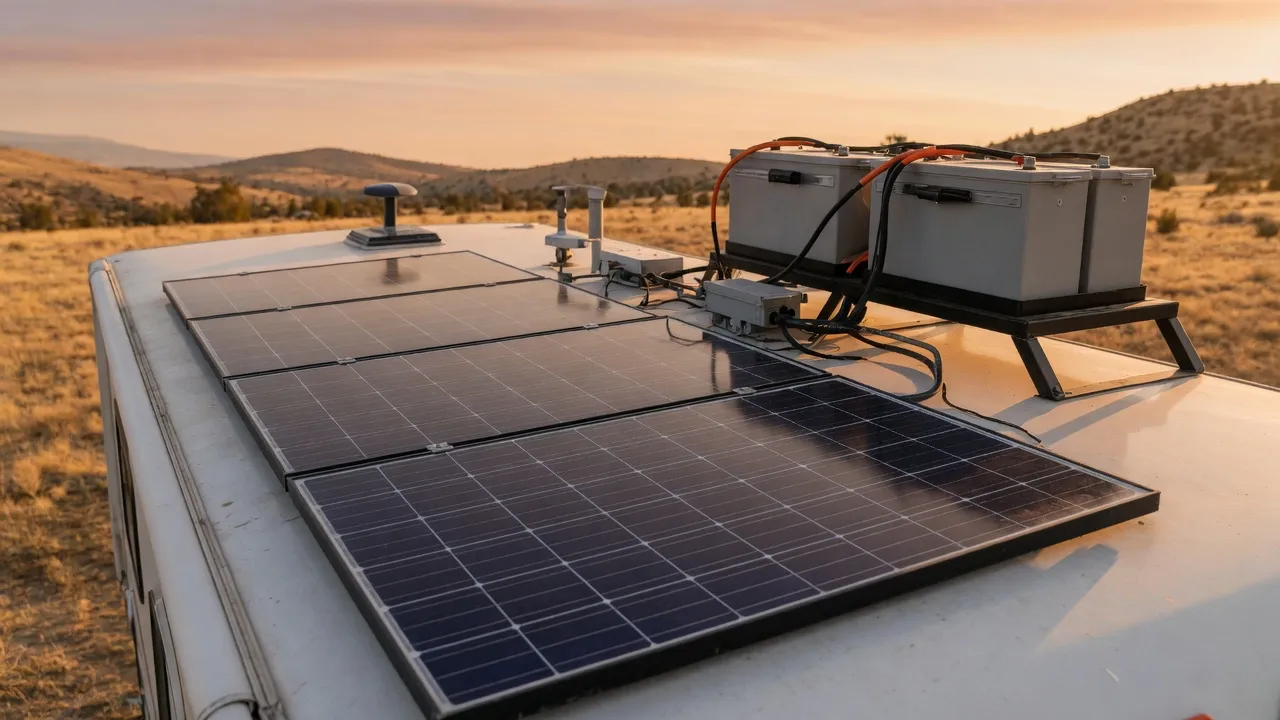
Solar panels enable extended boondocking without generator use. Practical setup sizes range from 200W (modest) to 1,200W (boondocker-grade). Battery storage is the equally-important other half — typically 200-600 amp-hours of lithium iron phosphate (LiFePO4). This guide covers the practical sizing reality.
Frame: a general RV subject photograph — not a place on this route.
- Tier
- Fuel + logistics
- Sources
- Cited official (.gov / .org)
How much solar do I need to boondock indefinitely?
Depends on your power consumption. Light use (lights + phones + minimal device charging): 200-400W solar + 100 Ah LiFePO4 = adequate. Moderate use (laptops + cooking + occasional refrigeration): 600-800W solar + 400 Ah LiFePO4. Heavy use (AC, electric heating, Starlink continuous): 1,200W+ solar + 600+ Ah LiFePO4. The constraint is that AC running off battery quickly depletes regardless of size; AC is the major boondocking limit.
- Light: 200-400W + 100Ah
- Moderate: 600-800W + 400Ah
- Heavy: 1,200W+ + 600Ah
- AC use depletes battery quickly
- LiFePO4 battery preferred over lead-acid
What RV solar industry + community doesn't tell you
Solar industry marketing emphasizes wattage. Real boondocker calculations involve daily watt-hours, battery storage, and cloudy-day reserves.
The honest summary: 600W solar + 400 Ah LiFePO4 is the sweet spot for most boondockers.
- Battle Born Batteries: Popular LiFePO4 brand.[source]
Frequently asked questions
- Can I run AC on solar?
- Briefly. Sustained AC requires generator or shore power. Boondockers typically don't run AC continuously.
Authoritative sources
Verify current conditions with state DOT 511 systems before departure. RV restrictions may change. Weather may close roads.
Planning an RV trip along RV solar power for boondocking?
Was this guide helpful?