Fuel + logisticsCited official sources
Boondocking fuel cache strategy
Plan fuel like you plan water when you're 100 miles from the nearest station.
Boondocking and dispersed camping puts RV travelers in remote areas — sometimes 100+ miles from the nearest fuel station. Fuel cache strategy is part of remote-trip planning. This includes both calculating ranges based on actual consumption (not optimistic ratings) and the option of carrying additional fuel safely.
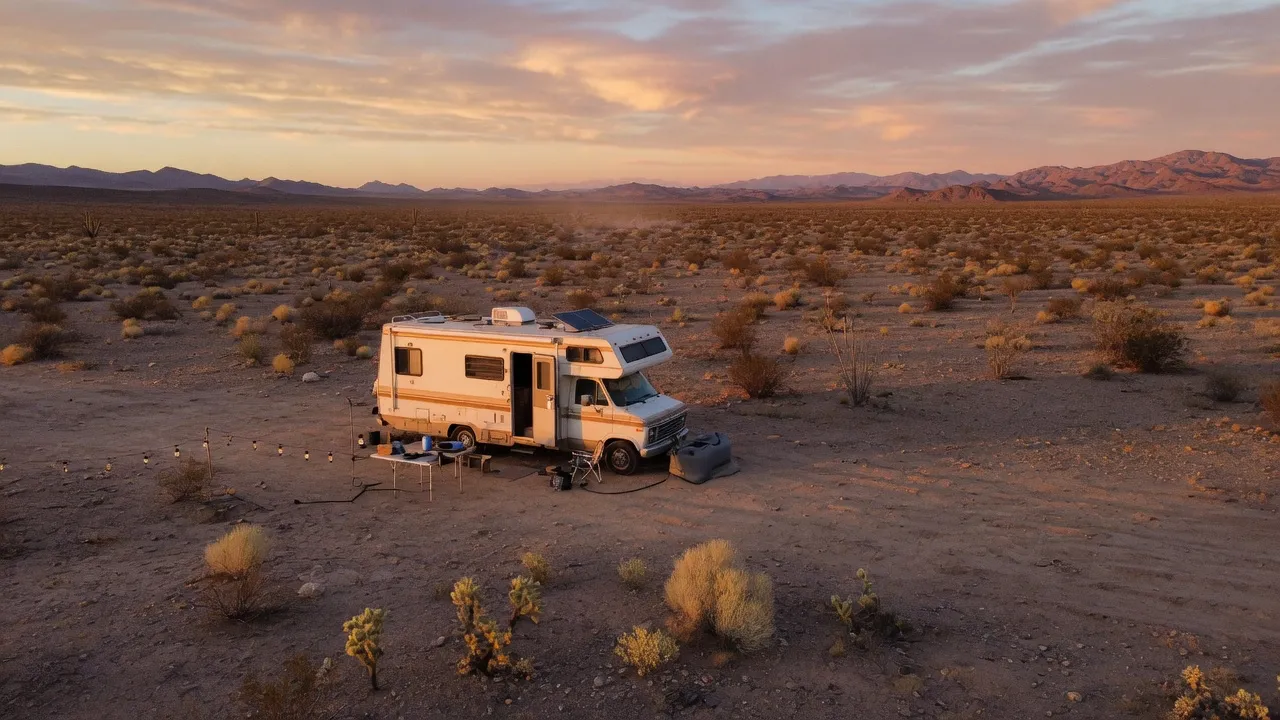
Frame: a general RV subject photograph — not a place on this route.
- Tier
- Fuel + logistics
- Sources
- Cited official (.gov / .org)
Should I carry extra fuel for boondocking?
For most boondocking trips, no — plan range carefully and refuel at the nearest paved station. For truly remote trips (Bureau of Land Management dispersed sites 50+ miles from paved roads), carry a 5-gallon jerry can as a safety margin. Federal regulation allows up to 5 gallons of gasoline in approved containers for personal use. Diesel jerry cans similarly allowed.
- Most boondocking: plan range carefully
- Truly remote: 5-gallon jerry can
- Federal regs allow 5-gal personal use
- Diesel + gasoline approved containers required
- Watch RV fuel consumption — not optimistic ratings
Calculating real range
Manufacturer fuel-economy ratings for RVs are optimistic. Real-world consumption typically 20-30% worse than rated. A Class A motorhome rated for 8 MPG in optimal conditions often delivers 6-7 MPG real-world.
Calculate range conservatively: usable fuel × real MPG × safety margin. A 100-gallon tank × 6 MPG × 0.8 safety = 480 miles practical range.
Adjust further for high altitude, headwinds, and towing.
What RV manufacturer ratings + real-world community data doesn't tell you
Manufacturer ratings are optimistic. Community data on forums (IRV2, RV.net) is more realistic.
- BLM dispersed camping: Remote area planning context.[source]
Frequently asked questions
- How long can my generator run on full propane?
- Varies by generator size. 20-gallon propane tank can power a 4kW generator about 30-50 hours at half load.
Authoritative sources
Verify current conditions with state DOT 511 systems before departure. RV restrictions may change. Weather may close roads.
Planning an RV trip along Boondocking fuel cache strategy?
Was this guide helpful?