Clearance + restrictionCited official sources
RV + trailer length legal rules — US state-by-state
State laws on combined RV + trailer length. Critical for fifth-wheel + towed-vehicle setups.
Most US states set a maximum combined length for vehicle + trailer. The standard for non-commercial vehicles is 65 feet combined in most states; some states allow 70-75 feet. RV travelers towing dinghy vehicles or large trailers should verify state law before extended trips.
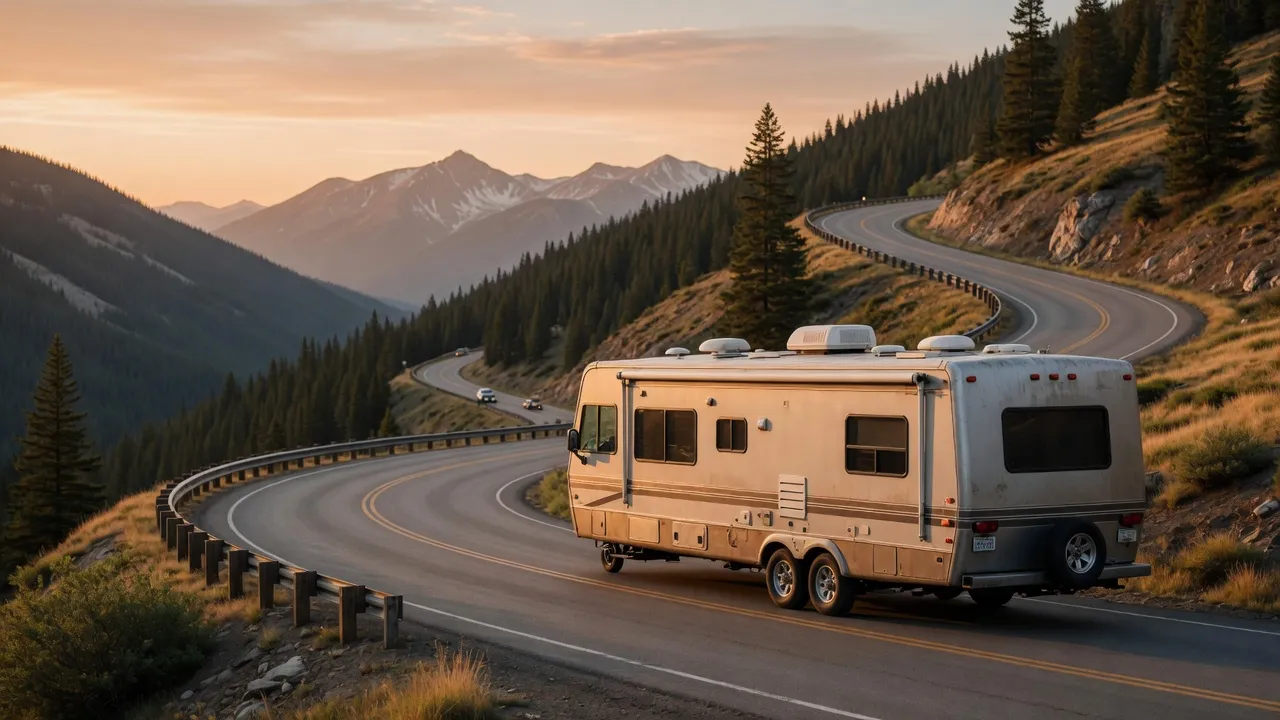
Frame: a general RV subject photograph — not a place on this route.
- Tier
- Clearance + restriction
- Sources
- Cited official (.gov / .org)
What's the maximum length of my RV + tow vehicle combination?
Federal standard for commercial trucks is 65 feet combined; most states adopt this for non-commercial too. Some states allow up to 70 feet (e.g., Texas) or 75 feet (in limited cases). The relevant law is your state of origin (registration state) plus any state you transit through. A 40-foot Class A motorhome plus a 25-foot tow vehicle is 65 feet combined — at the limit in most states.
- Most states: 65 ft combined max
- Some: up to 75 ft
- Verify by state
- Class A + dinghy: often at limit
- Triple-towing allowed in few states
Practical advice
Verify with each state DOT. Don't assume your origin-state law applies in another state.
Triple-towing (motorhome + first trailer + second trailer) is allowed in some states (UT, NV, AZ, NM, MT, ID) but prohibited in others. Verify state-by-state.
What State DOT regulations doesn't tell you
State DOT regulations are individually accessible. Aggregating them is tedious. RV LIFE and similar tools maintain state-by-state references.
- FHWA federal vehicle dimensions: Federal baseline.[source]
Frequently asked questions
- Is triple-towing legal everywhere?
- No. Allowed in some Western states only. Prohibited in most Eastern states. Verify state-by-state before planning a triple-tow trip.
Authoritative sources
Verify current conditions with state DOT 511 systems before departure. RV restrictions may change. Weather may close roads.
Planning an RV trip along RV + trailer length legal rules?
Was this guide helpful?