Scenic bywayCited official sources
Pikes Peak Highway — to the 14,115-ft summit by RV
America's most accessible 14,000-ft summit by paved road. RV-restricted, toll-required, and worth understanding before you commit.
Pikes Peak Highway climbs from Cascade, Colorado, to the 14,115-foot summit of Pikes Peak in 19 miles of paved road. The drive is one of America's most accessible high-altitude experiences and one of the most popular. The route is a privately operated toll road managed by Colorado Springs. RV restrictions are real: the route has historically required brake inspections, and vehicles over certain lengths have been turned back. The 2026 status is that recreational RVs up to 35 feet are typically accommodated but the road requires preparation.
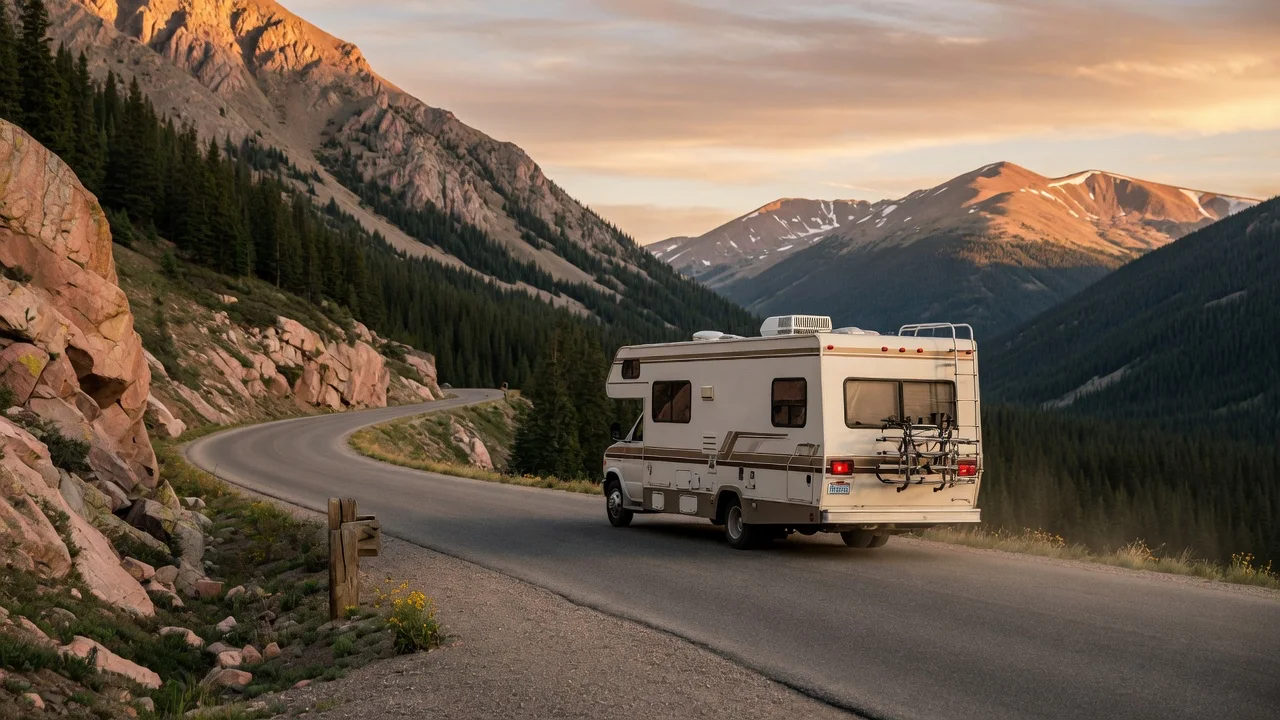
Frame: a highway in Colorado — not this route.
Elevation
14,115ft
highest point · climbs from 7,500 ft
Elevation range — drawn from this page's surveyed low and high points
Can I drive my RV up Pikes Peak?
Most RVs up to 35 feet can drive Pikes Peak Highway. Brake inspections are conducted at the summit before descent during peak season. The toll is per-vehicle plus per-passenger and includes the round-trip. Class A motorhomes have made the trip but face stricter inspection. Trailers are generally discouraged. The Pikes Peak Cog Railway is the alternative for travelers in larger rigs or those uncomfortable with the high-altitude drive.
- 19 miles Cascade to 14,115 ft summit
- Toll road — fees apply
- RVs up to 35 ft typically OK
- Brake inspection at summit before descent
- Cog Railway alternative
At a glance
Route facts worth checking before you roll out
Conservative, source-minded numbers for planning — always confirm against current conditions and state DOT 511 before you depart.
Distance
19 mi
Cascade gate to Pikes Peak summit
Drive time
1–2 hr
Each way
Elevation
7,500–14,115 ft
RV compatibility
Mid-size RV (Class B + small Class C)
Max length 35 ft
Best season
May through September. October-April access reduced; winter closures common.
Cell coverage. Variable. Verizon has service at most pull-outs. Spotty above 12,000 ft.
Elevation profile
Climbs from 7,500 ft at Cascade to 14,115 ft at summit.
Will your rig fit?
Pikes Peak Highway posts a 35-foot vehicle limit. Measured against the rigs listed on PickRV, 14 of 18 sizes clear it.
- Teardrop12 ft
- A-Frame Pop13 ft
- Pop-Up Camper14 ft
- Class B Pop18 ft
- Silver-Bullet Travel Trailer19 ft
- Class B City Camper Van21 ft
- Class B Camper Van Conversion22 ft
- Luxury Class B Touring Coach24 ft
- Class C Cascade Loop25 ft
- Class C Beach Cruiser26 ft
- Class C Yellowstone Adventure27 ft
- Class C Family Motorhome28 ft
- Super C 4x4 Adventure33 ft
- Class A Open34 ft
4 of our listed sizes cannot drive it — everything from the class a las vegas convention at 36 ft upward.
The vertical line is the posted 35-foot limit. Lengths are the ones on our own listings, not manufacturer averages — check your rig's registration before you drive it.
See rigs this sizeVehicle restrictions
- Pikes Peak Highway accepts most RVs up to about 35 ft
- Brake inspection required at summit before descent (peak season)
- Trailers generally discouraged
- Toll required per vehicle + passenger
What to expect on the drive
Pikes Peak Highway climbs through three distinct ecological zones: lower montane forest, subalpine forest, and alpine tundra. The road is paved its entire length (paving completed 2011). Average grade is about 6-8% but the steepest sections approach 10%.
The drive takes about an hour each way without stops. Most visitors spend 30-60 minutes at the summit at the Pikes Peak Summit Complex. Total trip duration 3-5 hours from gate to gate.
Brake inspections happen at the summit before descent during peak season. Rangers check rotor temperature with infrared thermometers. Vehicles with overheated brakes are required to cool before descent.
Real warnings
Altitude sickness can be severe
14,115 ft is extreme altitude. Passengers may experience nausea, headache, breathing difficulty. The Pikes Peak Cog Railway provides similar views with less altitude exposure.
cautionLightning at the summit
Afternoon storms develop quickly. Plan a morning ascent.
dangerBrake management
Long, sustained descent. Use engine braking aggressively.
dangerToll required
Pre-purchase via the Pikes Peak Highway website saves time at the gate.
info
What Pikes Peak — America's Mountain (Colorado Springs) doesn't tell you
The official site emphasizes the experience but undercovers the altitude risk. Visitors arriving from sea level should plan an acclimation period in Colorado Springs (6,000 ft) before attempting Pikes Peak (14,115 ft).
The site also undercovers the seasonal closure pattern. Winter access is limited and unpredictable. October through April, check status before committing to the drive.
The Pikes Peak Cog Railway is the alternative for travelers in larger RVs or those uncomfortable with high-altitude driving. The cog railway reaches the same summit via a separate engineered route. It is a different experience and worth considering.
Frequently asked questions
- Can a 30-ft Class C drive Pikes Peak?
- Yes, typically. Most 30-ft Class C motorhomes have completed the drive. Brake inspection still applies at the summit.
- Is the cog railway better for big RVs?
- If your rig is over 35 ft, the cog railway is the practical alternative. Park the rig at the railway base station in Manitou Springs and ride to the summit.
- What about altitude effects?
- Acclimate at 6,000 ft for a day before driving to 14,000 ft. Hydrate aggressively. Have an exit plan if symptoms worsen at altitude.
Authoritative sources
- Colorado CDOT — COtrip travel center State DOT
- America's Byways — Federal Highway Administration scenic byway program FHWA National Scenic Byways
Verify current conditions with state DOT 511 systems before departure. RV restrictions may change. Weather may close roads.
Planning an RV trip along Pikes Peak Highway?
Was this guide helpful?