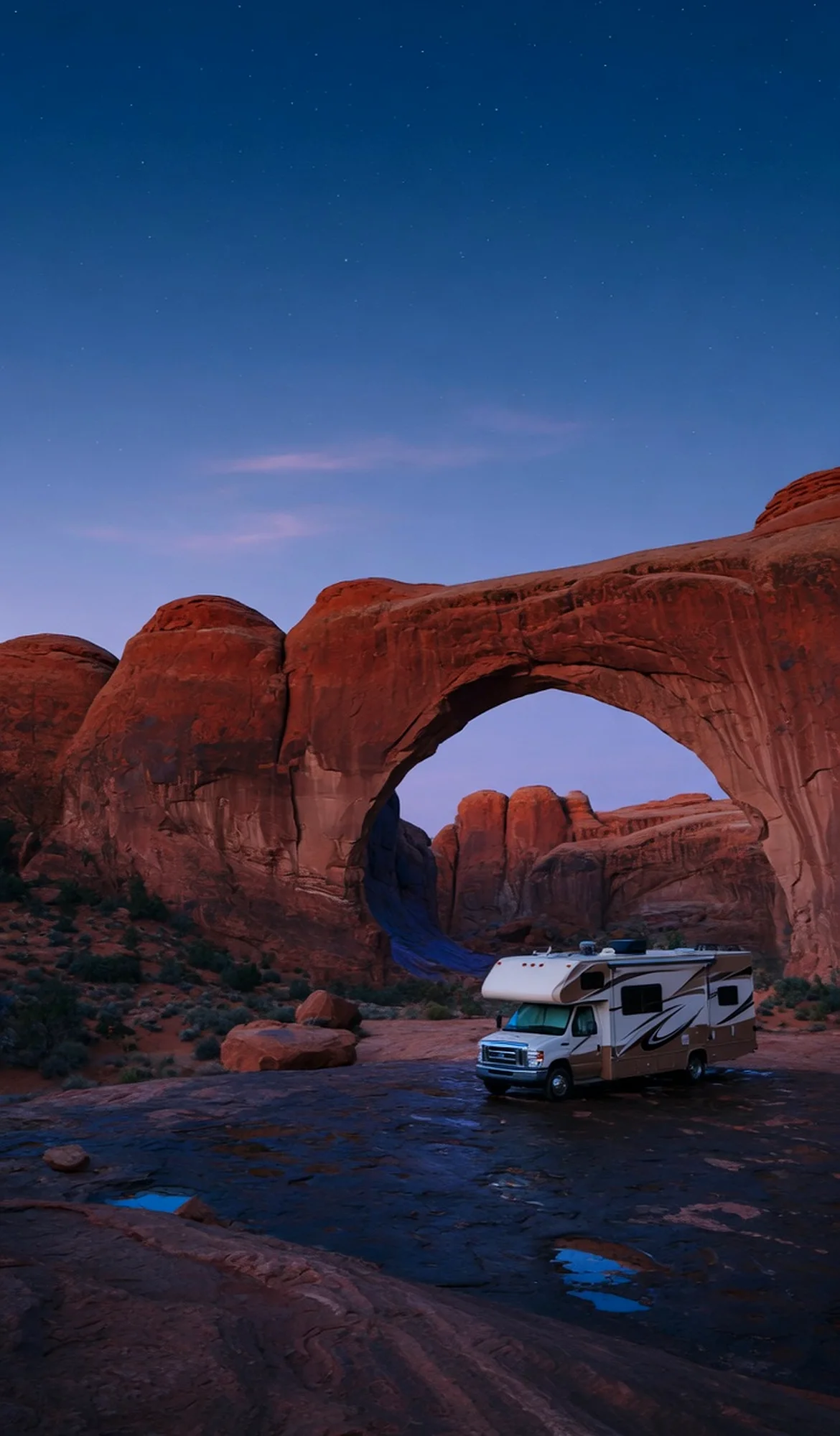
Rainbow Bridge National Monument safeguards one of the planet's largest natural bridges, a sandstone span carved by water over millennia. Reached by boat across Lake Powell or by an overland trail, the rock arch soars 290 feet high with a 275-foot span, its graceful curve rising above a desert stream. Managed by the National Park Service within the Glen Canyon National Recreation Area, the monument is sacred to several Native American tribes and offers a remote, awe-inspiring glimpse at a living masterpiece of desert geology.
Best season — Spring and fall offer comfortable temperatures and steady lake access for boat tours. Summer can be extremely hot, while winter days are cool with fewer crowds. A calm-water Lake Powell is essential for safe boat arrival.
What makes Rainbow Bridge National Monument so unique?
Rainbow Bridge is one of the world’s largest known natural bridges, rising 290 feet tall with a 275-foot span. Unlike an arch carved by weather, a natural bridge is formed by flowing water, here by Bridge Creek. Its remote location on Lake Powell makes arrival by boat part of the adventure, and its sacred status among local tribes adds deep cultural significance.
- Soars 290 feet high with a 275-foot horizontal span
- Formed by the relentless action of Bridge Creek
- Holds spiritual importance for neighboring Native American tribes
At a glance
The facts worth checking before you roll out
Conservative, source-minded facts for planning your visit — always worth confirming against current conditions before you travel.
Managing agency
National Park Service (U.S. Department of the Interior); administered through Glen Canyon National Recreation Area headquarters in Page, Arizona
State
Utah
Defining characteristic
One of the world's largest known natural bridges; considered a sacred place by neighboring Native American tribes
On the ground
Rainbow Bridge National Monument preserves a significant geological feature: one of the world’s largest natural bridges. Formed by the persistent action of Bridge Creek carving through Navajo Sandstone, its 275-foot span and 290-foot height are truly impressive. The monument is managed by the National Park Service within Glen Canyon National Recreation Area and holds cultural importance for local tribes.
RV travelers experience Rainbow Bridge primarily via Lake Powell. Boat access allows a unique perspective as visitors approach the bridge across the water, followed by a short walk to view the arch. This remote location emphasizes its quiet reverence and dramatic beauty, offering a chance to connect with both natural wonder and cultural heritage.
The most comfortable times to visit are spring and fall when temperatures moderate and boat access is consistently available. Summer brings intense heat, while winter offers cooler conditions but potentially limited lake access. Safe arrival depends on calm water conditions on Lake Powell; plan accordingly for potential delays due to weather.
Consider establishing a basecamp in the broader area to explore Rainbow Bridge alongside other Glen Canyon attractions. This allows flexible scheduling and reduces daily travel. From this location, RVers can easily drive to a boat dock and enjoy a day trip focused on experiencing this remarkable natural bridge and its surrounding landscape.
Official sources
- National Park Service — Rainbow Bridge National Monument National Park Service
Nearby & related
Keep planning Utah
Sourced costs, campground directories, and the places worth a detour — the next layer of Utah trip planning.
- Utah RV rental costFuel · camping · tax, sourced
- Utah RV-friendly campgroundsHookups, rig limits, booking tips
- Campervan & van rentals in UtahVan-life routes, rules & rigs
- Utah Mighty 5PickRV Wiki · 15 min read
- RV rentals in UtahPickRV Wiki · 6 min read
- National grasslandsWide-open prairie drives
- LighthousesCoast-road waypoints
- Sand dunesDune fields worth the climb
Planning an RV trip near Rainbow Bridge National Monument: An RV Traveler's Guide?
Was this guide helpful?