PickRV lifehack guide
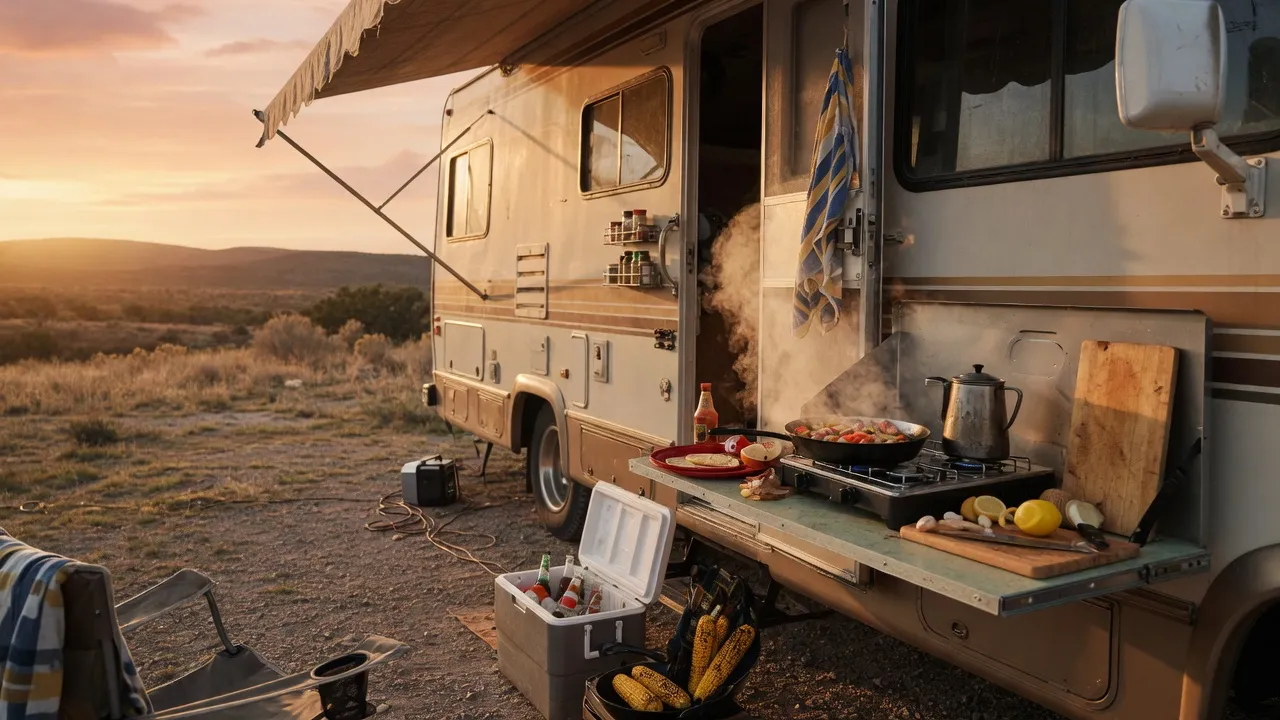
RV cooking minimalism — 1-burner mastery
- Sections
- 6
- Cited sources
- 3
- Depth
- Comprehensive
PickRV
Published by PickRV
RV cooking minimalism — 1-burner mastery (2026)
RV galley size + propane budget force constraint-based cooking. Most new RV cooks try to replicate home kitchens in 1/10th the square footage and burn out within 2-3 days. The solution is constraint-based meal design: 1-burner / 1-pot meals, low-water cleanup, scalable recipe tem
- The 1-pot meal template
- Meal-planning 7-day template
- Water budget — minimal-rinse method
- Propane budget — 1-burner conservation
The 1-pot meal template
Almost every RV-cookable meal fits a 1-pot template: protein + grain + vegetable, browned + simmered together. Variations: chili, curry, stir-fry, pasta, soup, paella, dirty rice, jambalaya, shakshuka.
Critical gear: 12-in cast-iron skillet OR 4-qt enamel Dutch oven (one or the other, not both). Cast-iron handles searing + frying + bread; Dutch oven handles soups + stews + braises. Pick by trip type.
- Cast-iron skillet 12 in: searing, frying, eggs, bread, cobblers
- Dutch oven 4-qt enamel: soups, stews, braises, rice, pasta
- Sharp 8-in chef knife: only knife needed
- Cutting board + 2 mixing bowls: enough prep surface for any 1-pot meal
Meal-planning 7-day template
Day 1 (arrival, easiest): grilled sausage + slaw + bread. Pre-made + chilled.
Day 2 (set-up): chili (canned beans + ground beef + onion + spices). One-pot, 30 min.
Day 3 (active): stir-fry (chicken + vegetables + rice). Pre-cooked rice from day 2.
Day 4 (rest): curry (canned coconut milk + protein + vegetables). One-pot, 25 min.
Day 5 (active): pasta + jar marinara + sausage. 20 min.
Day 6 (slowing): soup (broth + vegetables + protein). 30 min.
Day 7 (departure): use-up-leftovers scramble. 15 min.
Water budget — minimal-rinse method
Standard dish washing uses 2-3 gallons per meal. Minimal-rinse: 0.5-1 gallon per meal.
Method: wipe plates with paper towel + scrape food into trash. Dry-scrape pot with spatula. 1-cup water + biodegradable soap in pot, swish, dump (to grey tank if connected, to washbasin for transport to dump). 1-cup rinse water. Air dry.
Propane budget — 1-burner conservation
Standard rig 30-lb propane tank holds ~7 gallons liquid = ~150,000 BTU output. Stove burner consumes ~7,500 BTU/hr on high. Continuous high = 20 hours of stove. Real-world cooking is 1-2 hours/day = 10-20 day endurance.
Conservation: cover pot with lid (reduces cook time 30%). Pre-soak grains (rice + lentils + beans 8 hr soak reduces cook time 50%). Use one-pot method (no separate sides = no second burner = no double propane).
Cooler + fridge management for fresh ingredients
RV fridge holds 2-4 cubic feet (single-door) or 8-10 cubic feet (double-door). Plan accordingly. Bulk items (large milk jug, watermelon, family pack chicken) won't fit.
Strategy: buy in 3-4 day grocery cycles + plan to resupply at the campground or town within range. Most US towns have grocery store within 5-15 mi of any major campground.
What RV cookbooks + Instagram don't tell you
The under-shared truth: most RV-Instagram cooking is performative. Real RV cooking is fast, simple, and forgiving. A burnt cast-iron stir-fry tastes better than a fussy Instagram-perfect plate, especially after a hike day.
Second under-shared truth: the single biggest cost-saver in RV travel is cooking 2/3 of meals at the rig vs eating at restaurants. Restaurant meals during travel run $25-40 per person per meal. Self-cooked meals run $4-7 per person per meal. A 7-day trip with 2 adults + 2 kids saves $400-600 by cooking 14 of 21 meals at the rig.
Sources + citations
Continue your trip planning