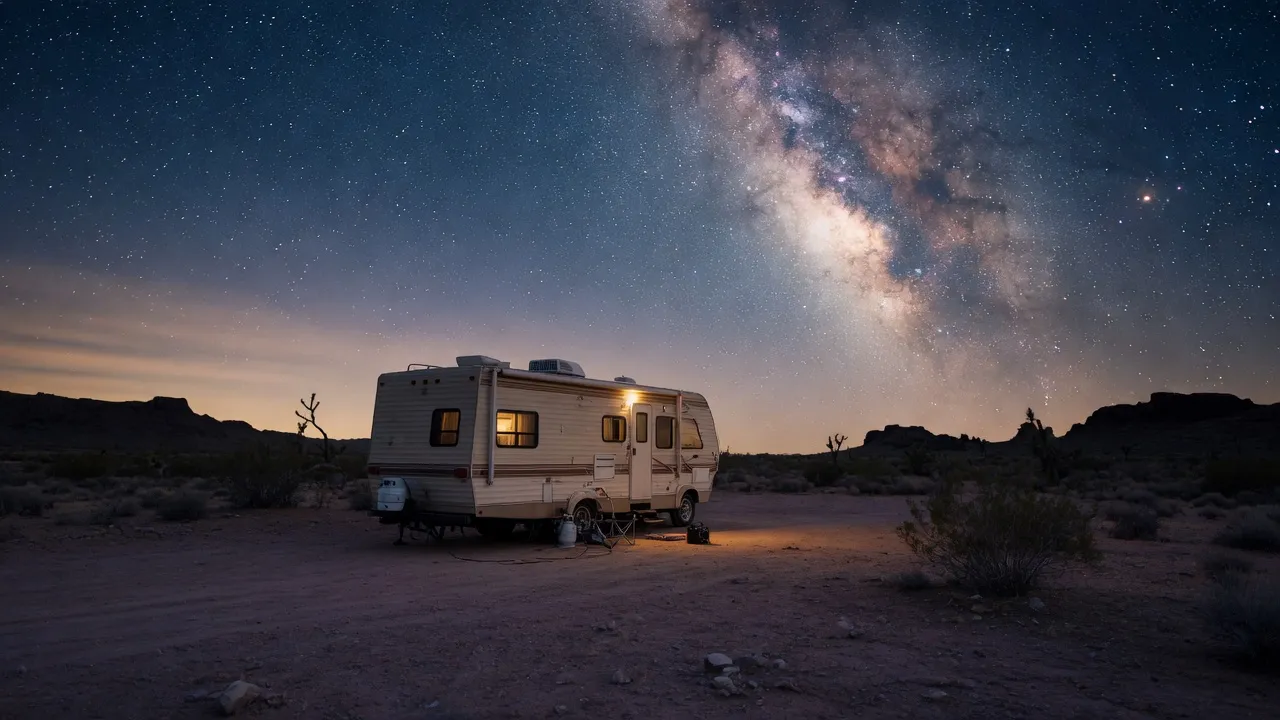
Why winter Southwest beats every other US winter destination
Winter Southwest combines: daytime highs 65-80°F (perfect for hiking + photography), nighttime lows 30-45°F (cool but not freezing in lower elevations), 0-2 inches of monthly precipitation (basically dry), 10-12 hours of dark sky per night (ideal for astrophotography + dark-sky viewing).
Compare to Florida winter (humid, mosquito-heavy in spring), Arizona snowbird parks (crowded social environments), Texas Hill Country (cooler than RGV).
International Dark-Sky Parks in the Southwest
International Dark-Sky Association (IDA, darksky.org) certifies dark-sky parks meeting strict light-pollution standards. Top Southwest IDA-certified parks: Big Bend NP TX (Gold tier), Capitol Reef NP UT (Gold), Bryce Canyon NP UT (Gold), Death Valley NP CA (Gold), Joshua Tree NP CA (Silver), Anza-Borrego Desert SP CA (IDA-certified), Cedar Breaks NM UT, Natural Bridges NM UT (first IDA-certified NPS unit).
Gold tier = darkest possible nighttime skies; visible Milky Way structure, planets, occasional zodiacal light.
- Big Bend NP TX: IDA Gold, darkest in lower-48
- Capitol Reef NP UT: IDA Gold, smaller crowds vs other Utah parks
- Bryce Canyon NP UT: IDA Gold, regular astronomy ranger programs
- Death Valley NP CA: IDA Gold, multiple dark-sky viewing areas
- Joshua Tree NP CA: IDA Silver, accessible from LA area
- Anza-Borrego Desert SP CA: IDA-certified state park
Big Bend NP — the dark-sky crown jewel
Big Bend NP is the darkest accessible NPS unit in the lower-48 US per IDA + NPS. 800,000 acres, no nearby cities, Rio Grande River, Chisos Mountains.
Winter weather: 65-75°F daytime, 35-45°F nighttime. RV camping: Rio Grande Village ($16/night, full hookups available, 40 ft max), Cottonwood ($16/night, no hookups), Chisos Basin ($16/night, 24 ft max, mountain elevation).
6-week Southwest winter loop
Sample 6-week itinerary (December-January or January-February):
Week 1: Big Bend NP (Rio Grande Village + Chisos Basin)
Week 2: drive to Carlsbad Caverns NP + dispersed BLM in Guadalupe Mountains
Week 3: drive to White Sands NP + dispersed Lincoln NF
Week 4: drive to Saguaro NP + Catalina State Park (Tucson area)
Week 5: drive to Joshua Tree NP + Mojave National Preserve
Week 6: drive to Death Valley NP + Anza-Borrego Desert SP
Reservation strategy
Winter Southwest NPS reservations: 6 months ahead on Recreation.gov. Spring-break weeks (March) clear within 5-15 minutes; off-peak (December weekdays, January weekdays) often available 1-2 weeks ahead.
Dispersed BLM + USFS camping: Sonoran Desert NM, Mojave NP, Lincoln NF, Coconino NF all offer dispersed camping. Free, first-come, 14-day stay limits.
Astronomy gear + photography
Astrophotography gear: DSLR or mirrorless + wide-angle lens (14-24mm f/2.8), sturdy tripod, intervalometer (or app), red headlamp (preserves night vision), polar-aligned star tracker (optional, enables longer exposures).
Basic settings: ISO 3200-6400, f/2.8, 20-30 second exposure. Bracket multiple exposures. Stack in post-production for noise reduction.
What dark-sky tourism marketing doesn't tell you
Under-shared truth: even Gold-tier dark-sky parks have nights when atmospheric conditions reduce visibility. Best dark-sky viewing requires: no moon (or thin crescent), low humidity, no smoke or dust. Check NWS humidity forecast + Lunar phase calendar before planning specific astrophotography nights.
Second under-shared truth: many dark-sky tours during the winter focus on Star Parties (multi-night events with telescopes + astronomy educators). Verify Star Party schedules for each park before booking specific weeks.